
Exploring Istanbul’s Old City: Mosques, Palaces, Bazaars and the Golden Horn
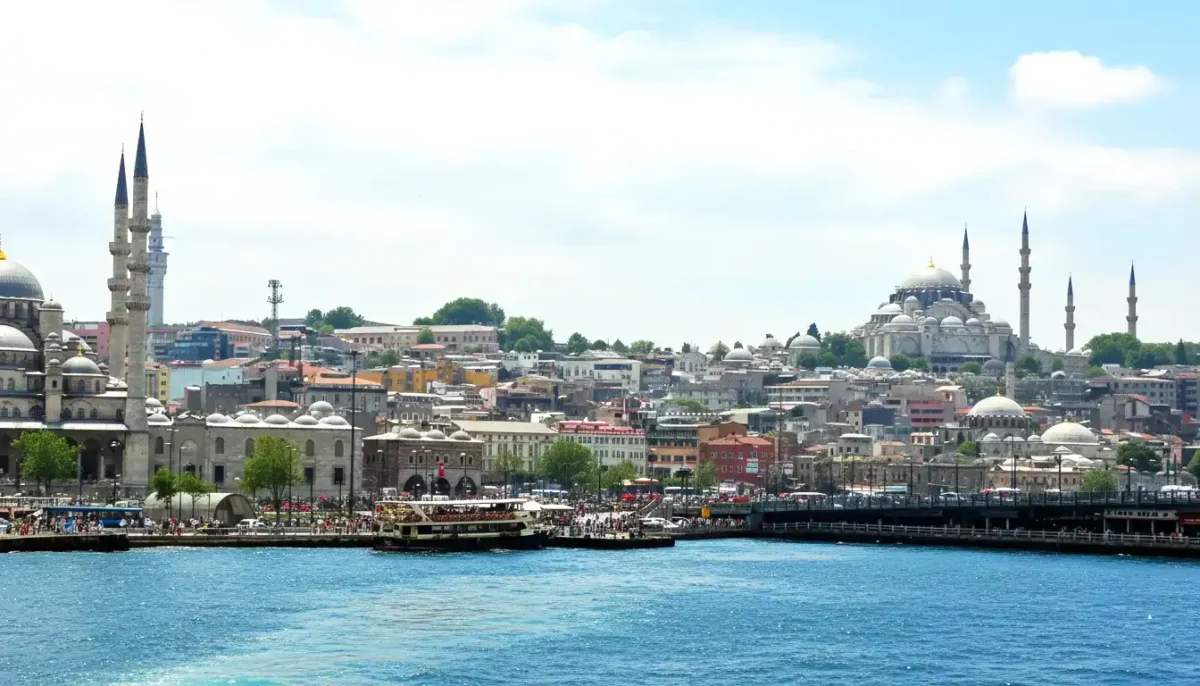
During our European trip, we spent three unforgettable days in Istanbul. Set along the Golden Horn and the Bosphorus, the city’s historic Old City offers an extraordinary mix of mosques, palaces, bustling markets, and ever-changing waterfront views.
We stayed in a small hotel in Sultanahmet, the heart of the Old City and a UNESCO World Heritage area. The location was superb — everything within easy walking distance, including Topkapi Palace, Hagia Sophia Mosque, and Sultanahmet Square.
We explored many of Istanbul’s iconic landmarks, waking each morning to the call to prayer from the nearby Ishak Pasha Mosque and wandering the city from early morning until late evening. Even so, we still missed the magnificent Suleymaniye Mosque and the famous Basilica Cistern. Three days were simply too short — Istanbul remains the most exciting city we have visited so far, and one we know we must return to.
Table of contents
- Sultanahmet – Istanbul’s historic Old City
- Topkapi Palace – Inside the World of the Ottoman Sultans
- Mosques of Istanbul – Faith, History and Iznik Tile Art
- Grand Bazaar – Colour, Chaos and Culture
- Golden Horn
Sultanahmet – Istanbul’s historic Old City
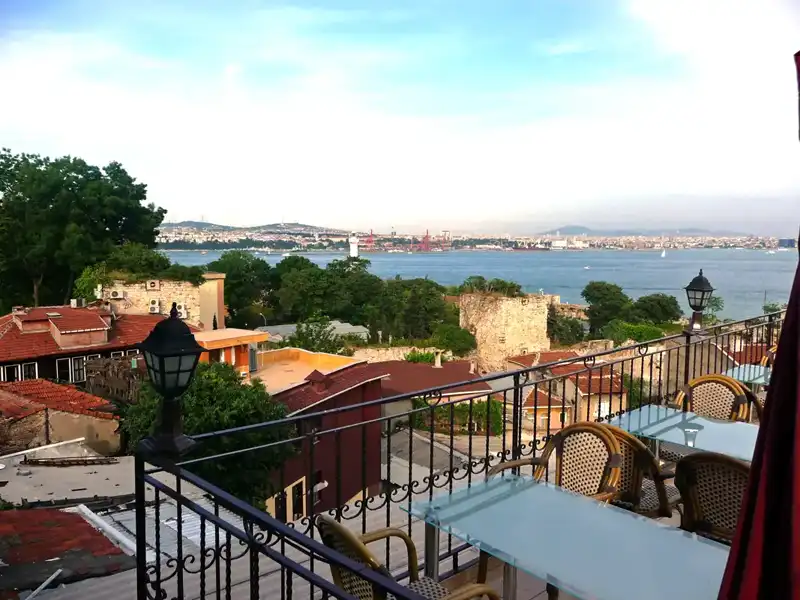
We stayed at the Alp Guesthouse Hotel, set in an Ottoman-style building , an ideal choice for travellers who prefer character over large, luxurious hotels. It suited us perfectly — a simple, clean room in the basement, with the added bonus of a small complimentary gym.Breakfast was served upstairs, and our favourite spot quickly became the rooftop terrace on the fifth floor — a lovely place to start or end the day. There was no lift, but climbing the stairs simply added to our daily exercise, along with exploring Istanbul on foot.
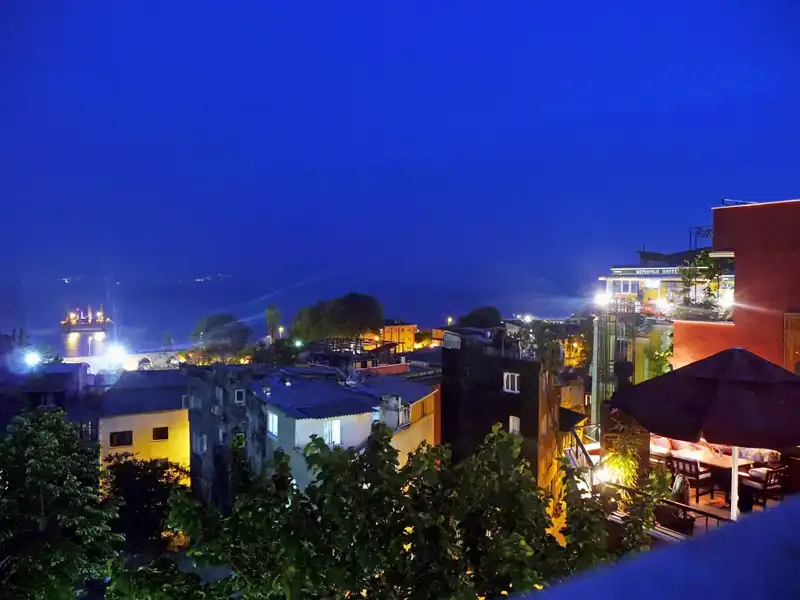
During the evenings, we loved spending time on the wonderful rooftop terrace, which was usually quiet as most guests went out for dinner. We picked up some delicious food — and even a bottle of wine — from a nearby convenience store, a rare find in this area. With several mosques close by, many local restaurants did not serve alcohol. Instead, we enjoyed a simple yet romantic dinner on the terrace, accompanied by a spectacular view over the Sea of Marmara.
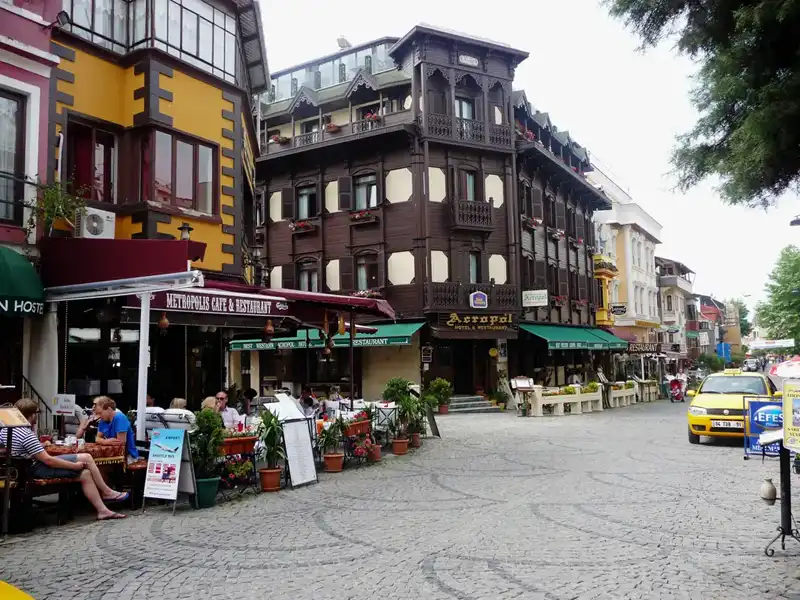
Our hotel was located on Akbiyik Street, which stretches toward the Sea of Marmara. The street is known for its lively evening atmosphere and backpacker-friendly hostels. We enjoyed wandering through its cobblestone lanes, past colourful wooden houses, small grocery shops, cafés and inviting restaurants. Shopping for supplies and eating out was easy, with no shortage of good places to choose from around the Old Quarter. It is an excellent location in Sultanahmet, within easy walking distance of major sights, but the uneven cobblestone streets may not be suitable for some travellers.
Back to table of contents
Topkapi Palace – Inside the World of the Ottoman Sultans
Topkapı Palace was built in 1459 by Sultan Mehmed the Conqueror and served as the primary residence of the Ottoman sultans for centuries. Beyond its role as a royal palace, it was also an important centre of learning and culture, housing a library as well as a hospital. Following the abolition of the Ottoman monarchy in 1924, Topkapı Palace was transformed into a museum, allowing visitors to explore the former heart of the empire.
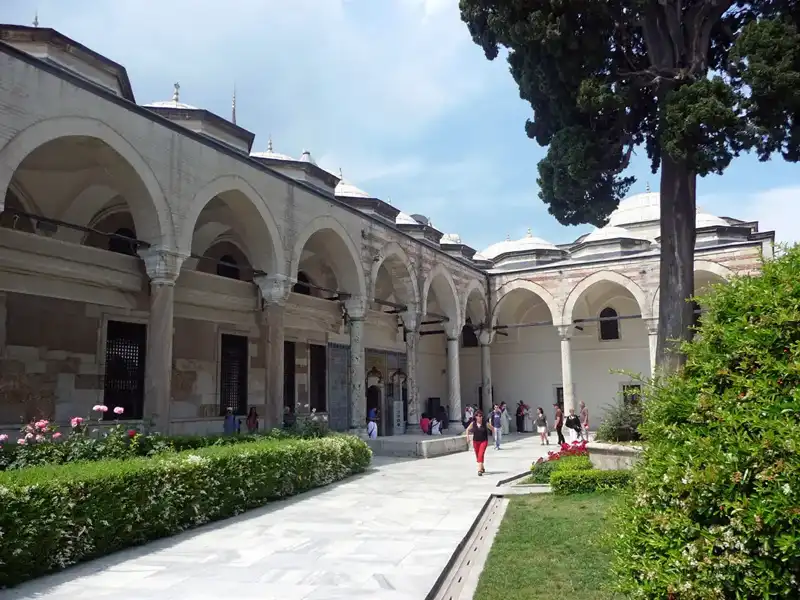
Topkapı Palace was built in 1459 by Sultan Mehmed the Conqueror and served as the primary residence of the Ottoman sultans for centuries. Beyond its role as a royal palace, it was also an important centre of learning and culture, housing a library as well as a hospital. Following the abolition of the Ottoman monarchy in 1924, Topkapı Palace was transformed into a museum, allowing visitors to explore the former heart of the empire.
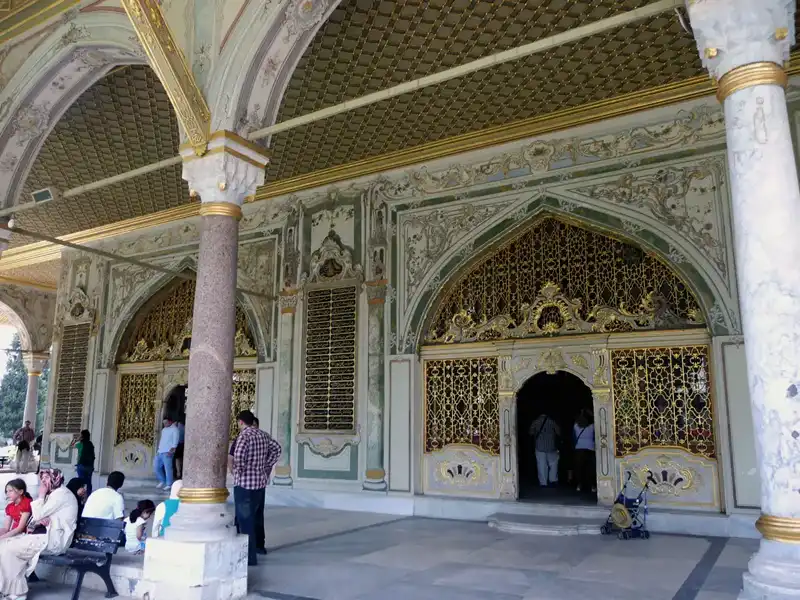
The Treasury was the highlight of our visit to Topkapi Palace. We were fascinated by the stunning collection of jewels, fine porcelain, and historic weapons. Each piece told a story of the power and grandeur of the Ottoman Empire.
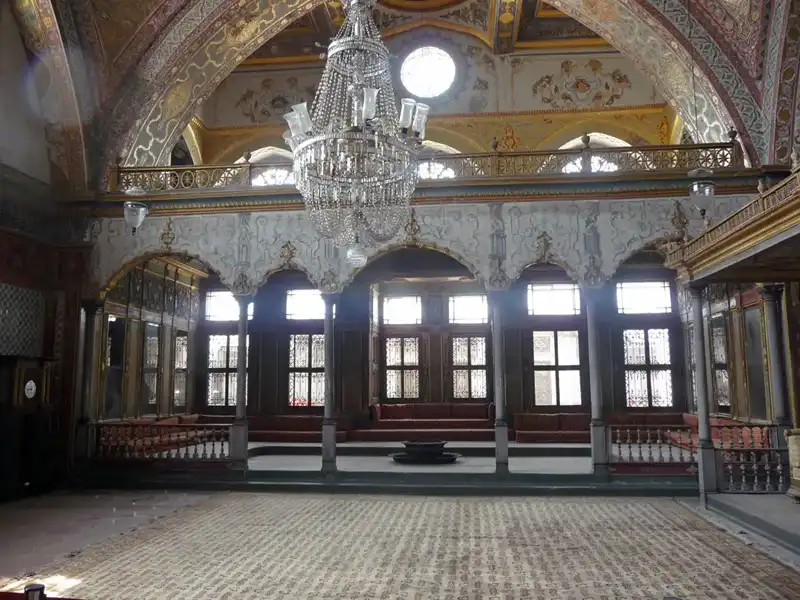
The Harem now feels quiet and almost melancholy. Walking through its empty rooms, it is hard not to sense the absence of the women who once lived here — their stories, emotions and influence long gone, leaving behind only silence and fading beauty.
Back to table of contents
Mosques of Istanbul – Faith, History and Iznik Tile Art
Istanbul is home to some of the most beautiful mosques in the world, celebrated for their rich history and remarkable Ottoman architecture. These mosques are not only places of worship but also major cultural landmarks. The iconic Blue Mosque impressed us with its vast scale and elegant design, while our favourite was the stunning Rustem Pasha Mosque. Nestled in a lively neighbourhood close to the Spice Bazaar, it is renowned for its exquisite Iznik tilework and intimate atmosphere.
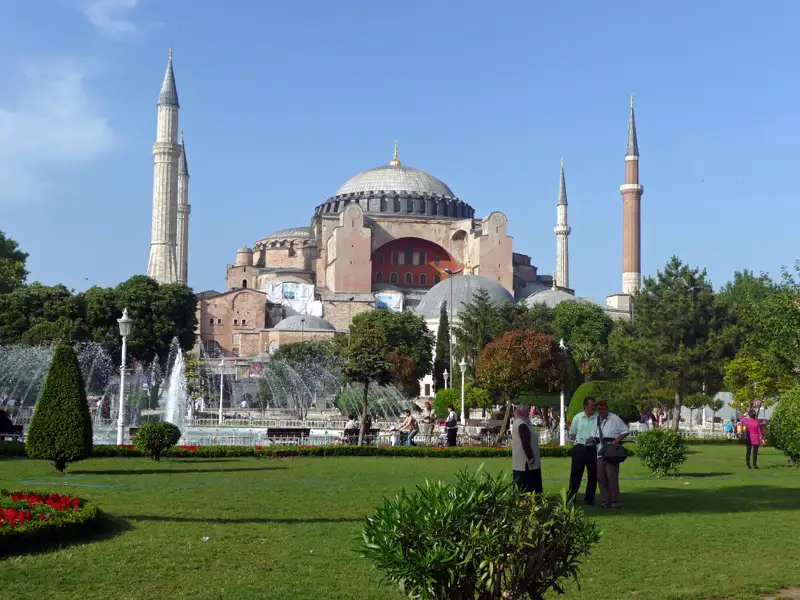
The first mosque we visited was Hagia Sophia, one of Istanbul’s most significant landmarks. Built in the 6th century as a Byzantine cathedral, it is a masterpiece of Roman and Byzantine architecture. Over the centuries, Hagia Sophia has served as a basilica, a mosque, a museum, and once again a mosque, reflecting the city’s complex history. While its scale and historical importance are extraordinary, it lacks the light, harmony, and refined elegance of the Blue Mosque.
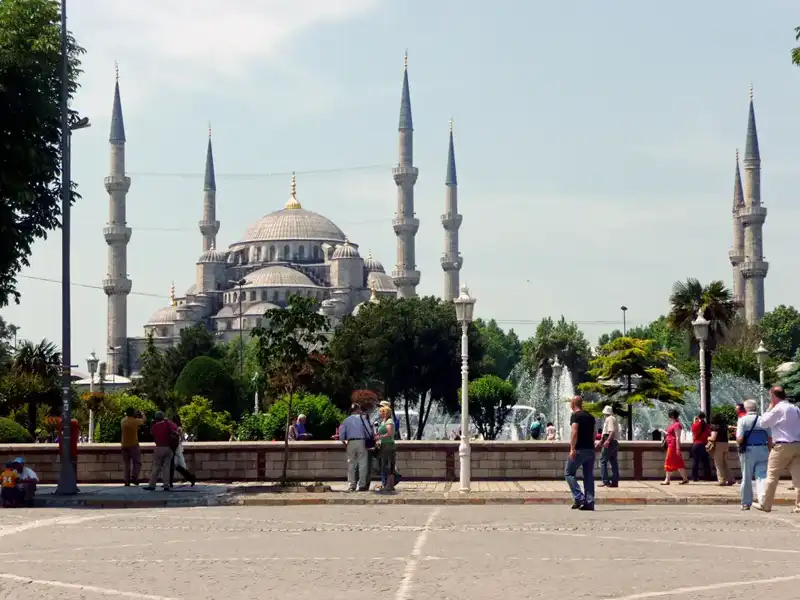
The Blue Mosque, also known as the Sultan Ahmed Mosque, is around 400 years old and was just a short walk from our hotel in Sultanahmet. A masterpiece of Ottoman architecture, it is distinguished by its six slender minarets and grand cascading domes. Inside, thousands of exquisite blue Iznik tiles give the mosque its famous name and timeless beauty.
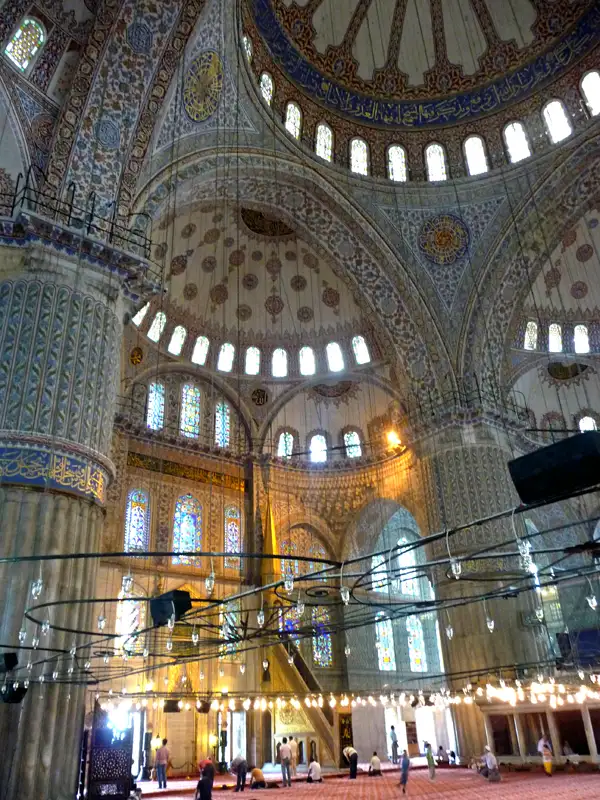
Stepping inside the Blue Mosque, we were immediately struck by a deep sense of tranquillity, despite the crowds. The vast interior is richly decorated with more than 20,000 handmade ceramic Iznik tiles, woven carpets, and elegant calligraphy. Soft light filters through stained-glass windows and glows from the chandeliers, creating a calm and uplifting atmosphere. Although we are not religious, we were deeply moved by the beauty and serenity of the mosque.
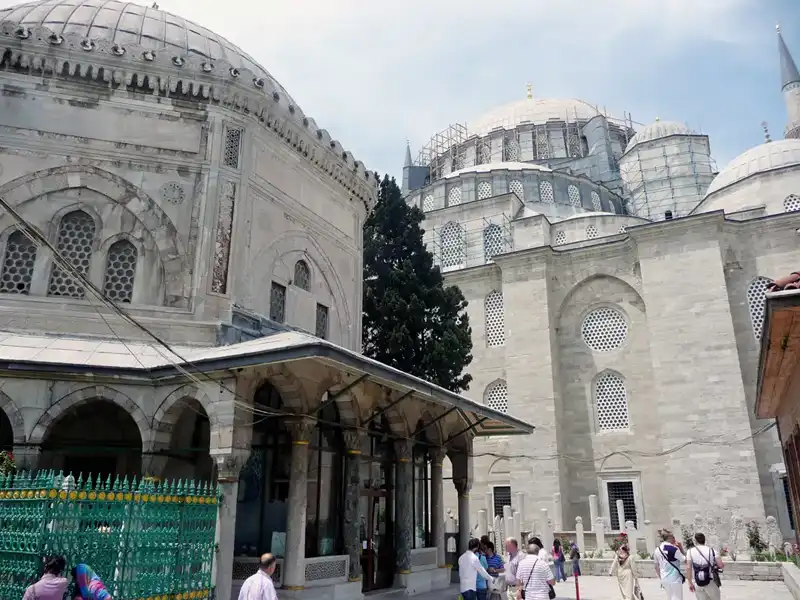
Another important landmark in Istanbul is the Süleymaniye Mosque, built in the 16th century during the reign of Sultan Suleiman the Magnificent. Designed by the great Ottoman architect Mimar Sinan, it is widely regarded as one of Istanbul’s most impressive mosques and a highlight not to be missed. Unfortunately, after a long walk through the city, we arrived to find the mosque closed for renovation — a small disappointment, but still an imposing sight from the outside.
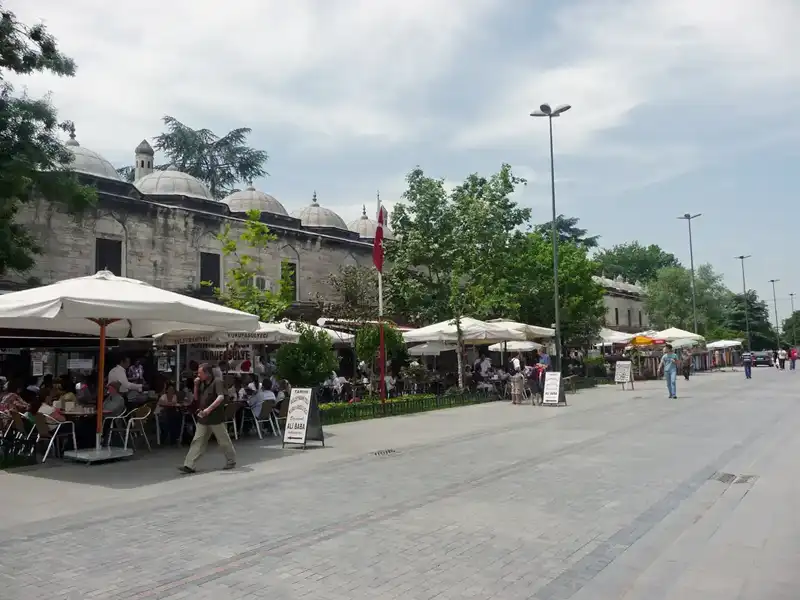
The mosque was far more than a place of worship. It formed part of a larger complex that included a hospital, primary school, public bath, caravanserai, medical school, Qur’an school, and a public kitchen that provided food for the poor. Today, the restored complex has taken on a new role, with parts of it now operating as a pleasant restaurant serving tasty meals.
Rustem Pasha Mosque – A Hidden Gem of Iznik Tiles
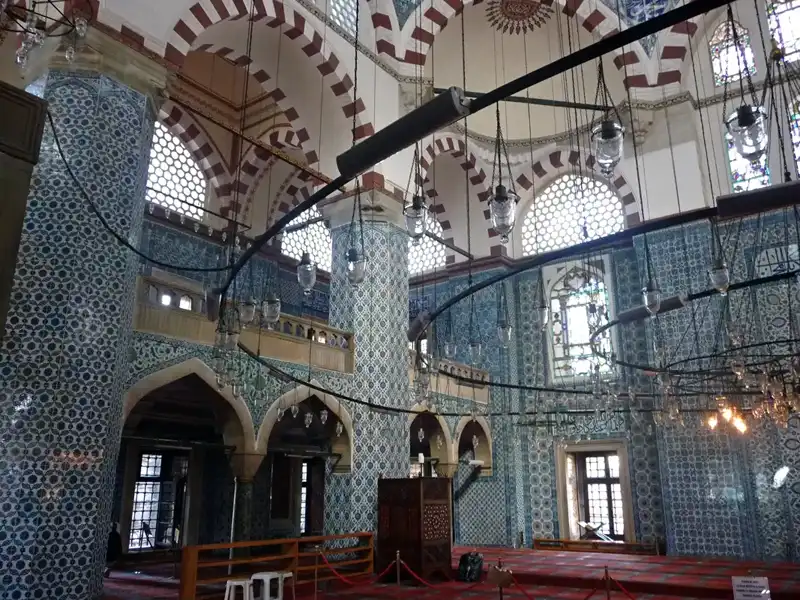
Near the Spice Bazaar, we discovered one of Istanbul’s lesser-known highlights: the Rustem Pasha Mosque. Built in 1562, this beautiful Ottoman mosque is renowned for its exceptional Iznik tilework and is considered one of Mimar Sinan’s finest designs. Small, elegant, and deeply peaceful, the mosque felt worlds away from the crowds. There were hardly any tourists — just a few locals quietly praying — which made the experience especially memorable.
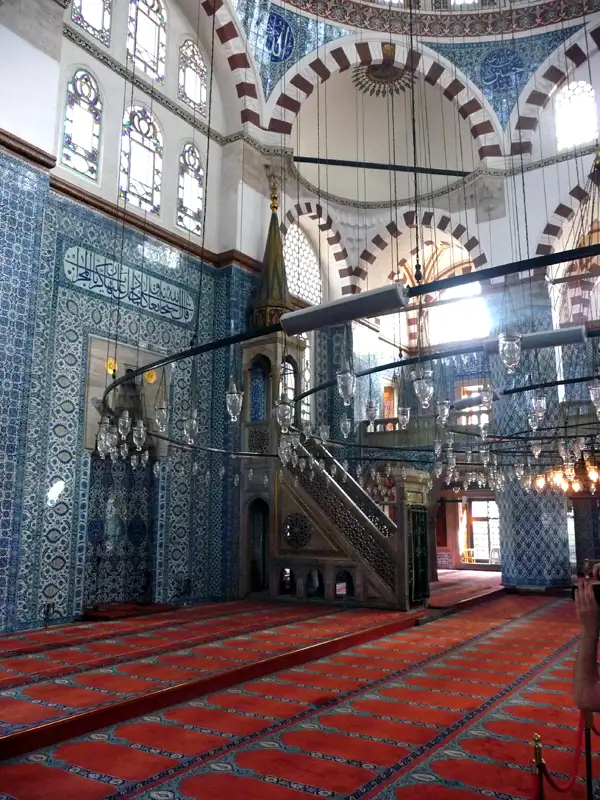
Inside the Rustem Pasha Mosque, exquisite Iznik tiles rise above deep red carpets and softly lit chandeliers, with steps leading up to the muezzin area. With only a few locals present and no tour groups in sight, the mosque felt calm, intimate, and deeply peaceful — a quiet contrast to Istanbul’s busier landmarks.
Back to table of contents
Grand Bazaar – Colour, Chaos and Culture
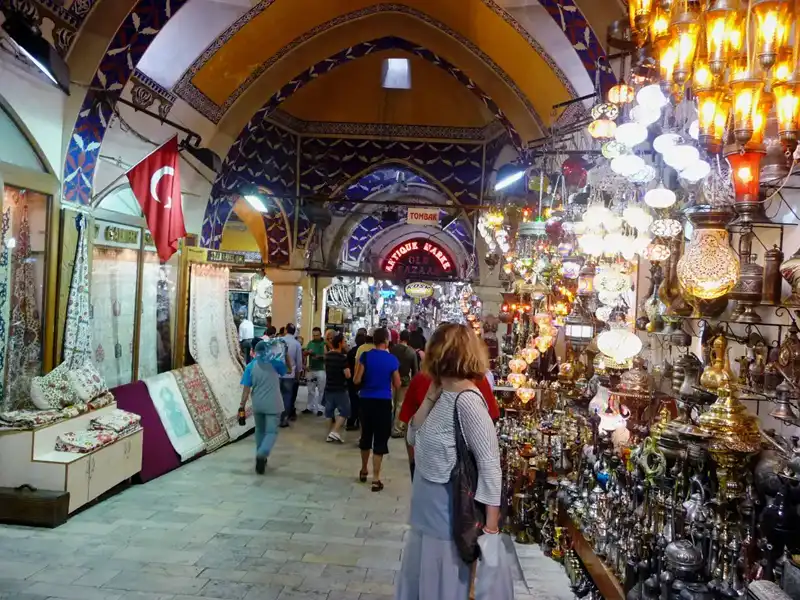
A must-see in Istanbul is the Grand Bazaar (Kapalıçarşı), one of the largest and oldest covered markets in the world, with more than 4,000 shops. It truly feels like a city within a city, employing over 30,000 people. We enjoyed wandering through its bustling lanes, watching visitors haggle and browse for jewellery, carpets, ceramics, and souvenirs. Unfortunately, as we were on a long journey home, we had no space left to bring anything back with us.
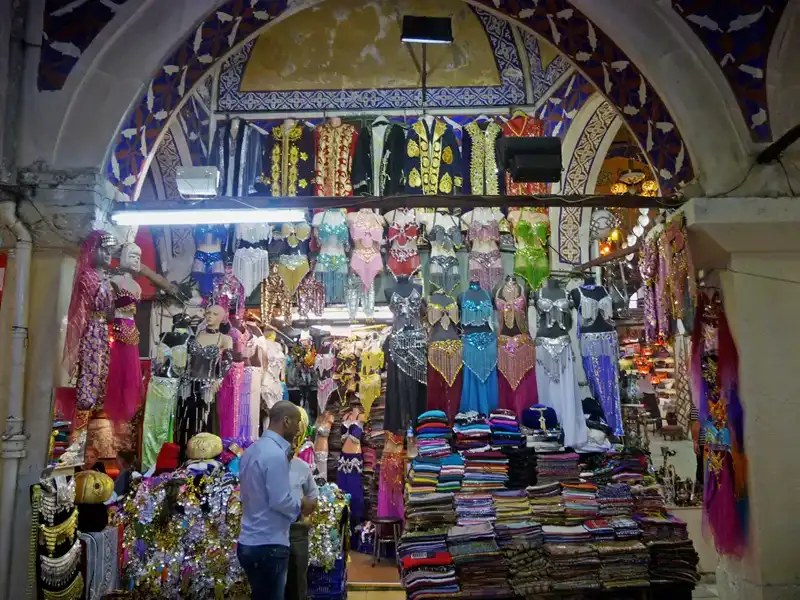
Seeing a beautifully stocked belly dancer costume shop in the Grand Bazaar made us realize how much we’d missed; our time in Istanbul was simply too short to attend a traditional belly dancing performance
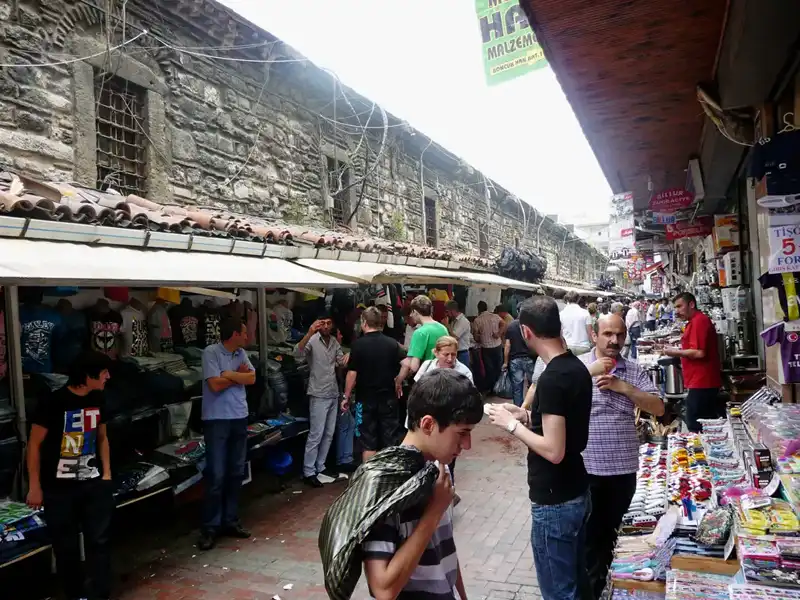
On our way to the Rüstem Paşa Mosque, we came across Mahmutpaşa Bazaar, a lively and authentic local market in Istanbul. Unlike the Grand Bazaar, it is not geared towards tourists. Here, locals shop for textiles, clothing, jewellery, and household goods, often haggling for the best prices.
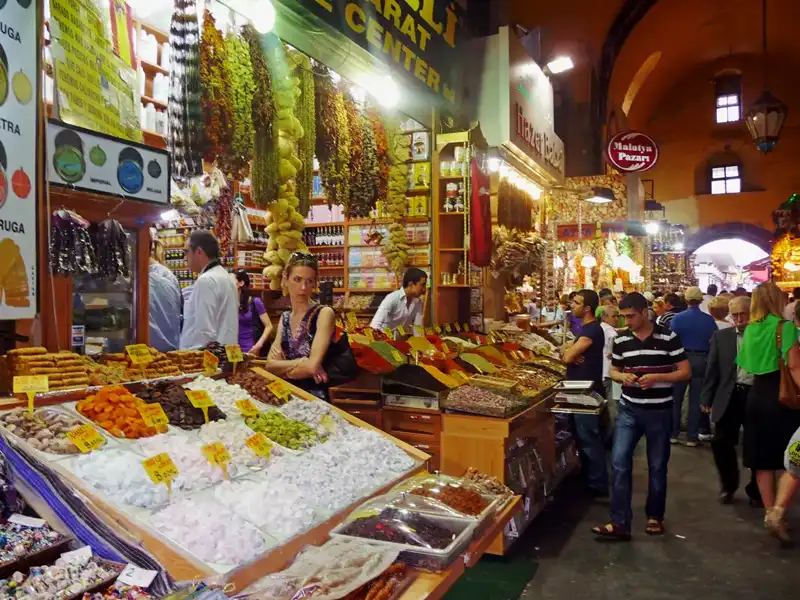
We loved the Spice Bazaar, one of Istanbul’s oldest markets. It is a bustling place filled with spices, sweets, nuts, and many other tempting products. The vibrant atmosphere makes it a must-visit for both locals and visitors. Located close to the Rüstem Paşa Mosque, it fits perfectly into a day of exploring the area.
Back to table of contents
Golden Horn – Where History Meets the Bosphorus
The Golden Horn is an inlet of the Bosphorus, which divides the European side of Istanbul from the Asian side. It is a major tourist destination with recreational parks and cultural centres. There are various restaurants and boat cruises to choose from.
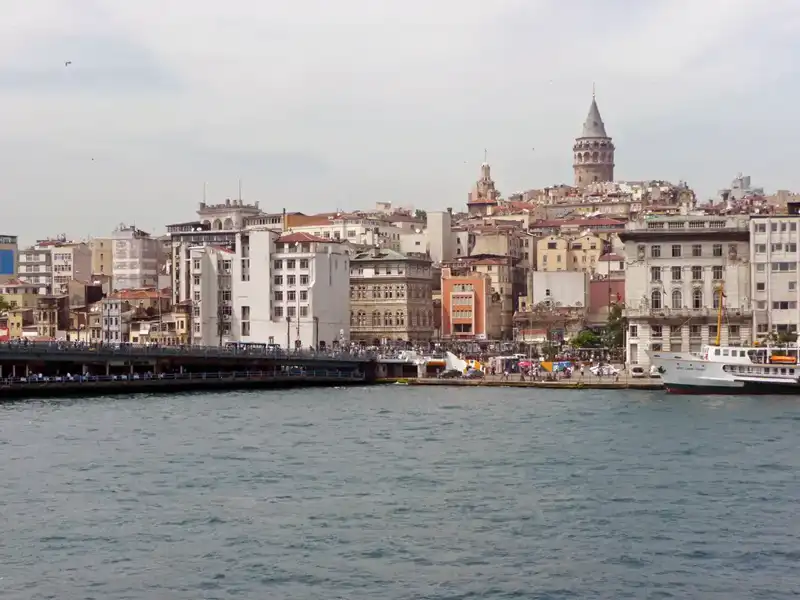
We explored the Galata Bridge, which is far more than just a crossing for traffic. It is a lively cultural and social hub. The upper level carries road traffic and tramlines, while local fishermen line the railings, patiently fishing in the waters of the Golden Horn.
Below, the lower level is reserved for pedestrians, shops, and restaurants. We enjoyed dinner in one of the restaurants, with wonderful views over the Bosphorus, the Golden Horn, and the city — an unforgettable experience.
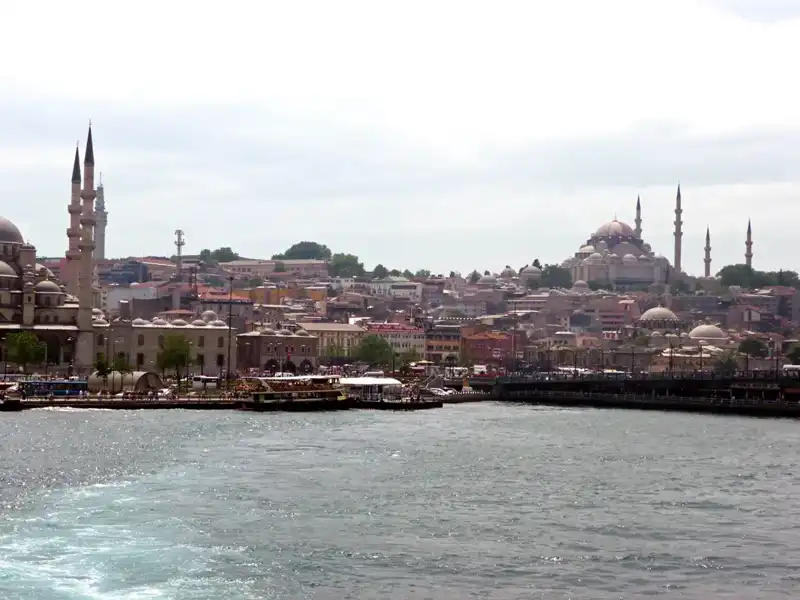
Finally, we did a 2-hour Bosphorus cruise from the Galata Bridge. It was great to see the Golden Horn and Istanbul from a new angle. Along the way, we passed the impressive Dolmabahçe Palace and sailed beneath the Bosphorus Bridge, linking the European and Asian sides of the city. We also saw the medieval Rumeli Fortress and Anadolu Fortress along the shores. This was the end of a wonderful trip to Istanbul.
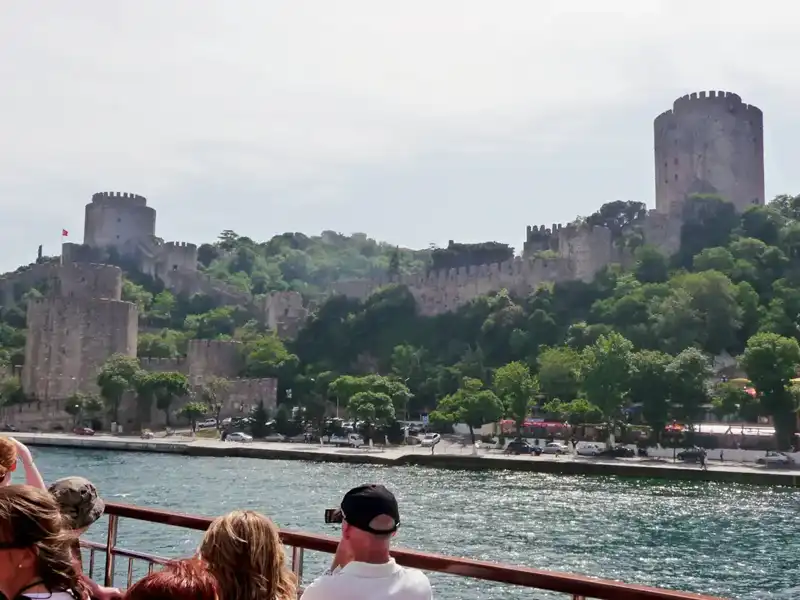
As we continued along the Bosphorus, we passed Rumeli Hisarı, an imposing 15th-century fortress built by Sultan Mehmed II as part of his preparations for the siege of Constantinople.
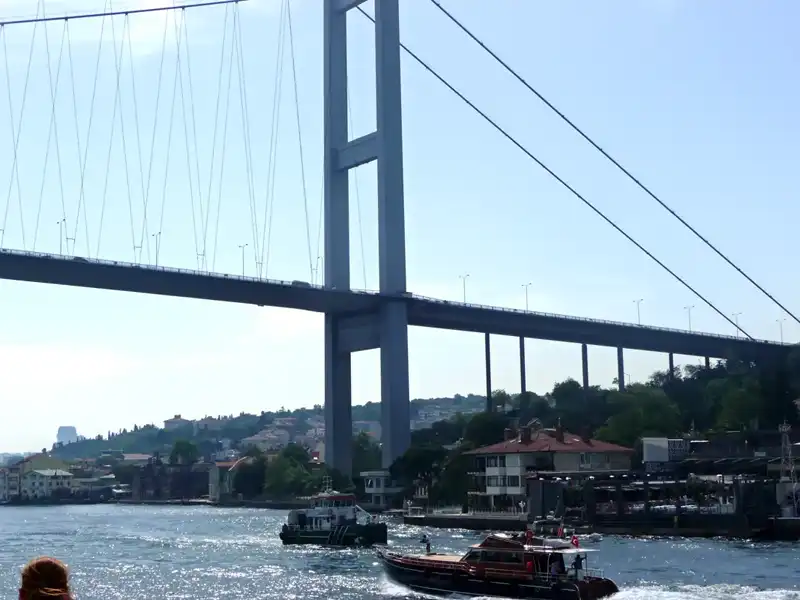
We then cruised beneath the Bosphorus Bridge, which links the European and Asian sides of Istanbul. Crossing between two continents while remaining in the same city is one of the things that makes Istanbul truly unique.
Back to table of contents
More from Europe: Greece
More from Europe: Germany, Berlin & Frankonia