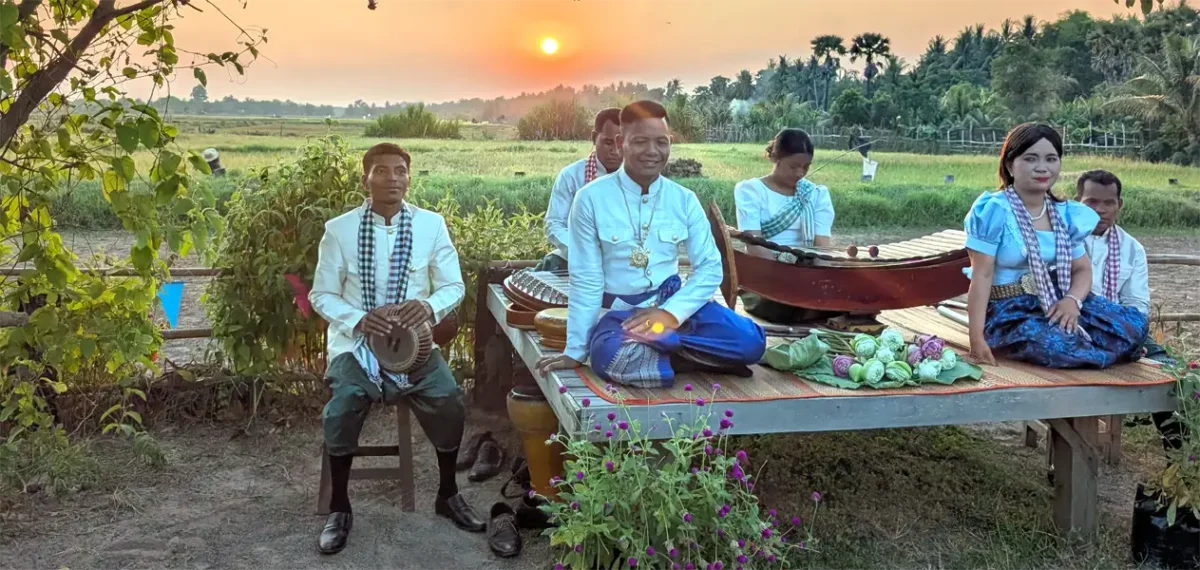
Local band at our Cocktail party in the ricefields
Siem Reap, Angkor Wat and Mekong River Cruise Travel Experiences
This journey combines three unforgettable experiences: exploring Siem Reap and the magnificent Angkor Wat, cruising the Mekong River through Cambodia and Vietnam, and finishing in vibrant Ho Chi Minh City (formerly Saigon). I travelled with Holiday-Max on this well-organised tour, which made exploring the region both comfortable and stress-free. Along the way, we visited floating villages, ancient Buddhist temples, the fascinating capital of Phnom Penh, and experienced everyday life on one of Asia’s greatest rivers. From spectacular archaeological wonders to colourful local culture and peaceful river landscapes, this journey offered an unforgettable glimpse into the heart of Southeast Asia.
Table of contents
Siem Reap and Angkor Wat
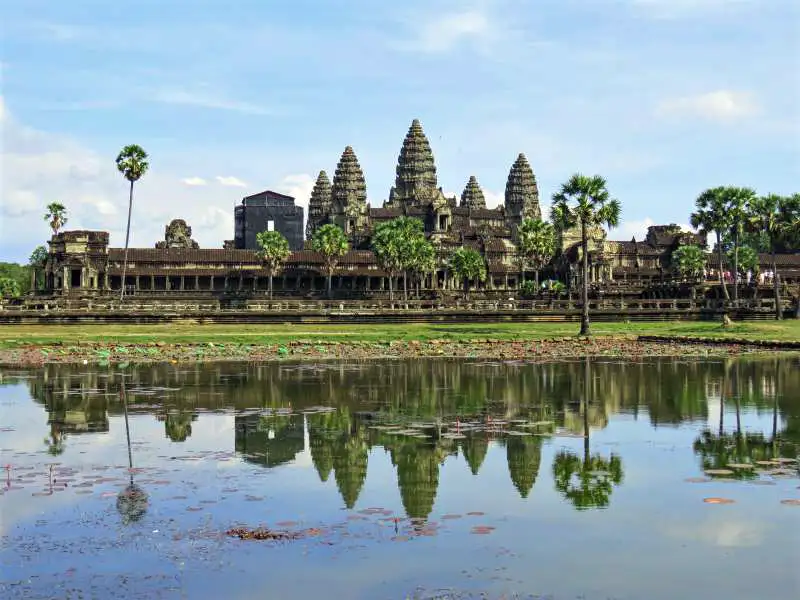
Photo: Judy Crundall
Before boarding our Mekong River cruise, we spent three days exploring Siem Reap and the magnificent temples of Angkor, one of the world’s most extraordinary archaeological and religious sites. Highlights included the iconic Angkor Wat, the giant carved faces of Bayon Temple, and the jungle-covered ruins of Ta Prohm.
Our days in Siem Reap were packed with unforgettable experiences. Exploring the ancient capital of Angkor Thom involved hours of walking, climbing countless steps, and enduring temperatures above 40°C. Despite the intense heat, the visit was surprisingly manageable thanks to our excellent guide, who shared fascinating stories at regular stops. These breaks gave us plenty of time to rest, take photographs, and fully appreciate this remarkable UNESCO World Heritage Site.
Originally built as a Hindu temple in the early 12th century, Angkor Wat covers more than 160 hectares and remains the largest religious monument in the world. By the end of the 12th century, it had gradually become a Buddhist temple and continues to be an important place of worship today.
What impressed me most was seeing local people quietly performing their religious ceremonies among the many visitors. Despite being one of the world’s most visited landmarks, Angkor Wat has retained its deep spiritual atmosphere, making the experience even more memorable.
Our days in Siem Reap were packed with unforgettable experiences. Exploring the ancient capital of Angkor Thom involved hours of walking, climbing countless steps, and enduring temperatures above 40°C. Despite the heat, the visit was surprisingly manageable thanks to our excellent guide, who shared fascinating stories at regular stops, giving us plenty of opportunities to rest, take photographs, and fully appreciate this extraordinary UNESCO World Heritage site.
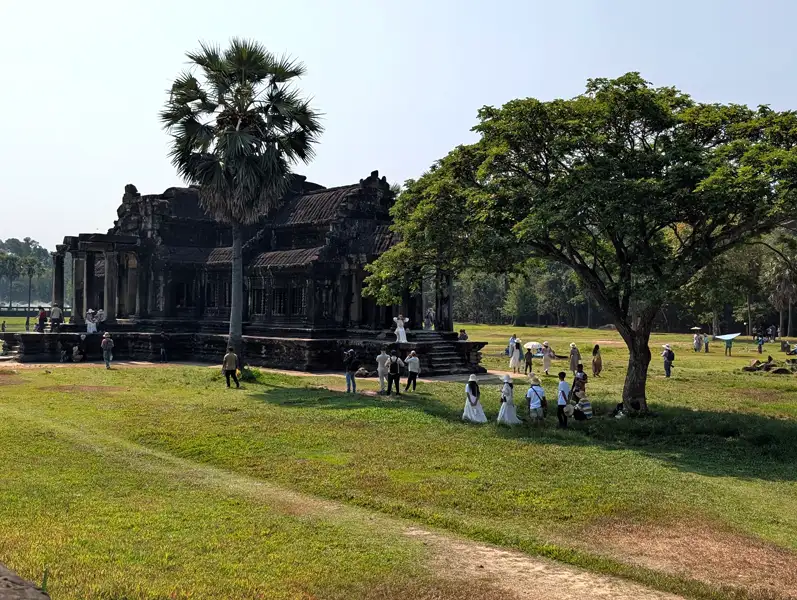
While exploring the vast Angkor Archaeological Park, we saw many local families and community groups enjoying picnics on the beautifully maintained lawns beneath the shade of tall trees. It was wonderful to see that this remarkable World Heritage site is not only a major tourist attraction but also a peaceful place where Cambodians gather for relaxation, reflection, and family time.
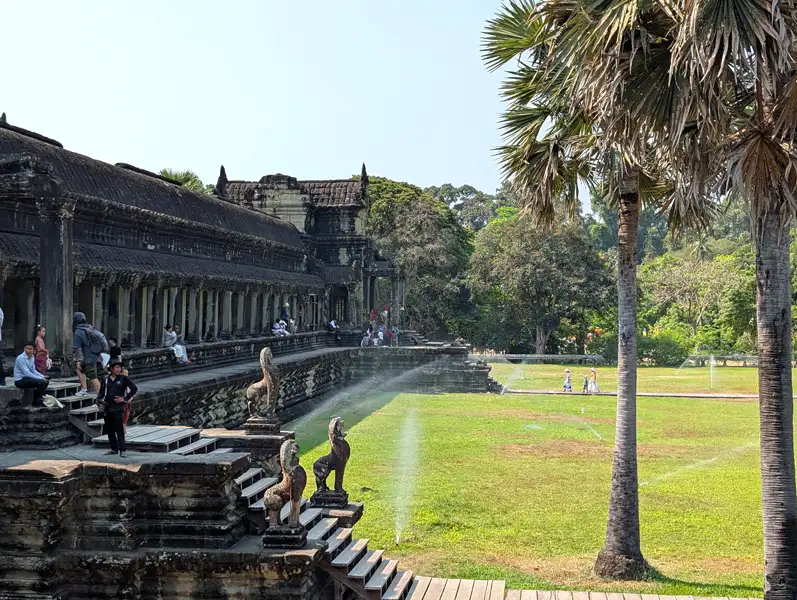
Other groups sought refuge from the 40°C heat in the shade of the ancient temple walls, enjoying the cool breeze while overlooking the expansive lawns. Despite the scorching temperatures, the grass remained lush and green thanks to an extensive sprinkler system, creating a peaceful oasis within the Angkor Archaeological Park.
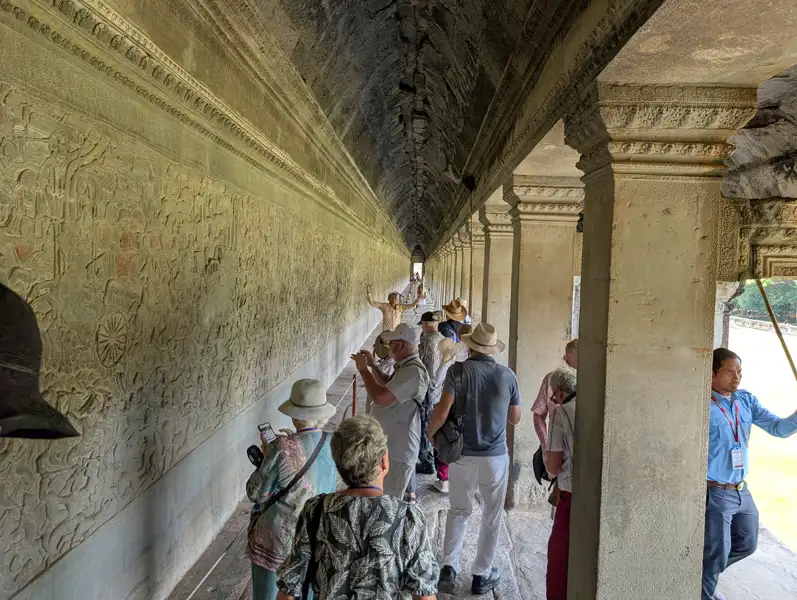
The galleries of Angkor Wat are lined with magnificent relief sculptures, with more than 1,000 square metres of intricately carved sandstone depicting scenes from the great Hindu epics.The craftsmanship is extraordinary, and every panel tells a story. Unfortunately, we didn’t have enough time to study these remarkable carvings in the detail they deserved.
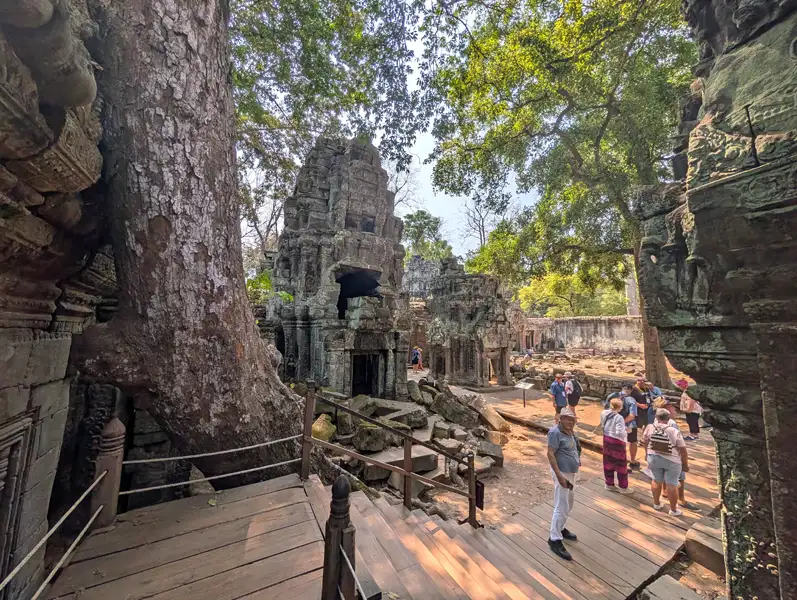
About 3 km from Angkor Wat, we visited Ta Prohm, the famous “Tomb Raider Temple” and a former Buddhist monastery. Unlike many of the restored temples in Angkor, Ta Prohm has been left much as it was discovered, with massive silk-cotton trees and strangler figs growing over and through the ancient stone walls.
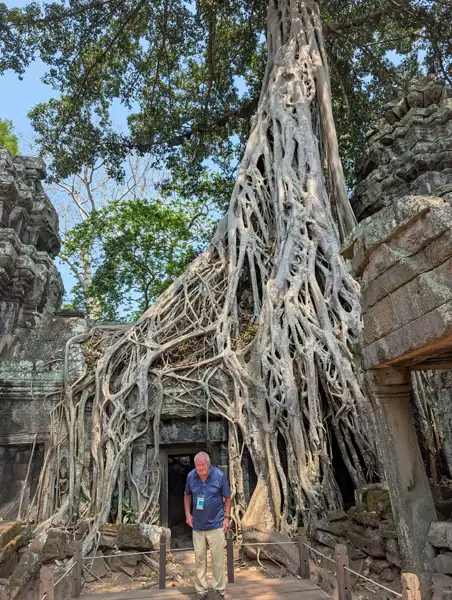
About 3 km from Angkor Wat, we visited Ta Prohm, the famous “Tomb Raider Temple” and a former Buddhist monastery. Unlike many of the restored temples in Angkor, Ta Prohm has been left much as it was discovered, with massive silk-cotton trees and strangler figs growing over and through the ancient stone walls.
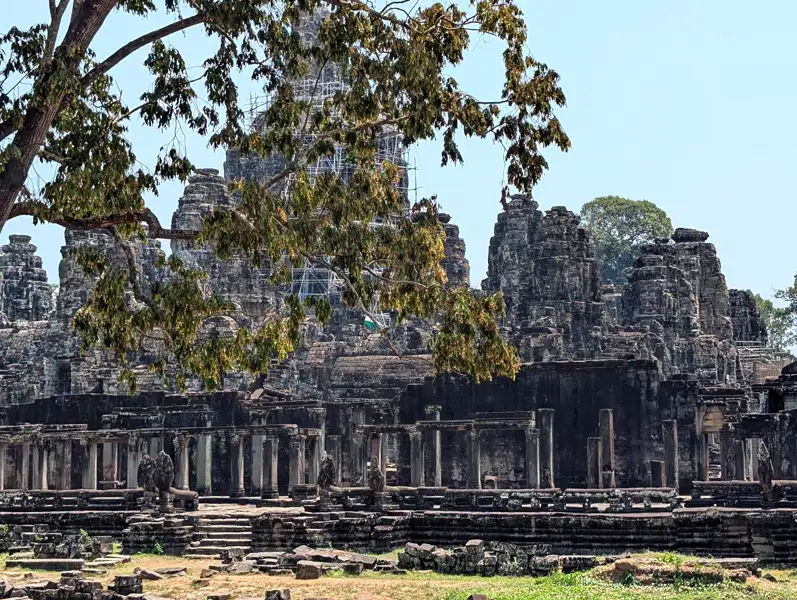
We finished our exploration of Angkor Thom with a visit to the magnificent Bayon Temple. Famous for its 54 towers adorned with more than 200 serene, smiling stone faces, it is one of the most distinctive temples in the Angkor Archaeological Park. Although restoration work was underway in some areas, it did little to diminish the temple’s beauty and grandeur. Bayon was a truly impressive finale to an unforgettable day of exploring Cambodia’s ancient wonders.
Back to table of contents
Siem Reap Excursions and Cultural Experiences
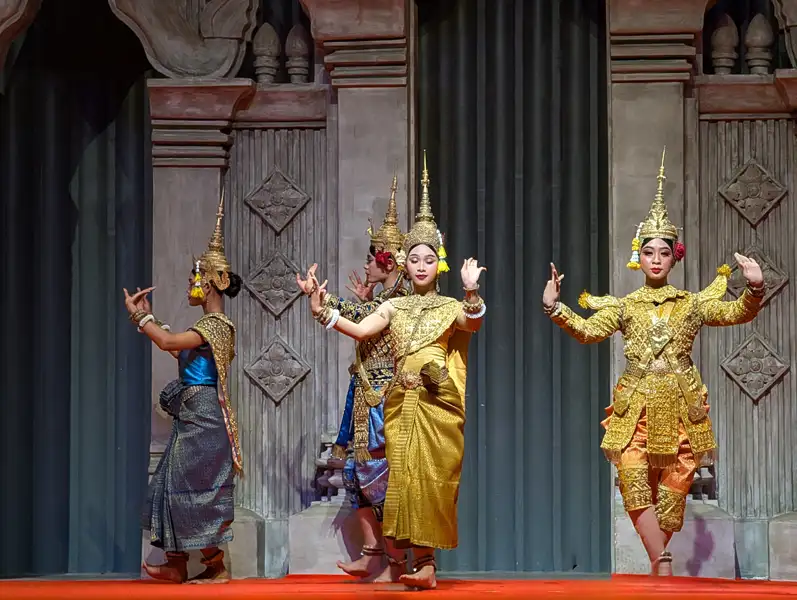
After a wonderful day exploring Angkor Thom and walking around 4–5 km in hot but dry conditions, we returned to our hotel for a well-earned rest and refreshment. At 6 pm, we were driven to a delightful buffet dinner accompanied by a traditional Apsara dance performance. The graceful dancers, elegant costumes, and gentle music made for a memorable evening. I particularly enjoyed the show, as it reminded me of the beautiful performances I had seen at the Royal Ballet Theatre in Luang Prabang, Laos.
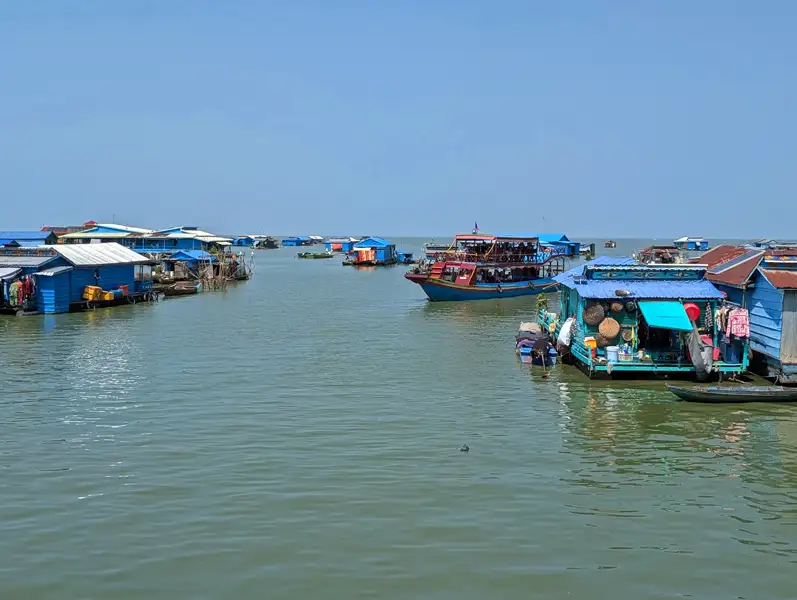
A fantastic excursion was our trip to Tonlé Sap Lake, not far from Siem Reap. Known as the Great Lake, it is the largest freshwater lake in Southeast Asia. During the dry season, it covers about 3,000 square kilometres, but in the wet season it expands dramatically to around 15,000 square kilometres as the Mekong River floods its basin. We visited Chong Kneas, one of the lake’s floating villages, where houses, schools, shops, and even churches rise and fall with the changing water levels, offering a fascinating glimpse into this unique way of life.
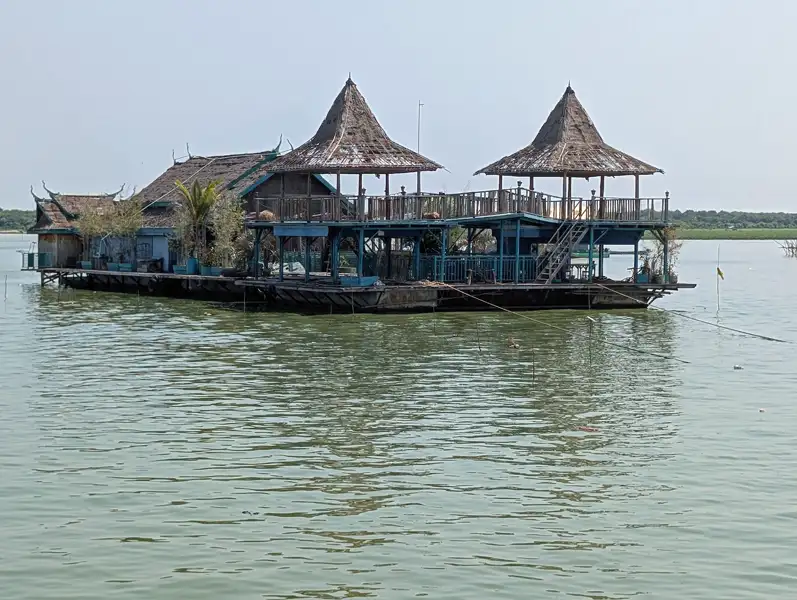
The floating village is largely self-sufficient, with its own grocery stores, restaurants, a bar, a school, and even a church. Everything floats on the water, allowing the community to adapt to the lake’s dramatic seasonal changes. Beneath of the grocery stores and restaurants are cages where crocodiles are raised, providing a local source of meat and supporting the village’s livelihood.
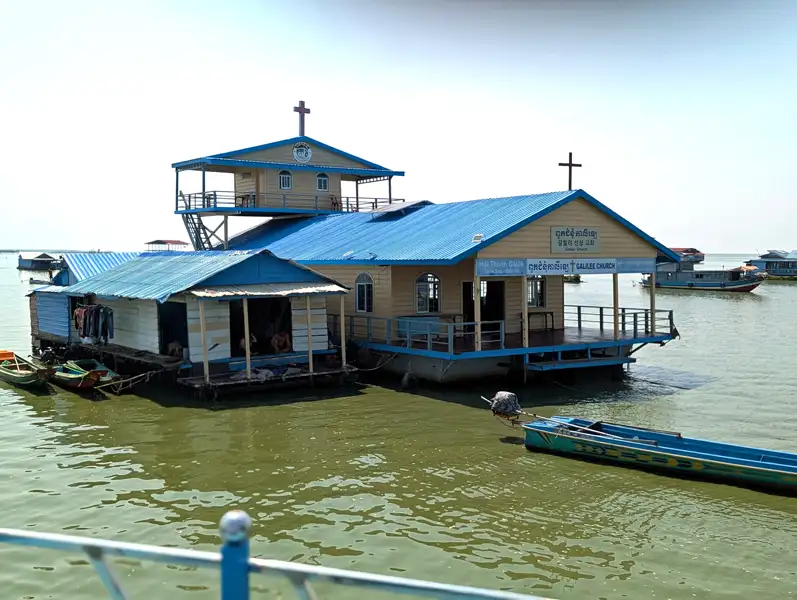
The chuch
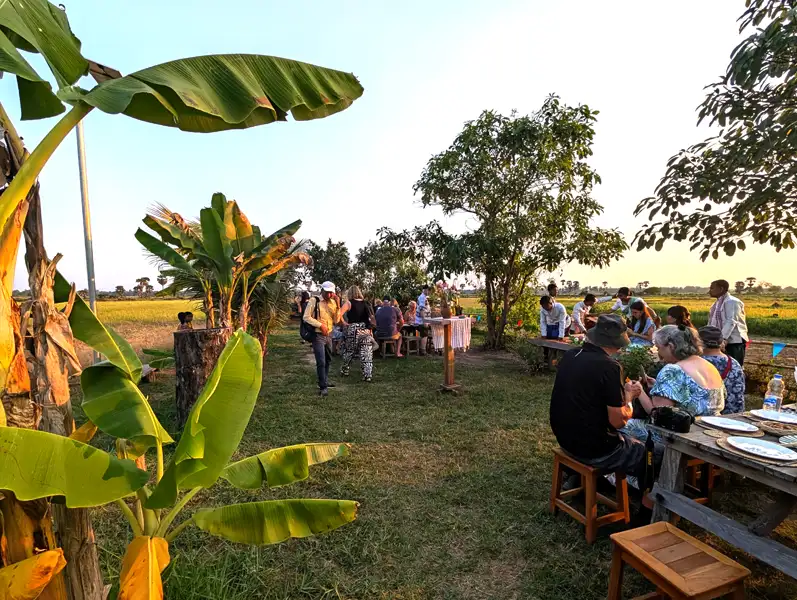
After a short lunch break and a chance to relax, we set off on an afternoon excursion through picturesque rice paddies and rural farming villages. Along the way, we visited local markets and learned how traditional rice noodles, palm sugar, and sticky rice are made using age-old techniques. We ended this fascinating day with cocktails and snacks while watching the sun set over the tranquil rice fields—a perfect way to experience the peaceful Cambodian countryside.
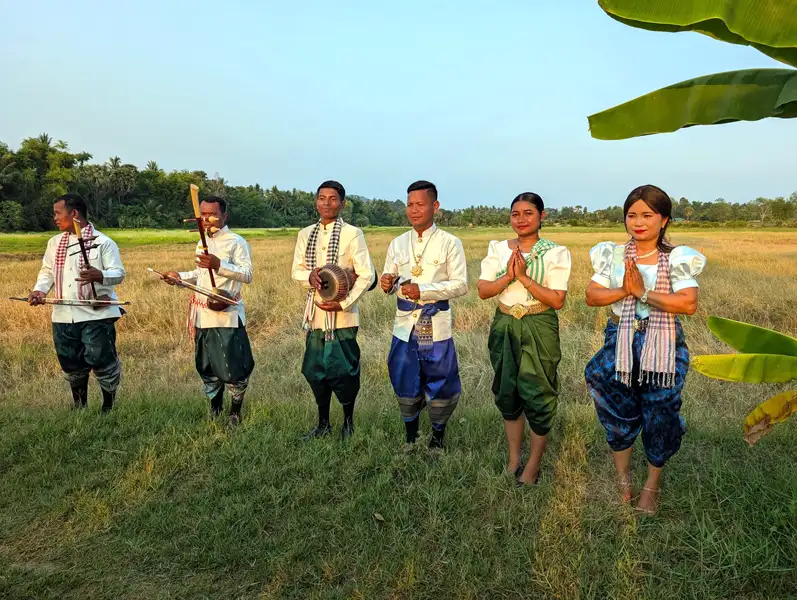
As the sun set over the rice fields, we enjoyed cocktails and delicious snacks while a small band, dressed in colourful traditional costumes, entertained us with local music and songs. Their cheerful performance created a relaxed and authentic atmosphere, providing the perfect ending to a fascinating day exploring the Cambodian countryside.
Back to table of contents
The Mekong River Cruise
Because it was the low-water season, we were unable to board on Tonlé Sap Lake. Instead, we travelled about four hours further downstream to Kampong Cham. It turned out to be a fascinating drive through the Cambodian countryside, as preparations for the Cambodian New Year, known as Khmer New Year, were in full swing.
We saw many vehicles packed with families travelling home for the three-day celebration, held each year from 13 to 16 April. This festive period is also a popular time for weddings, which often last two or three days. As many family homes are not large enough to accommodate all the guests, enormous marquees are erected beside the road or in front of houses. We passed many of these colourful tents, ready to host the celebrations.
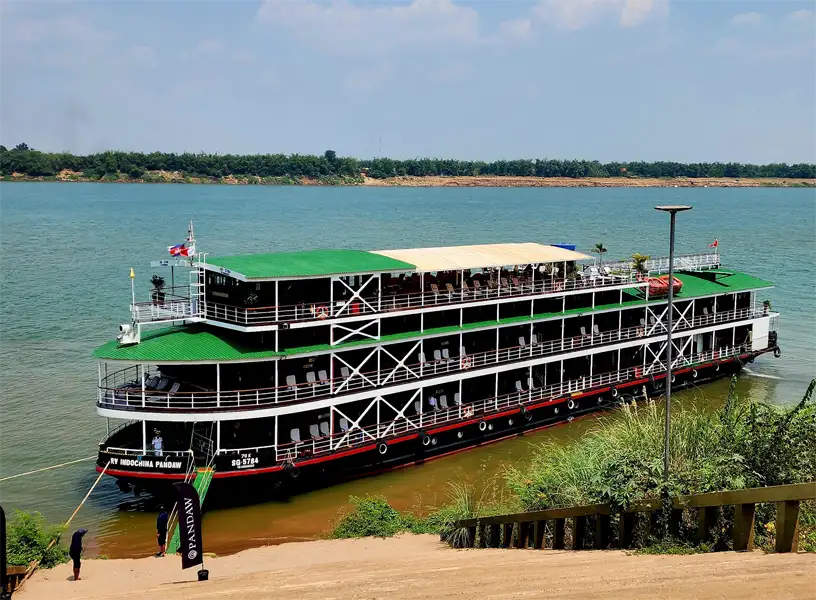
Photo: Judy Crundall
I had never been on a cruise before, apart from the ferry journey from Bellingham to Juneau in Alaska, so I was excited to experience a Mekong River cruise. Our ship, the Pandaw Indochina, was the perfect vessel for exploring the river. At just 52 metres long and 10 metres wide, with only 28 cabins and a crew of 28, it offered an intimate atmosphere and exceptional personal service, making the journey along the Mekong a truly memorable experience.
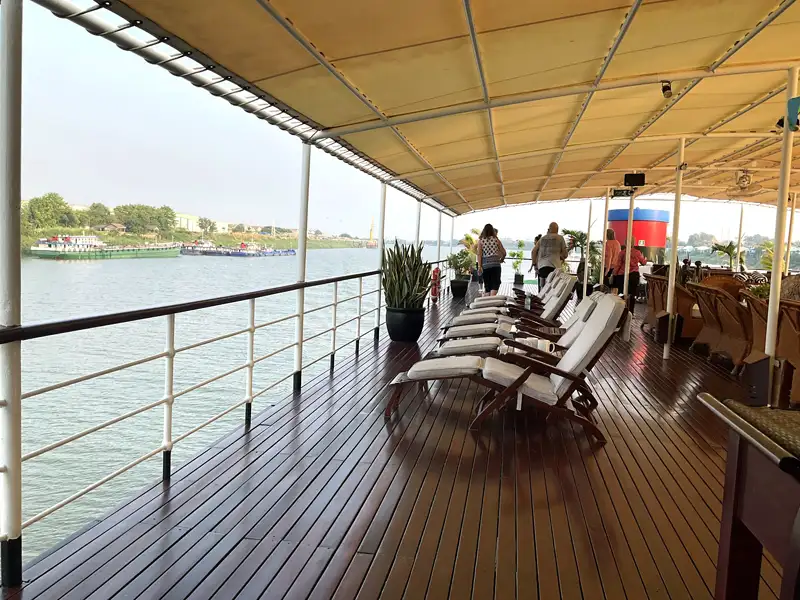
Life on board began early each morning. At 6:30 am, a small group gathered on the upper deck for a Tai Chi lesson,.
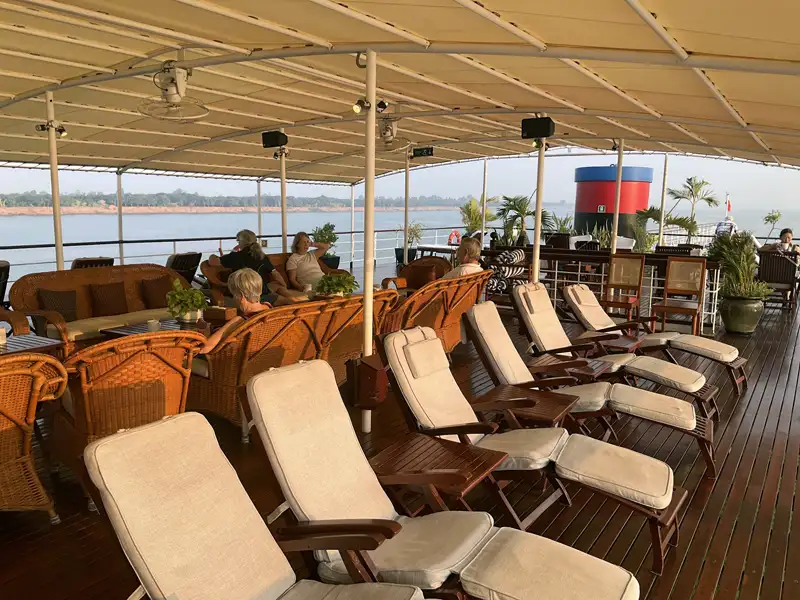
While others enjoyed a cup of coffee and soaked in the peaceful morning scenery as the Pandaw Indochina cruised along the Mekong River. Breakfast was served at 7:30 am, providing a relaxed start to another fascinating day of exploration.
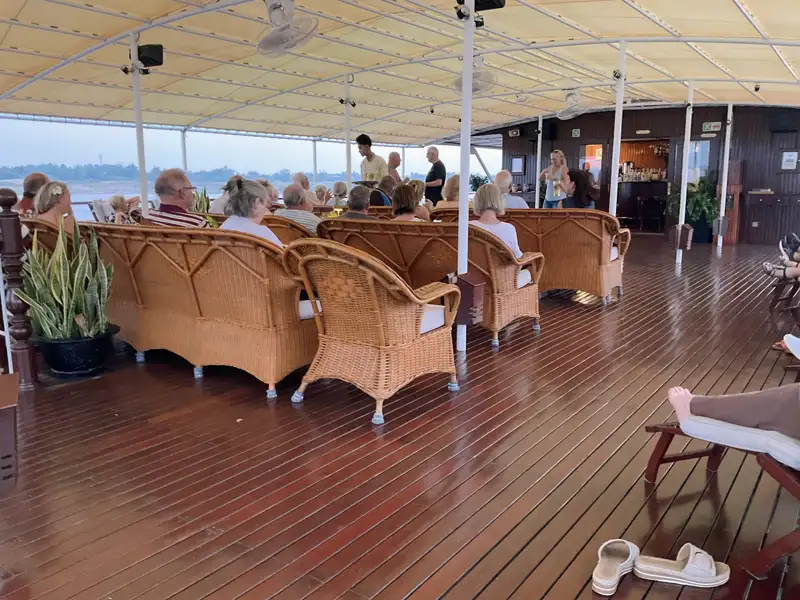
After returning on board from our daily land excursions, I often headed to the inviting bar on the upper deck for a refreshing drink while watching life unfold along the Mekong River. At 6:00 pm, complimentary cocktails were served, giving passengers a wonderful opportunity to relax, chat with fellow travellers, and reflect on the day’s adventures before dinner.
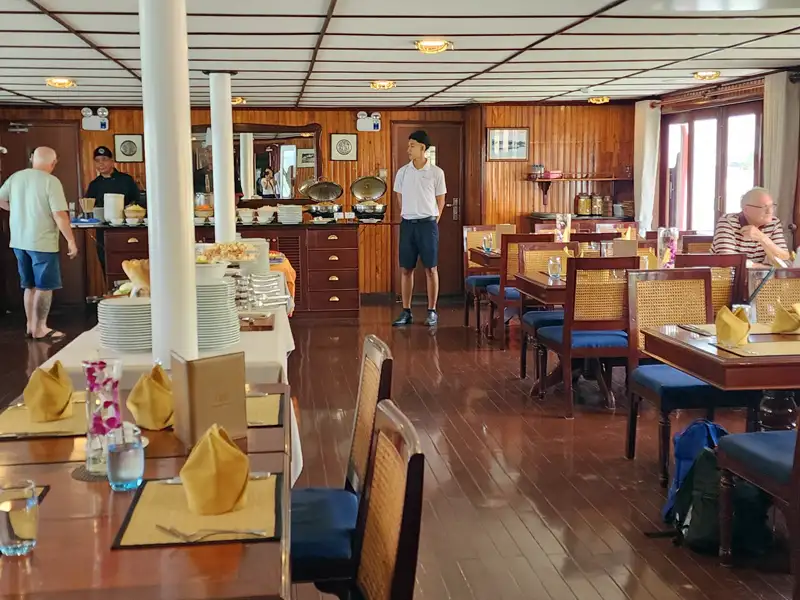
Photo: Judy Crundall
The beautifully crafted dining room aboard our Pandaw river ship became a welcoming gathering place for breakfast, lunch, and dinner each day. Meals were consistently excellent, with breakfast offering an impressive selection of Western and Asian favourites, including fresh tropical fruit, pastries, cereals, eggs cooked to order, and traditional Vietnamese pho. Lunch and dinner featured a choice of freshly prepared dishes, blending local flavours with international cuisine. Complimentary wine and beer were included with both lunch and dinner, adding to the relaxed and friendly atmosphere that made dining one of the highlights of our Pandaw Mekong River cruise.
View from the bow of the Pandaw Indochina as it cruised along the mighty Mekong River.
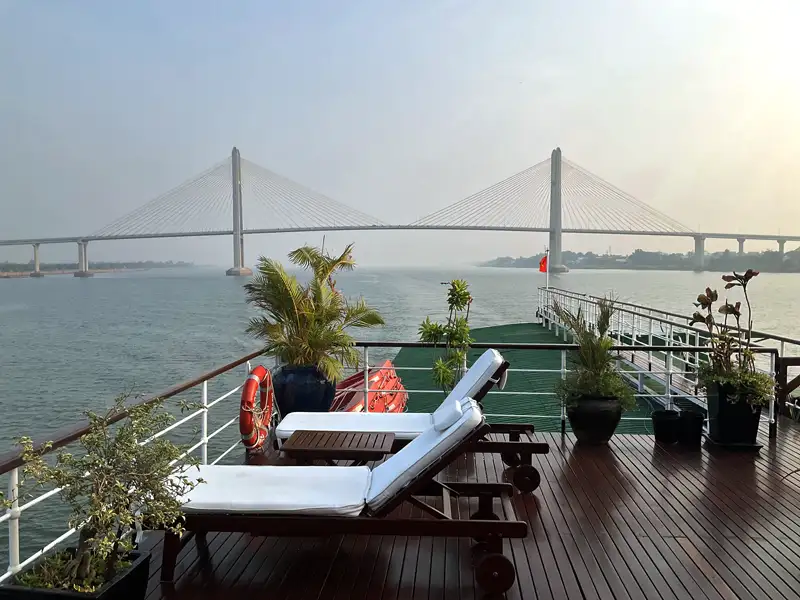
As we cruised through Vietnam towards Ho Chi Minh City, the Mekong River widened, and we passed beneath several elegant, wide-span bridges. Their graceful modern design contrasted beautifully with the timeless rural landscapes and traditional river life along the banks, marking our gradual approach to the bustling city.
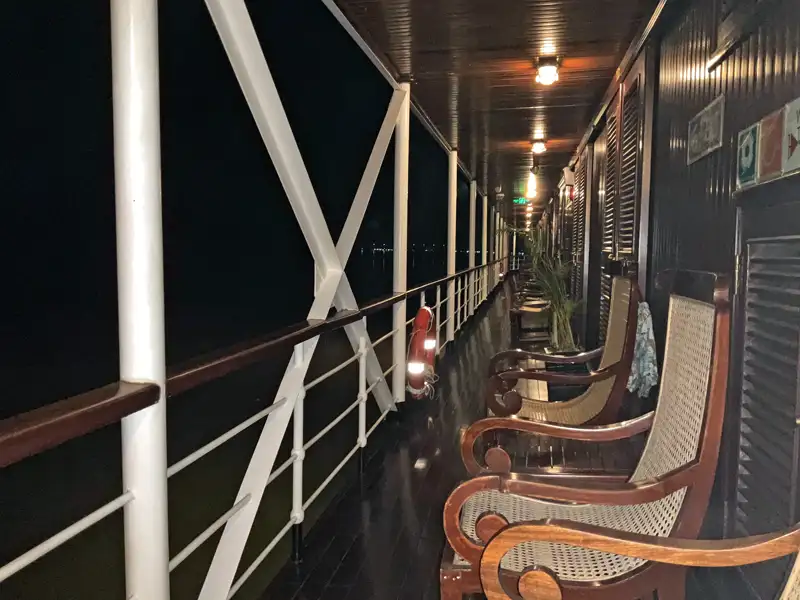
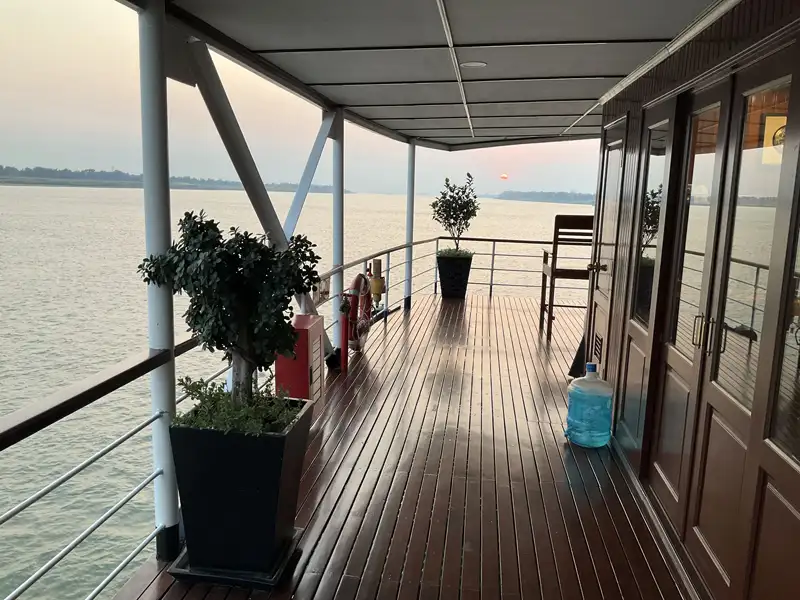
The narrow gangway outside our cabin became one of my favourite places on the ship. In the evenings, I enjoyed sitting there, listening to the gentle lapping of the water against the hull as the Pandaw Indochina glided along the Mekong. One word of advice—don’t drop anything, because it will almost certainly end up in the river!
I learned that lesson the hard way. Shortly after settling into my cabin, I was on my way to the upper deck for the complimentary cocktail hour. As I locked the cabin door, my mobile phone slipped from my hand, bounced once on the gangway, and disappeared straight into the Mekong River. My cruise had barely begun, and I was already without a phone!
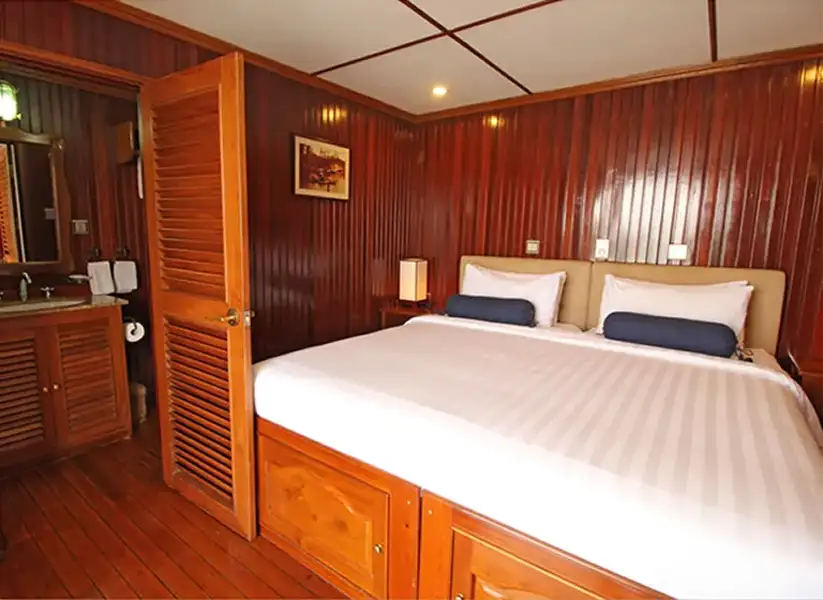
The cabins were compact but thoughtfully designed, with a very comfortable bed, effective air conditioning, and a small but functional ensuite bathroom. They were surprisingly quiet, with no disturbing noise from outside, ensuring a restful night’s sleep.
There was plenty of space elsewhere on board to relax. Whether you wanted to sit on the upper deck and watch the scenery drift by, enjoy a drink in the bar, or find a quiet corner to read a book, the Pandaw Indochina offered a peaceful and comfortable atmosphere throughout the cruise.
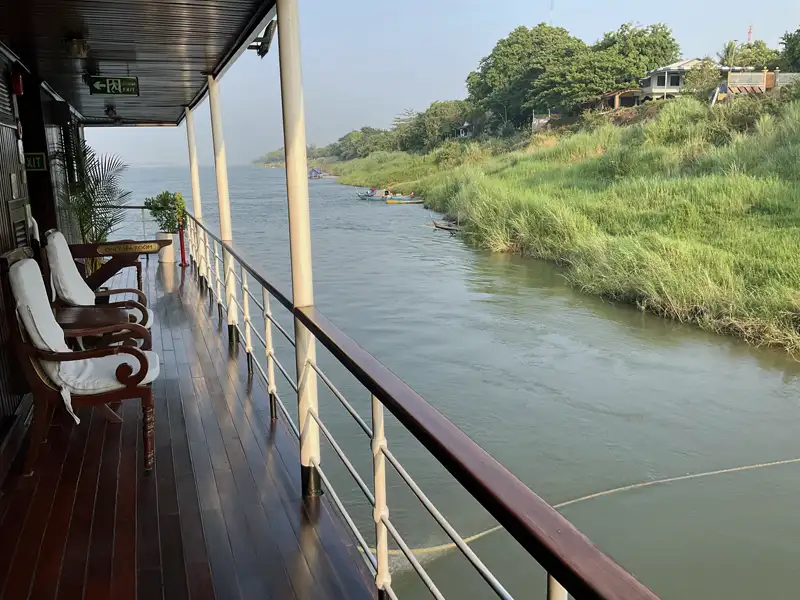
We usually moored overnight beside one of the small villages along the river. It was incredibly peaceful, and I loved sitting outside in the evening, watching the gentle flow of the Mekong and listening to the sounds of village life. It was the perfect way to unwind after a day of exploring.
Back to table of contents
Along the Mekong River
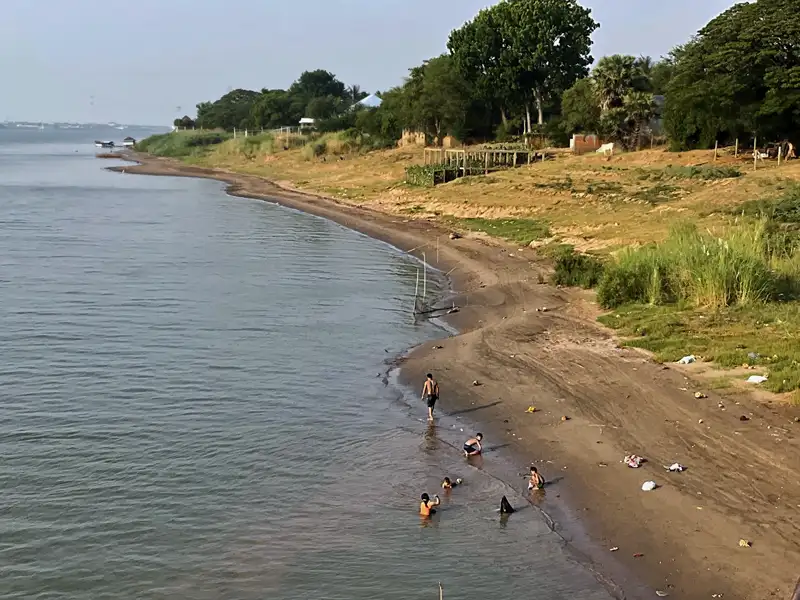
We rarely saw people bathing in the Mekong River. One memorable scene was on the Cambodian side, where a family and their children were enjoying a swim from a sandy beach. Their laughter and carefree fun added a warm, human touch to the peaceful riverside landscape.
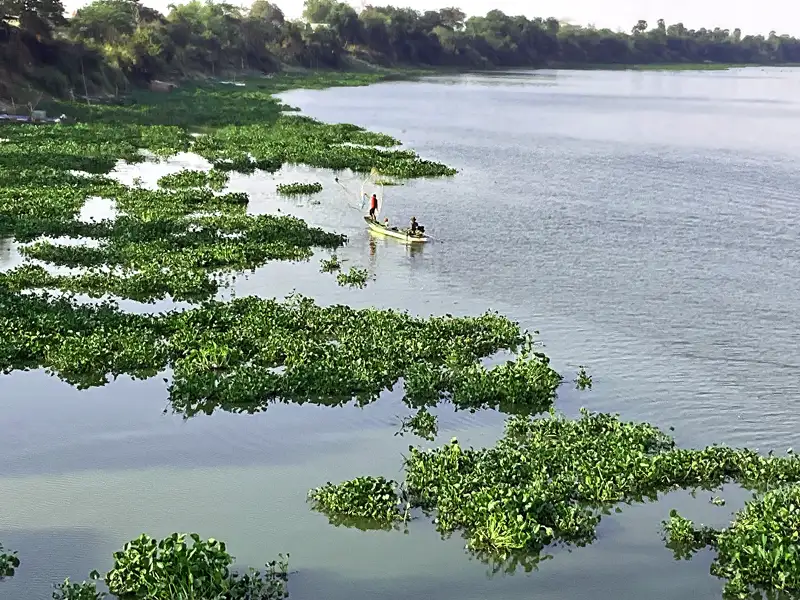
Throughout our journey along the Mekong River, we saw vast mats of floating green Water Hyacinth. Native to South America, this fast-growing plant was introduced to Southeast Asia in the 19th century and has since become an invasive species, often clogging waterways and affecting local ecosystems.
Rather than simply viewing it as a nuisance, many local communities have found a practical use for the plant. After harvesting and drying the long stems, skilled artisans weave them into attractive baskets, rugs, handbags and other household items, transforming an environmental problem into a sustainable source of income. We also saw many traditional fishing methods, particularly on the Cambodian side of the river. Local fishermen used simple rods and cast large nets with remarkable skill.
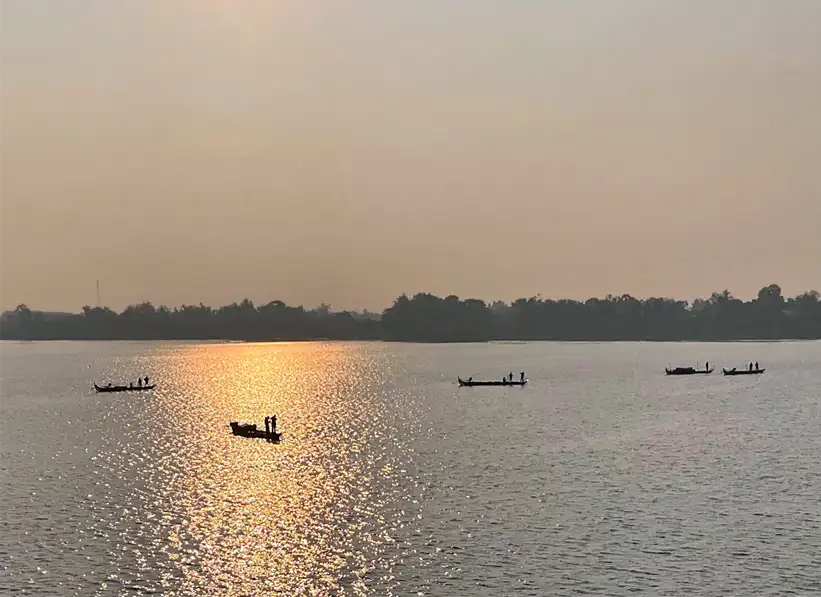
Fishermen in their small wooden boats at sunset created one of the most peaceful scenes on the Mekong River. As the sun dipped below the horizon, the calm water reflected the golden light, bringing another memorable day on the river to a tranquil close.
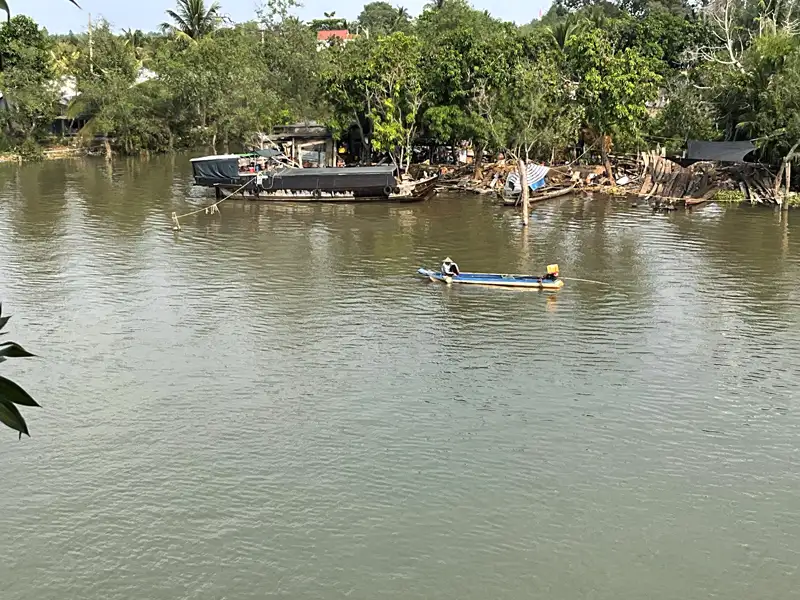
On our cruise, we passed many small villages along the Mekong River. The river is the lifeblood of these communities, providing water, fish and fertile land for growing crops, while serving as an important transport route for people and goods.
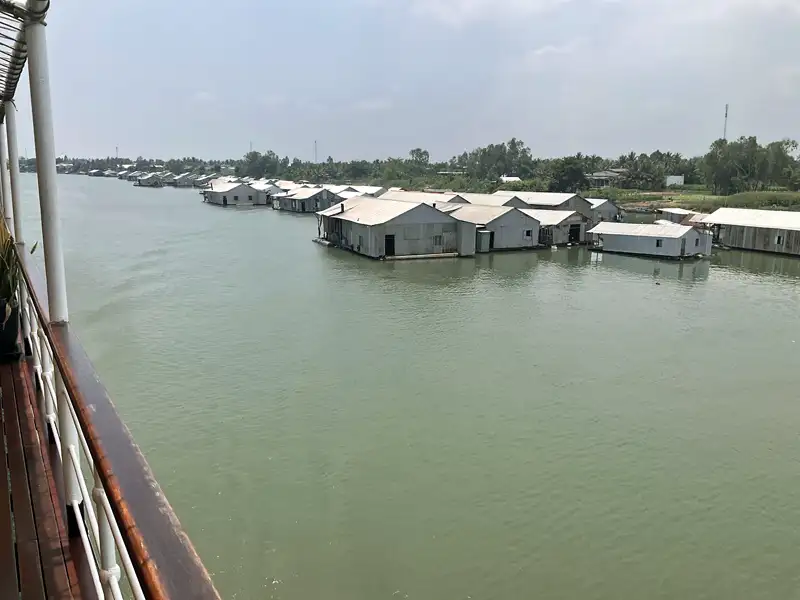
Another important industry we observed along the Mekong River, from Siem Reap to Ho Chi Minh City, was fish farming. We passed numerous earthen fish ponds and floating fish cages, many built beneath or alongside houseboats. Aquaculture plays a vital role in the local economy, providing food and income for thousands of families.
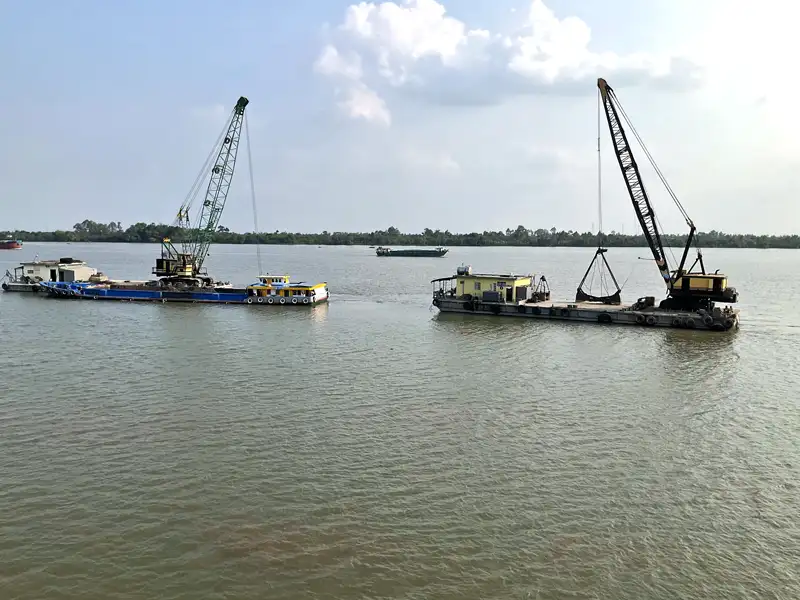
During our Mekong River cruise, I saw hundreds of barges fitted with cranes extracting sand from the riverbed. At first, I assumed they were dredging the river to keep the shipping channel deep enough during the low-water season. When I returned home, I did some research and discovered I was completely wrong. These vessels were engaged in large-scale sand mining. With the construction boom across Southeast Asia, the demand for sand has grown enormously, and Vietnam now imports increasing quantities of river sand from neighbouring Cambodia to help meet that demand.
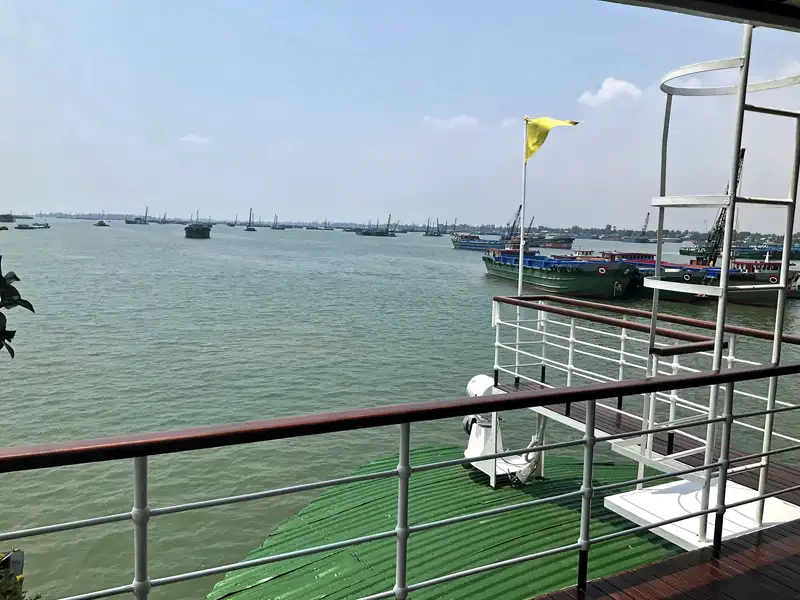
The scale of sand mining on the Mekong River is alarming. Driven by the huge demand for concrete used in buildings, roads and highways, millions of tonnes of sand are removed from the river each year. This has caused the riverbed to sink, leading to severe erosion and collapsing riverbanks that destroy homes and farmland. As the river becomes deeper, seawater can penetrate further inland during the dry season, contaminating drinking water supplies and damaging agriculture and aquaculture. With many of Vietnam’s own sand reserves becoming depleted, the country increasingly relies on imports from neighbouring Cambodia, where similar environmental concerns are now emerging.
Back to table of contents
Life and Entertainmend on Board
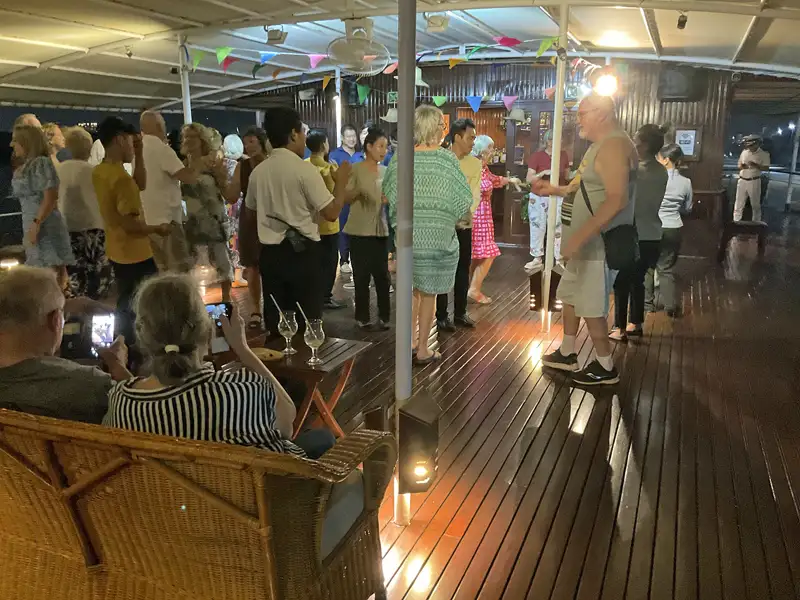
Nearly every evening, some form of entertainment was offered on board. This included an Asian cooking class, performances by a local music band, and a presentation of traditional Cambodian fashion.
The highlight for me was the farewell dance party, where passengers and crew members came together on the upper deck. It was a fun and relaxed evening filled with music, dancing, and laughter—a wonderful way to celebrate our memorable journey along the Mekong River.
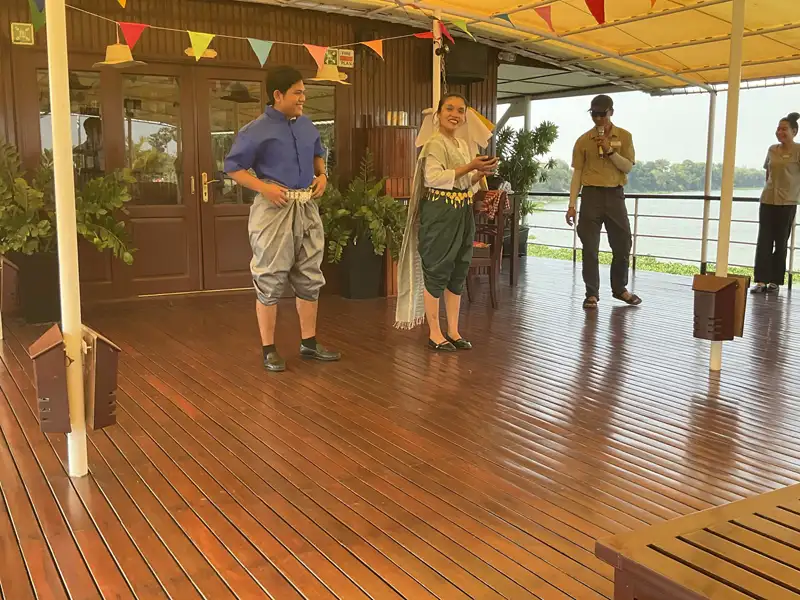
Traditional Cambodian fashion show
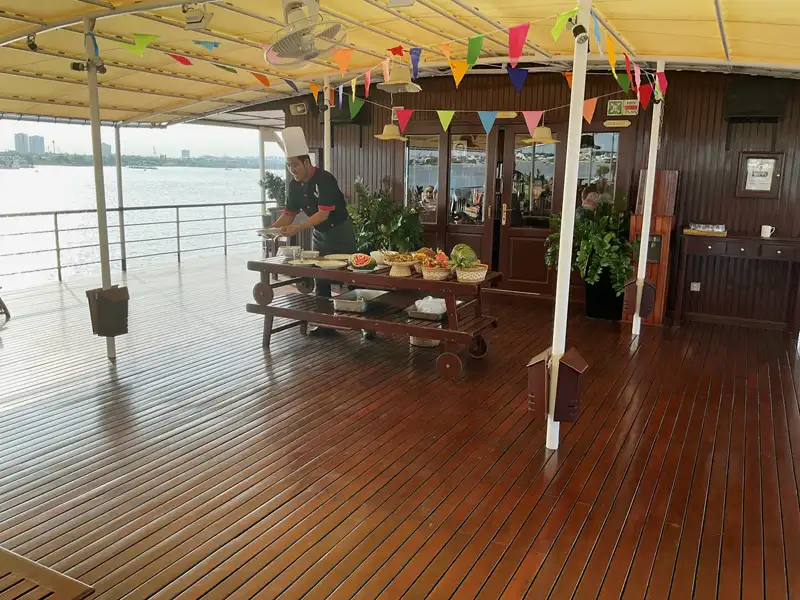
Asian cooking demostration
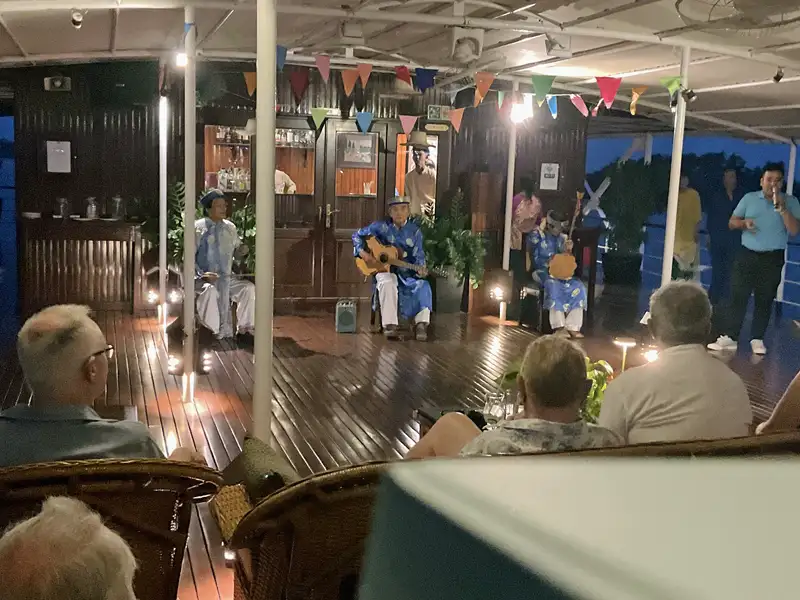
Local music band
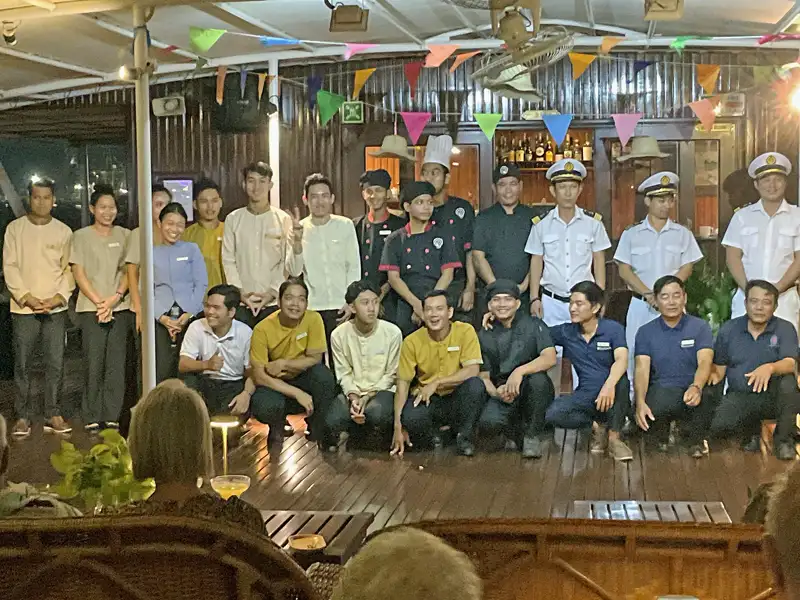
The crew
Cambodian Villages and Local Workshops
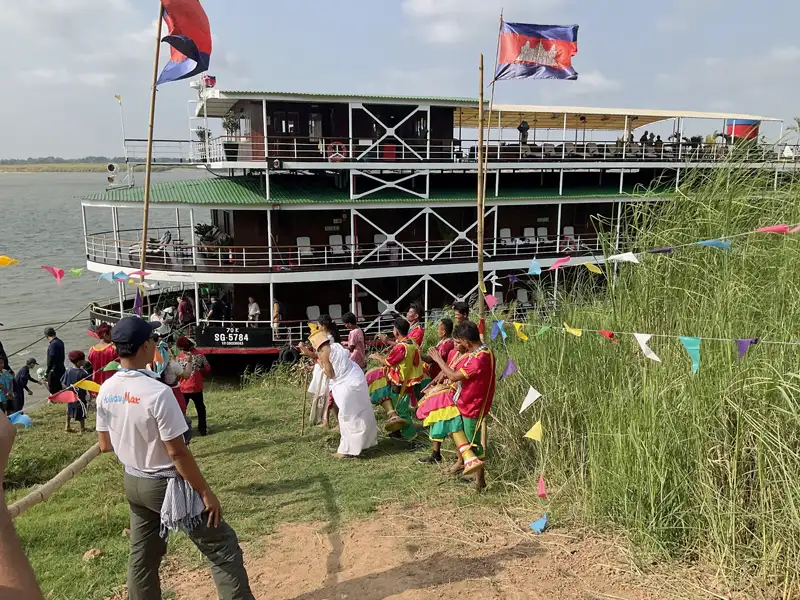
On the morning of Khmer New Year, we were welcomed by a lively group of local villagers dressed in elaborate traditional costumes. Accompanied by the rhythmic beat of drums, and with some performers wearing colourful face masks, they led us from the ship into the village.
I was quite surprised by the spectacle, as it reminded me of the Fasnacht celebrations I had experienced in southern Germany and in Basel, Switzerland. Although the traditions are different, the colourful costumes, masks, and festive atmosphere made the scenes feel remarkably familiar.
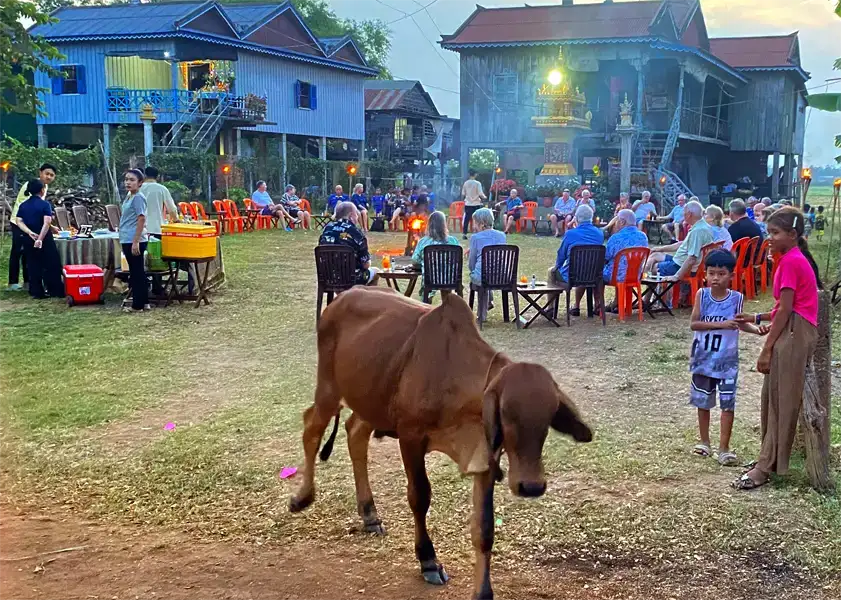
The crew were wonderful, carrying everything needed for the dance party from the ship up to the village. It was, without doubt, the highlight of the cruise for me.
As the evening unfolded, local villagers and children joined us on the dance floor, creating a truly unforgettable celebration. Laughter, music, and dancing brought everyone together, regardless of language or nationality. Even a curious young calf wandered over and seemed keen to join in, adding another memorable moment to a magical evening.
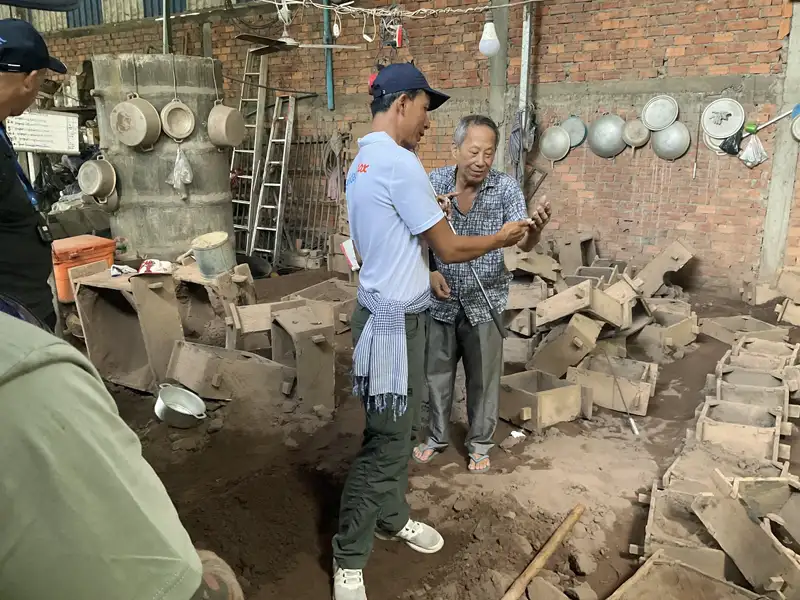
The next day, we visited a small family-run metal workshop that produced pots, pans, and a variety of household items from recycled scrap metal. The business began after decades of conflict had left Cambodia littered with discarded bomb casings, rockets, artillery shells, and other military debris. Rather than letting the metal go to waste, local craftsmen found an ingenious way to recycle it into useful everyday products.
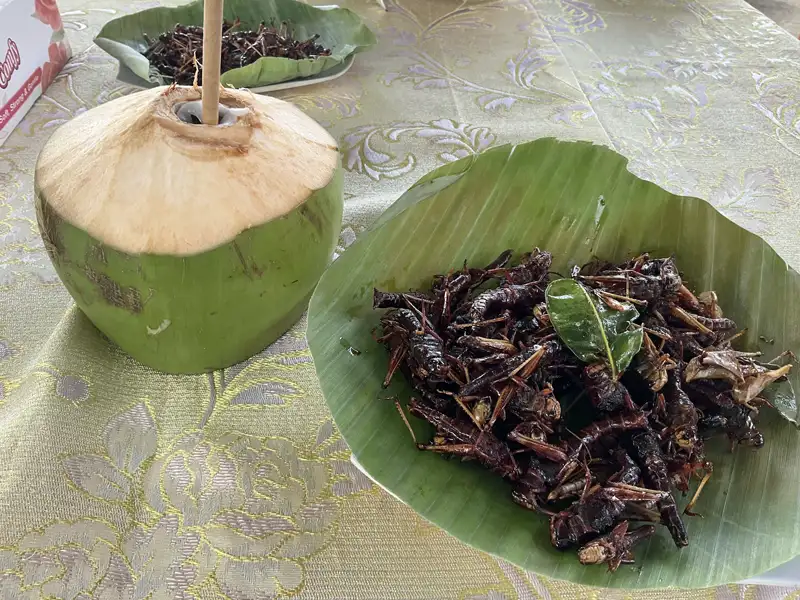
Next, we visited a cricket farm, where we had the opportunity to taste a grilled cricket. Most of my fellow travellers were trying one for the first time, but I had already sampled them during a hiking trip in the highlands near Luang Prabang, Laos.
I have to admit I preferred the ones in Laos. They were smaller, crispier, and, in my opinion, tasted better than the larger crickets served here in Cambodia.
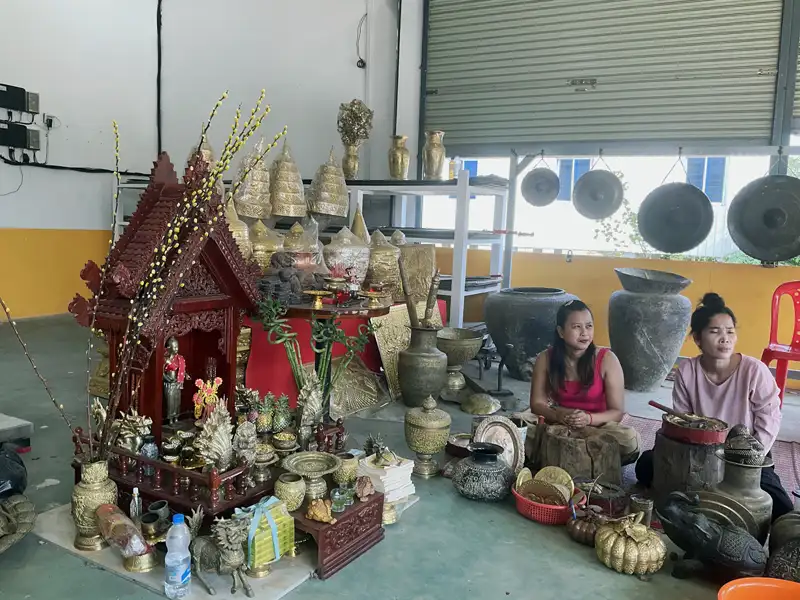
We stopped at Koh Chen, a small village about 35 kilometres upstream from Phnom Penh, renowned for its skilled silversmiths. It was fascinating to watch beautiful silver bowls, plates, and intricate animal figurines being handcrafted in family-run workshops using traditional techniques passed down through generations.
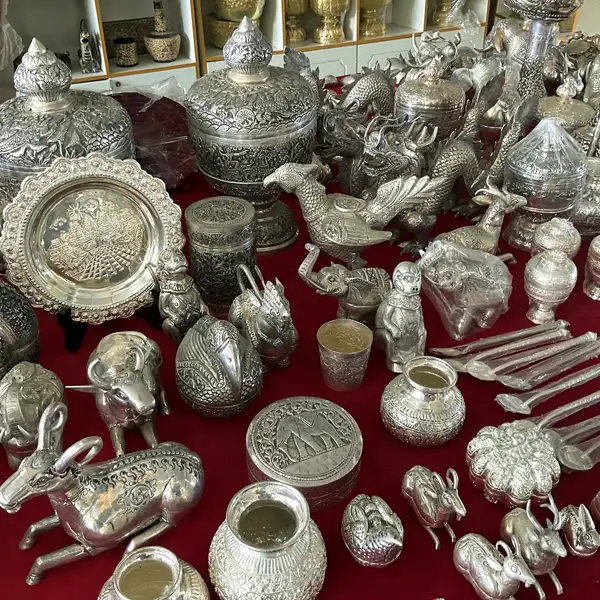
As we left the Silversmith Village, I had the impression that our visit had been appreciated. Many of the women smiled and waved goodbye, while I noticed only a few of the men doing the same. It was a warm and friendly farewell that left a lasting impression.
Back to table of contents
Phnom Penh – Royal Palace and Buddhist Centre
The ship spends two nights in Phnom Penh, giving time to properly explore Cambodia’s capital. Visit the gleaming Royal Palace, still the official residence of the King of Cambodia, and pay respects at the Killing Fields, a sobering and important stop for understanding Cambodia’s recent history.
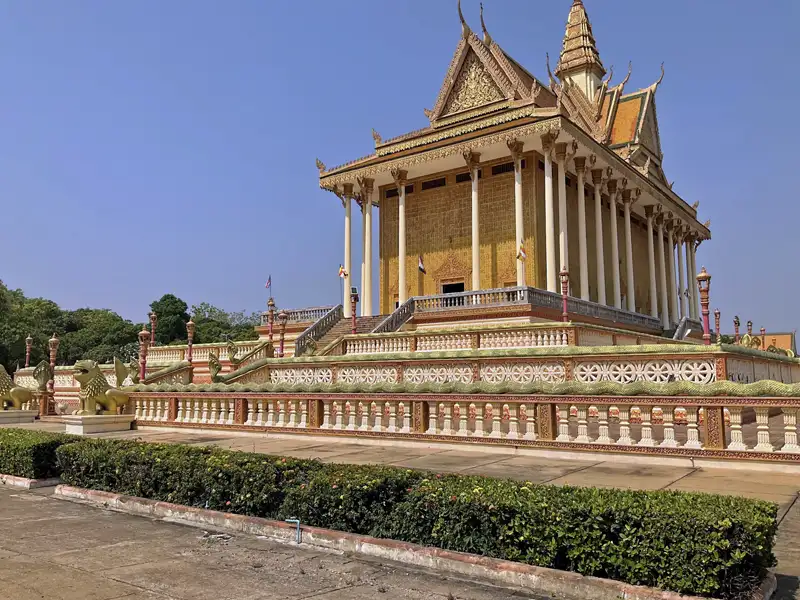
While moored in Phnom Penh, we visited the Vipassana Dhura Buddhist Centre, a peaceful retreat renowned for its beautiful Khmer-style architecture and tranquil gardens. The serene surroundings provided a welcome contrast to the bustling streets of Cambodia’s capital and offered a glimpse into the country’s rich Buddhist traditions.
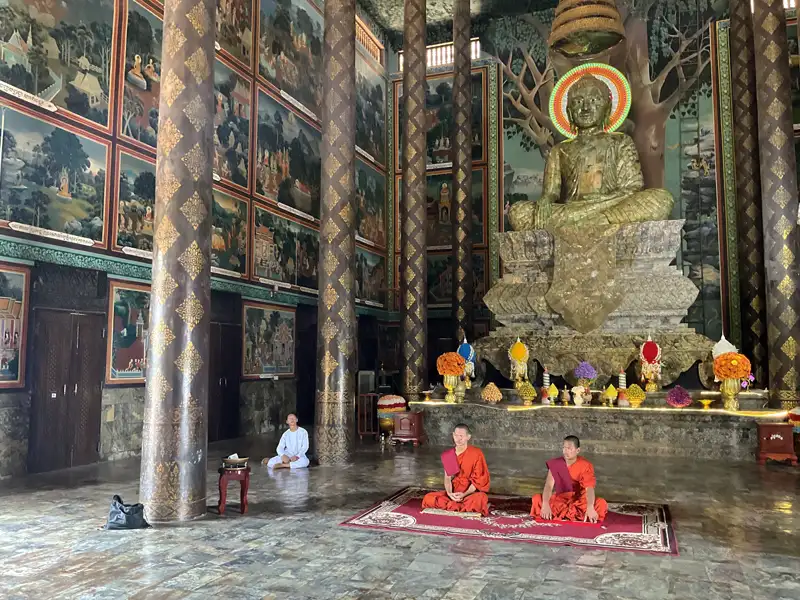
We quietly entered the richly decorated main temple during a meditation session. The silence, combined with the beautiful surroundings and the devotion of those meditating, created a very special feeling. The peaceful atmosphere made it one of the most memorable moments of our visit.
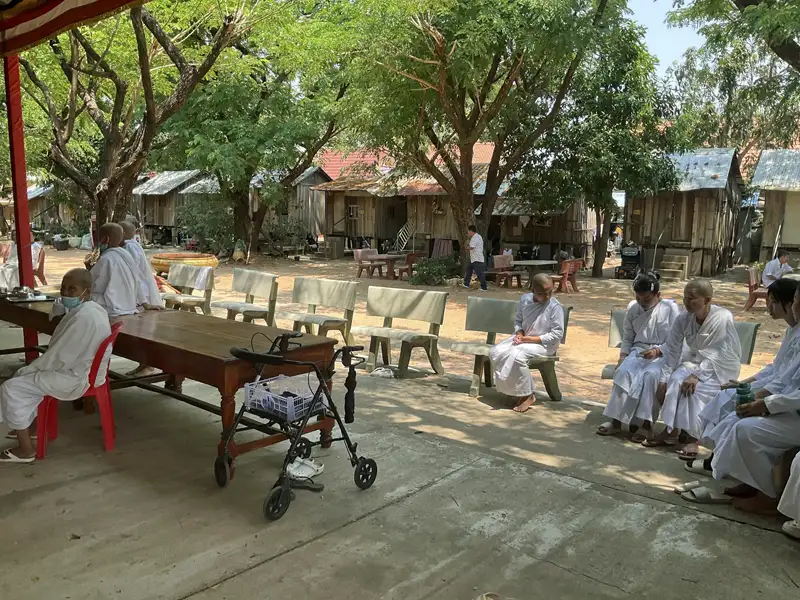
The centre includes living quarters for monks and nuns, as well as a nursing home and basic health care facilities. In the background are the simple wooden huts that provide accommodation for the nuns.
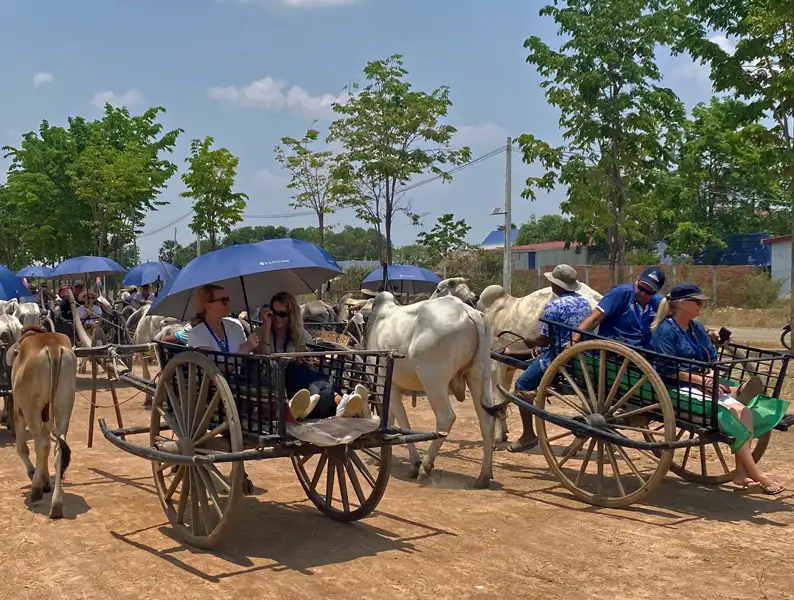
The tour company, Travel-Max, organised the transportation exceptionally well, making every part of the journey an experience in itself. During the trip we travelled by coach, motorboat, traditional rowing boat, rickshaw and tuk-tuk. One of the more unusual highlights was the opportunity to choose an ox cart for part of the journey, providing a slow but authentic glimpse into rural Cambodian life.
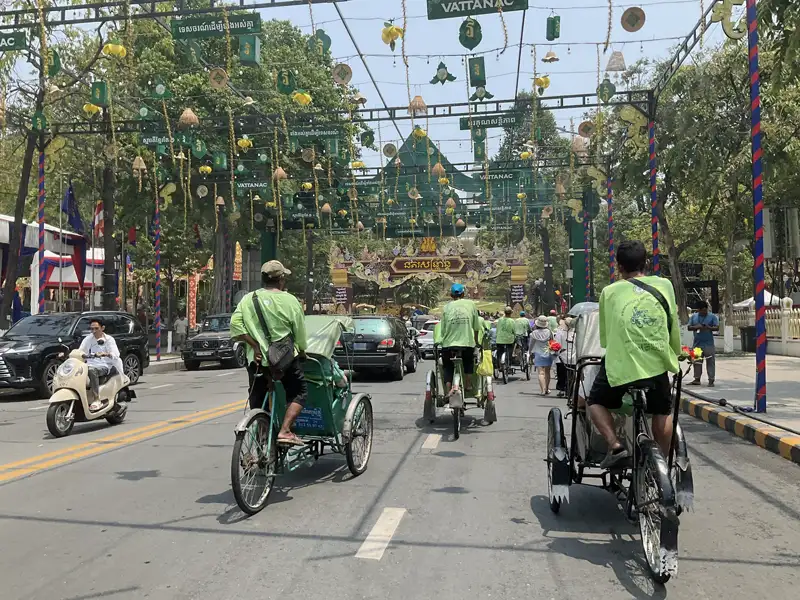
Our transport from the cruise ship to the Royal Palace in Phnom Penh was by rickshaw. I must admit I felt a little guilty sitting comfortably while the driver worked hard pedalling through the busy streets in the intense heat. Most of the drivers were no longer young, which made me appreciate their effort even more. I tried to compensate with a generous tip. Although it was only a modest amount by Australian standards, it was warmly received and hopefully made a small difference to the driver.
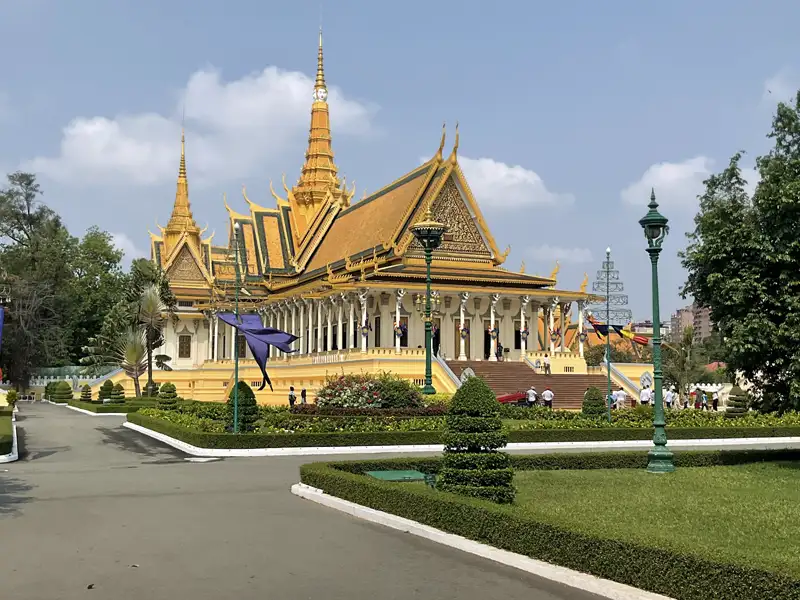
We visited the magnificent Royal Palace in Phnom Penh, the official residence of the King of Cambodia and one of the country’s most important landmarks. The beautifully maintained palace complex features classic Khmer architecture with gleaming golden roofs and ornate decorations. Inside the Exhibition Halls, we admired royal treasures, including ceremonial gold vessels, gilded presentation urns, ornate lidded boxes, traditional royal uniforms and other priceless artefacts.
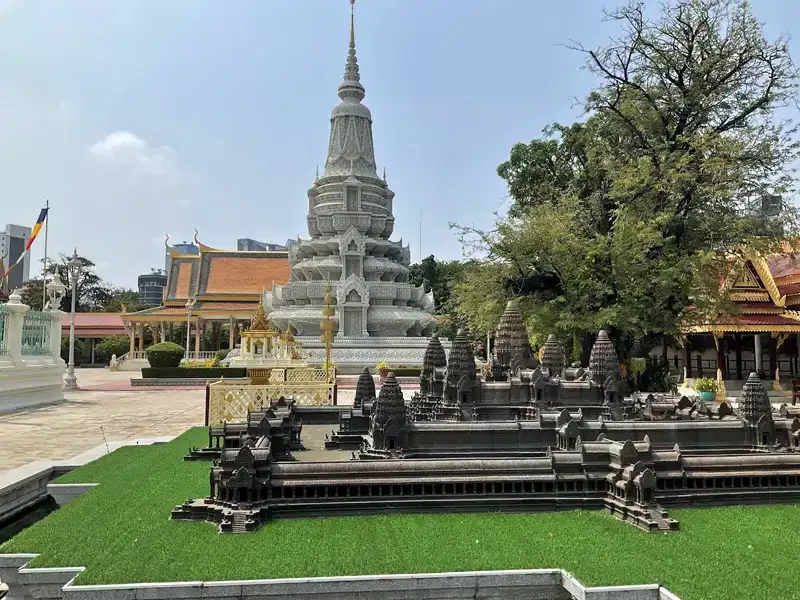
We also visited the elegant Napoleon III Pavilion, a remarkable iron building gifted by the French Emperor, and the nearby royal stupa, which honours members of the Cambodian royal family.
Back to table of contents
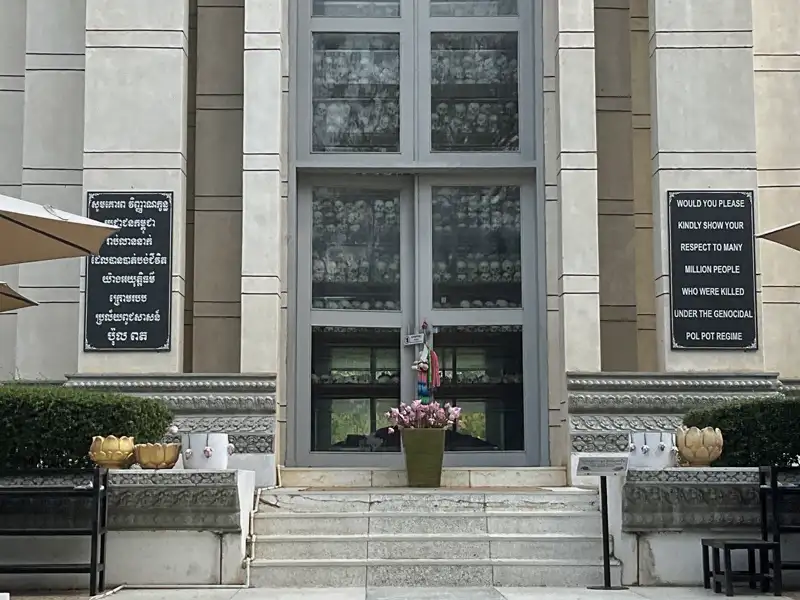
For any visit to Cambodia, I believe a visit to the Killing Fields and the Genocide Museum and Memorial Centre is essential. It is a deeply moving and confronting experience that reveals just how cruel human beings can be to one another. After returning home, I read more about the Khmer Rouge regime to better understand how such horrific events could have happened.
Shore Excursions in the Mekong Delta
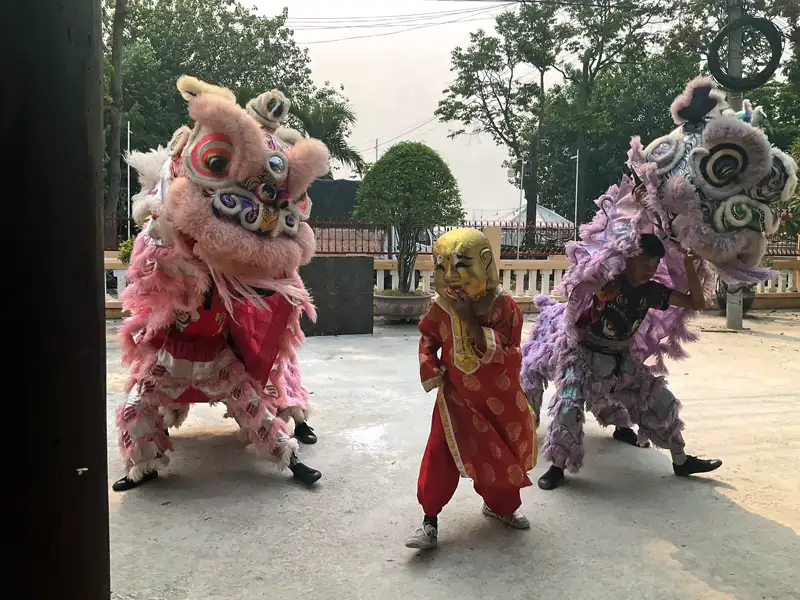
On the way to Hang Pagoda, we stopped in a small village where we were warmly welcomed by a lively lion dance performance. The colourful costumes, rhythmic drumbeats, and energetic acrobatic movements created a festive atmosphere and provided a wonderful glimpse into the local culture.
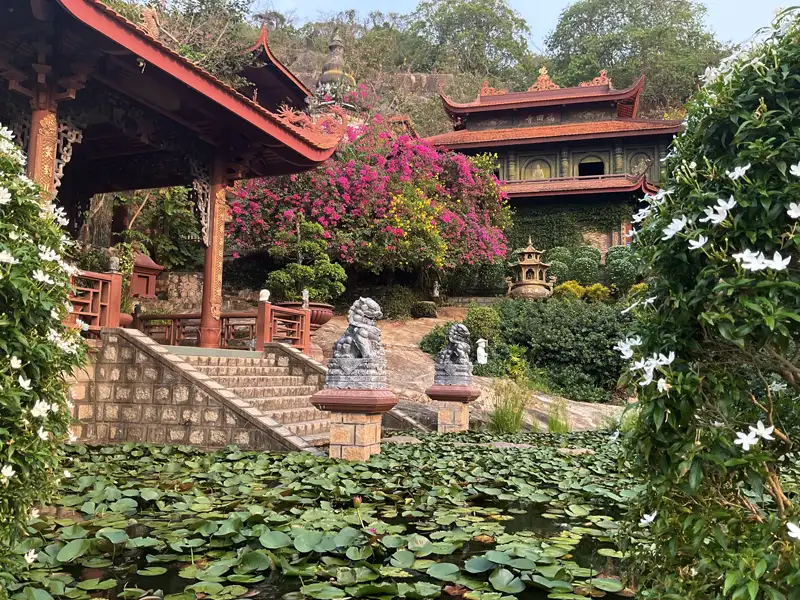
We . Surrounded by lush greenery and dramatic rock formations, the peaceful setting makes it one of the region’s most picturesque spiritual sites. The climb to the pagoda rewards visitors with beautiful views and a tranquil atmosphere. However, if you are a little older like me, the many steep steps can be quite challenging. There are no handrails along most of the climb and very few places to stop and rest, so taking your time is essential. Reaching the top, though, is well worth the effort.
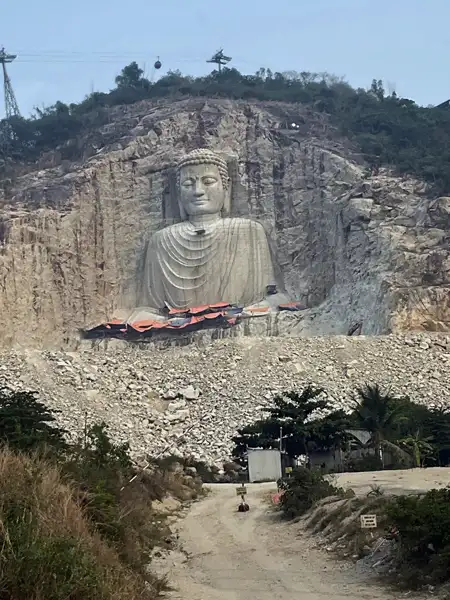
Another remarkable attraction on Sam Mountain is the Shakyamuni Buddha statue, an impressive 81-metre-high image carved directly into the mountainside. Towering above the surrounding landscape, this monumental sculpture is a striking symbol of Buddhism and a popular pilgrimage site, offering visitors a memorable sight and a peaceful atmosphere.
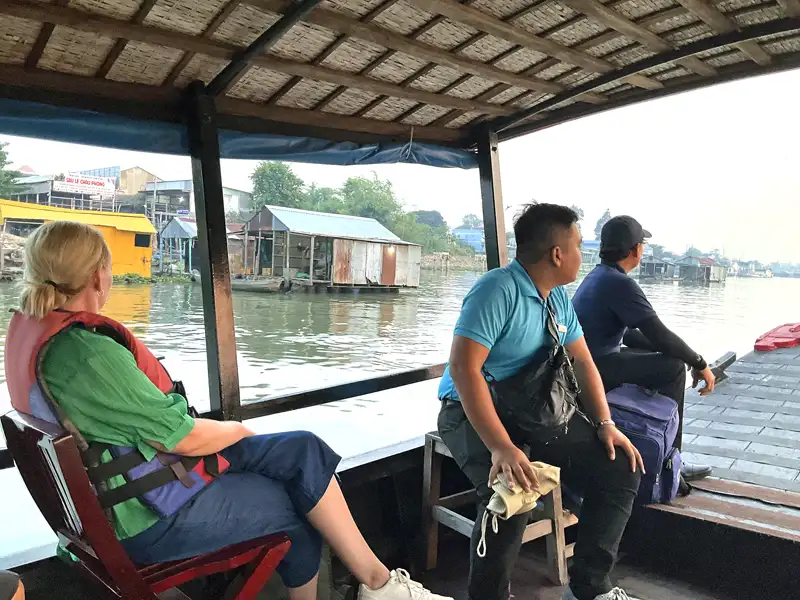
The daily excursions were thoughtfully planned and well organised, making each day both interesting and enjoyable. One memorable example began when we left our cruise ship and boarded a small motorboat to cross the Mekong River. We then continued along a narrow stream to a small family-run workshop, where we watched locals produce traditional coconut candies
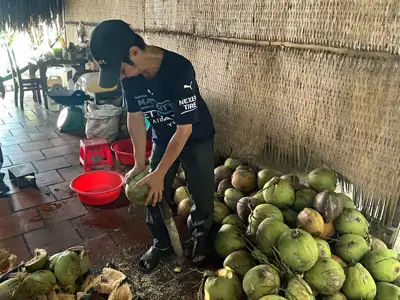
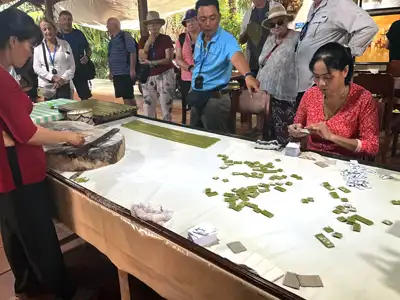
At the small family-run workshop, we watched the traditional process of making kẹo dừa (Vietnamese coconut candy), a famous speciality of Bến Tre Province in the Mekong Delta. The coconuts were split open, and the thick white flesh was grated using a simple rotary machine. Fresh coconut milk was then blended with malt syrup and slowly cooked until it caramelised into a rich, golden mixture. The hot candy was poured into long, narrow moulds, allowed to cool slightly, and then carefully cut into bite-sized pieces. Finally, each piece was wrapped by hand in paper, ready to be sold.
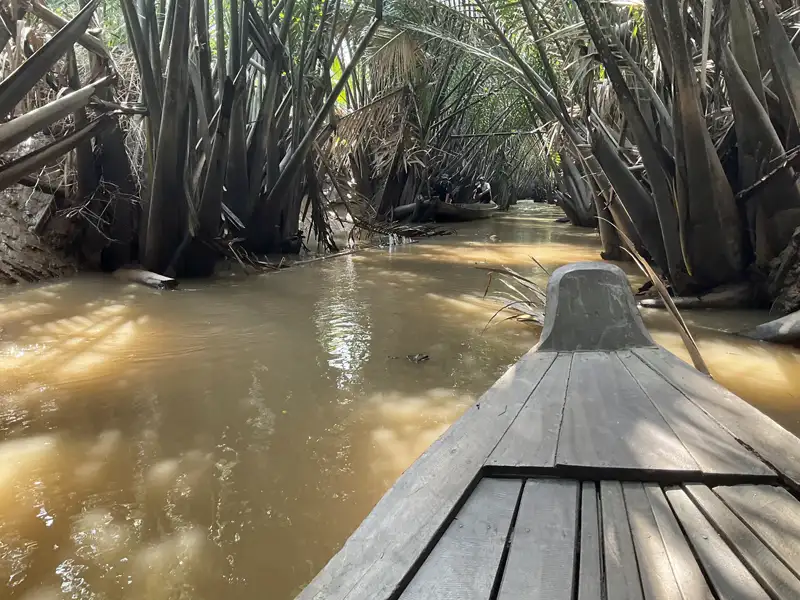
After the candy-making demonstration, the day became even more memorable as we stepped into traditional sampans. Our local rower gently paddled us about a kilometre upstream through narrow, palm-lined canals. Gliding silently through the peaceful waterways of the Mekong Delta was a relaxing and unforgettable experience.
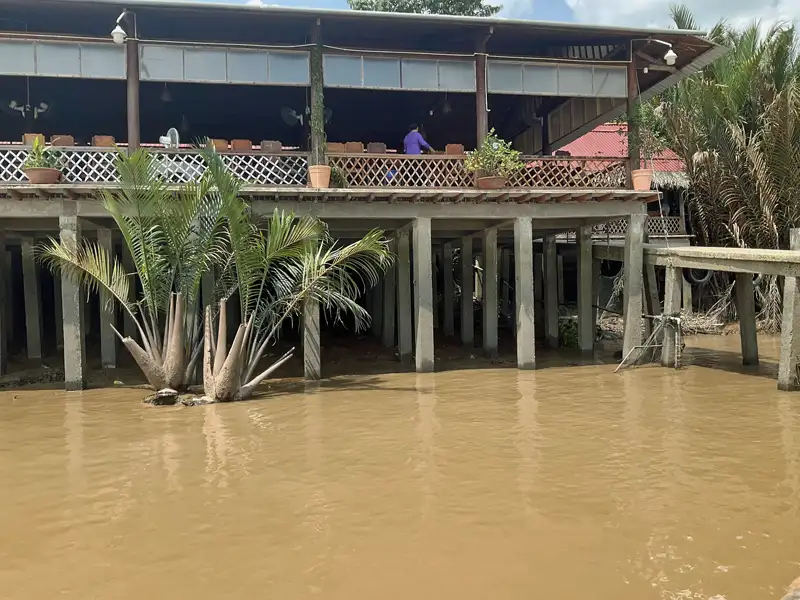
After our peaceful sampan ride, a fleet of tuk-tuks was waiting to take us to a charming restaurant overlooking the mighty Mekong River, where we enjoyed refreshments and had time to relax. From there, a motorboat returned us to our cruise ship. Looking back, it had been a wonderful day, travelling by three very different forms of transport—a motorboat, a traditional sampan, and a tuk-tuk—each adding its own unique flavour to an unforgettable Mekong adventure.
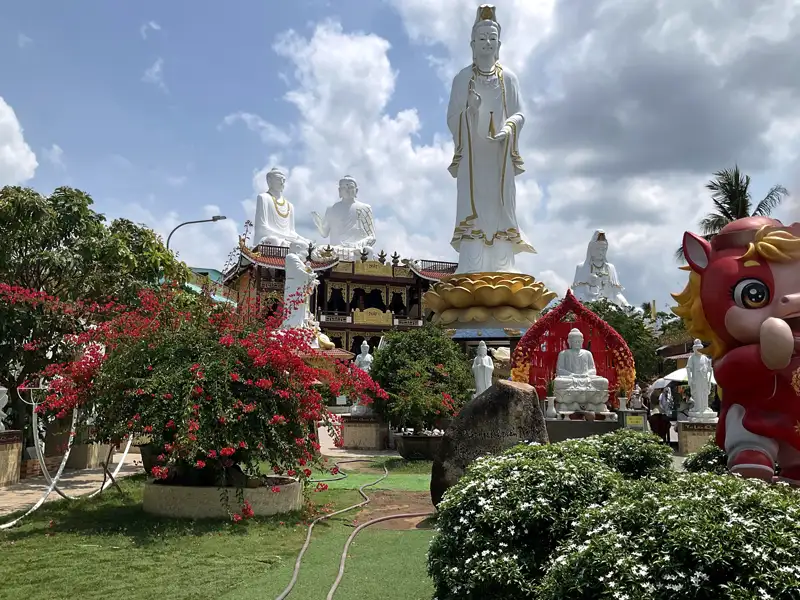
After crossing from Cambodia into Vietnam, our first stop was a beautiful Buddhist temple in Bình Ninh, Tiền Giang Province. The peaceful gardens were filled with colourful flowers and impressive white statues of Quan Âm (the Goddess of Mercy) and the Buddha. Away from the crowds of the major tourist sites, it offered a tranquil introduction to the spiritual life of the Mekong Delta.
Back to table of contents
Ho Chi Minh City (Saigon)
Our cruise concluded in Ho Chi Minh City (formerly Saigon). I had visited Vietnam on a previous trip and once again found the city to be a fascinating blend of colonial-era landmarks and modern energy. Highlights include the ornate Opera House and Central Post Office, the bustling stalls and street food of Ben Thanh Market, the incense-filled Ba Thien Hau Temple, and two of the city’s most significant historical sites: the War Remnants Museum and the Cu Chi Tunnels, an extensive underground network used during the Vietnam War.
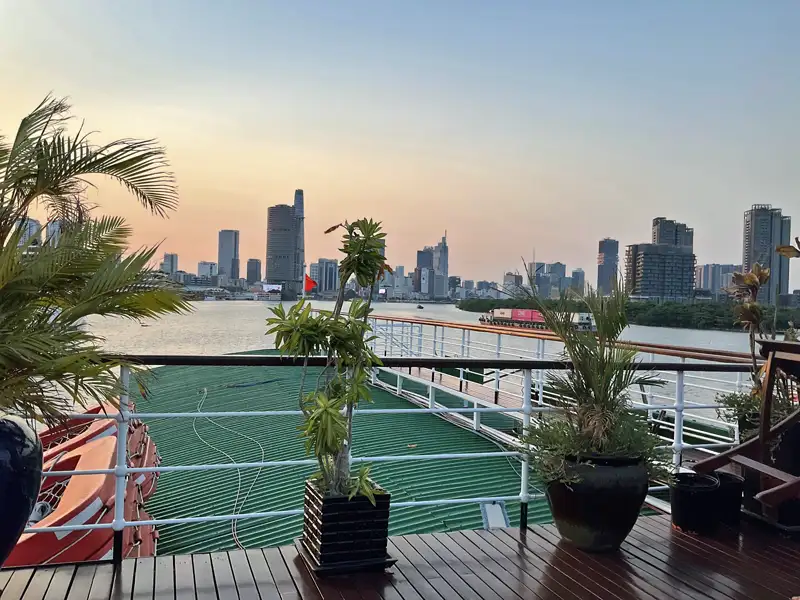
A fantastic cruise has come to an end. After six wonderful days, we arrived in Ho Chi Minh City. Every day was filled with fascinating excursions led by knowledgeable local guides who brought the history and culture of the Mekong to life.
I thoroughly enjoyed the company of my fellow travellers, the excellent Asian cuisine on board, the daily cocktail parties, and the evening entertainment. It was my very first cruise, and I hope it won’t be my last.
We spent one final night on board before beginning the next adventure—exploring the vibrant city of Saigon.
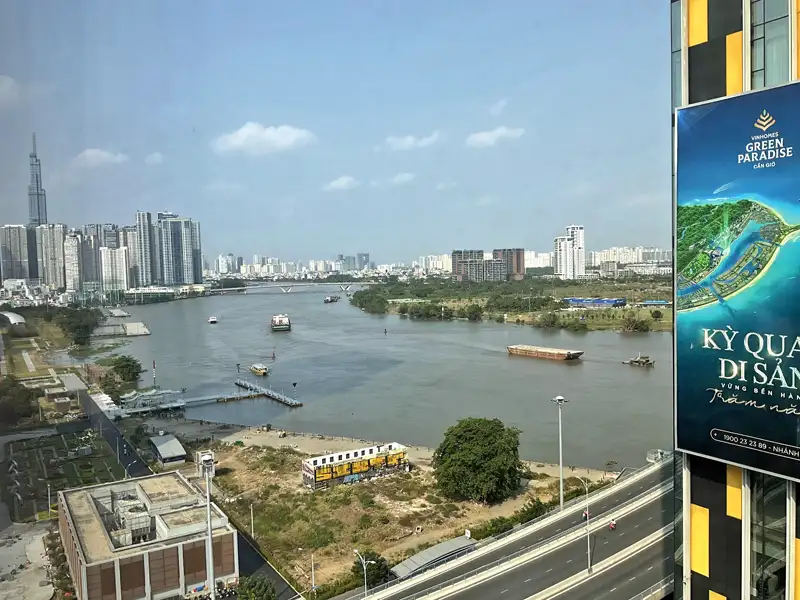
My hotel room on the 18th floor overlooked one of Ho Chi Minh City’s busiest intersections. I never felt the need to turn on the television. Early each morning, just after sunrise, I watched couples having their wedding photographs taken along the river. Soon afterwards, the city burst into life as thousands of scooters, bicycles, cars and buses streamed into the city.
The traffic was unlike anything I had ever experienced. Pedestrians simply stepped into the moving traffic, calmly weaving their way across without traffic lights, while the endless flow of scooters effortlessly moved around them. From my vantage point high above the city, it was a fascinating spectacle. As an Australian, watching the organised chaos below was far more entertaining than any crime movie on television.
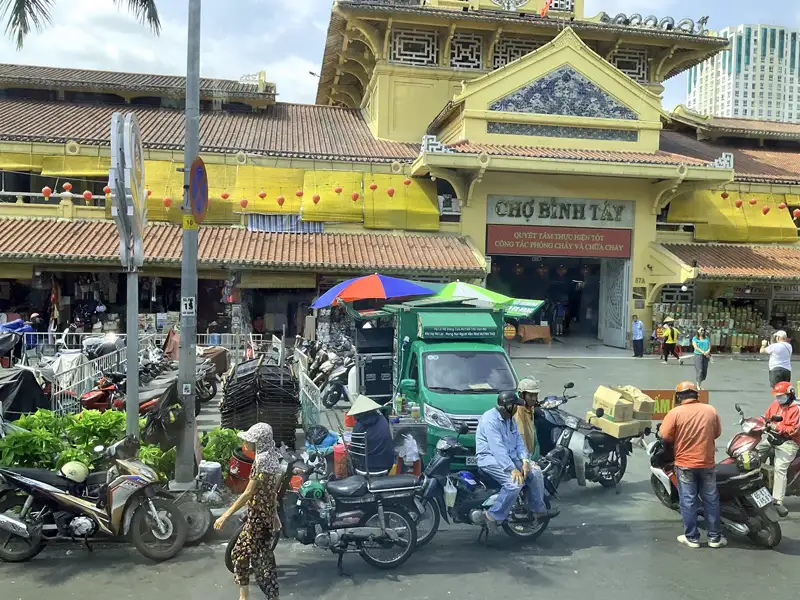
Our first day in Ho Chi Minh City was free to explore at our own pace. Some of our fellow travellers headed to the famous Bến Thành Market, but I had visited it on a previous trip to Vietnam and hadn’t been particularly impressed.
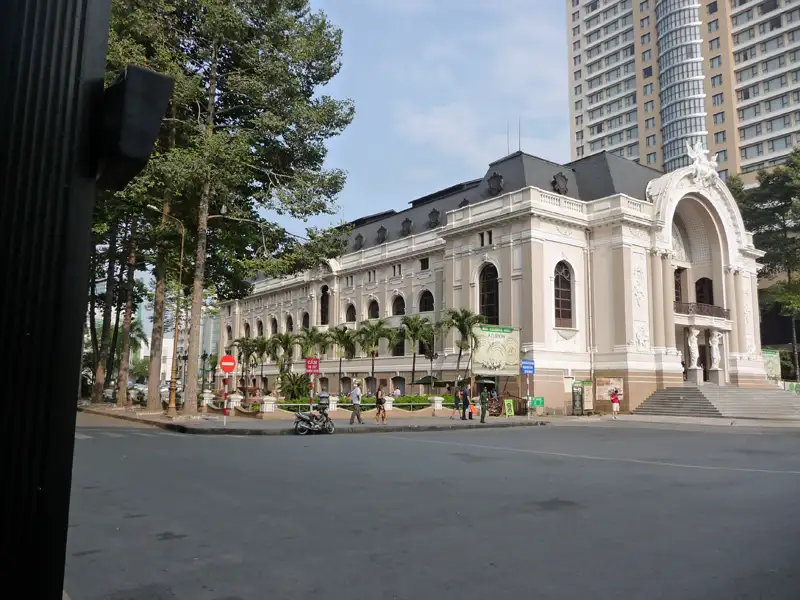
Instead, I returned to the beautiful Saigon Opera House, a building I had fond memories of from my earlier visit. It was just as elegant as I remembered. I enjoyed wandering around the area, soaking up the atmosphere and stopping for a relaxing coffee before continuing my walk through the city.
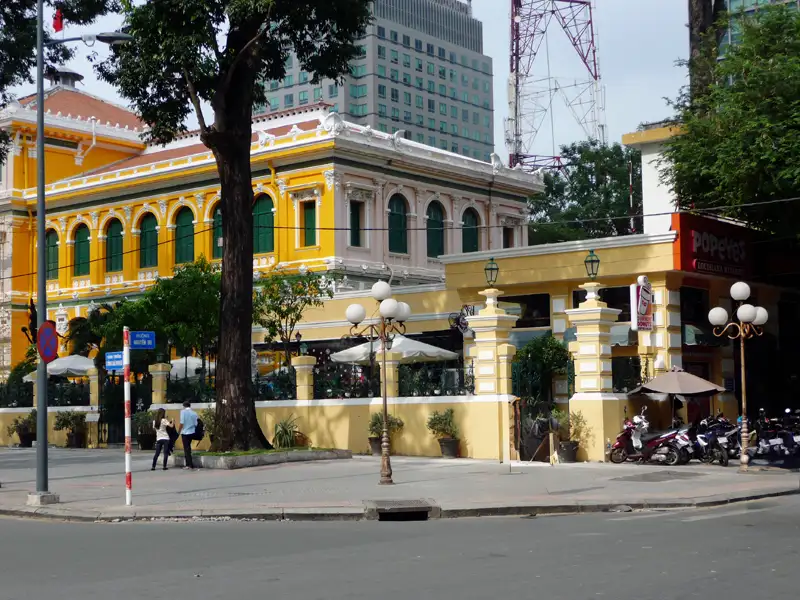
The next day we joined another city tour, with a stop at the historic Saigon Central Post Office. Designed during the French colonial era, this beautifully preserved building is an architectural landmark with its high vaulted ceiling, elegant ironwork and old-world charm. Even today, it remains a busy working post office.
The last time I visited Saigon, the post office was closed for renovations. This time I was able to admire its impressive interior, but instead it was the nearby Notre Dame Cathedral that was hidden behind scaffolding while undergoing restoration. Despite the construction work, its distinctive red-brick façade and twin bell towers still reflected the elegance of French colonial architecture.
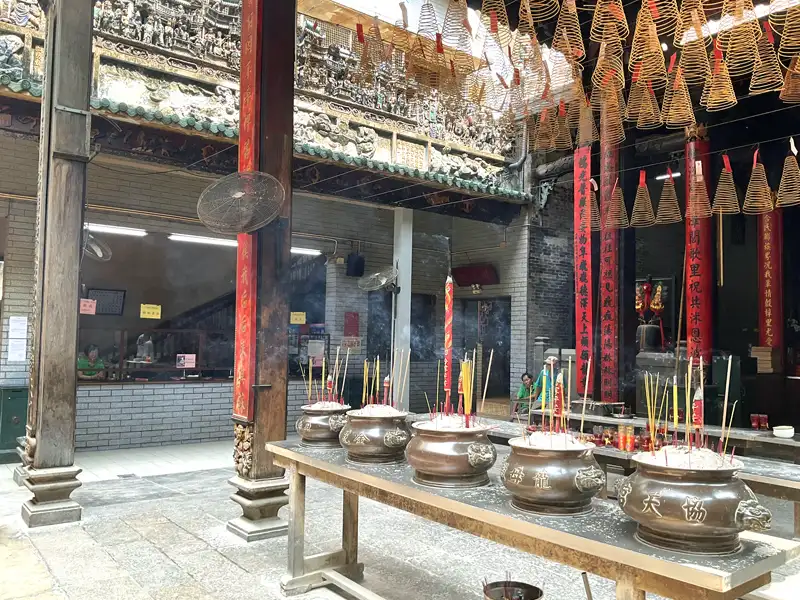
Our final stop was the beautiful Ba Thien Hau Temple in Cholon, Ho Chi Minh City’s historic Chinatown. Dedicated to Mazu, the Chinese sea goddess and protector of sailors, the temple is renowned for its richly decorated roof, peaceful central courtyard, and hundreds of large spiral incense coils hanging from the ceiling, each carrying a prayer for good fortune. It was a fascinating place to end our Mekong journey, offering a glimpse into the city’s rich Chinese heritage.
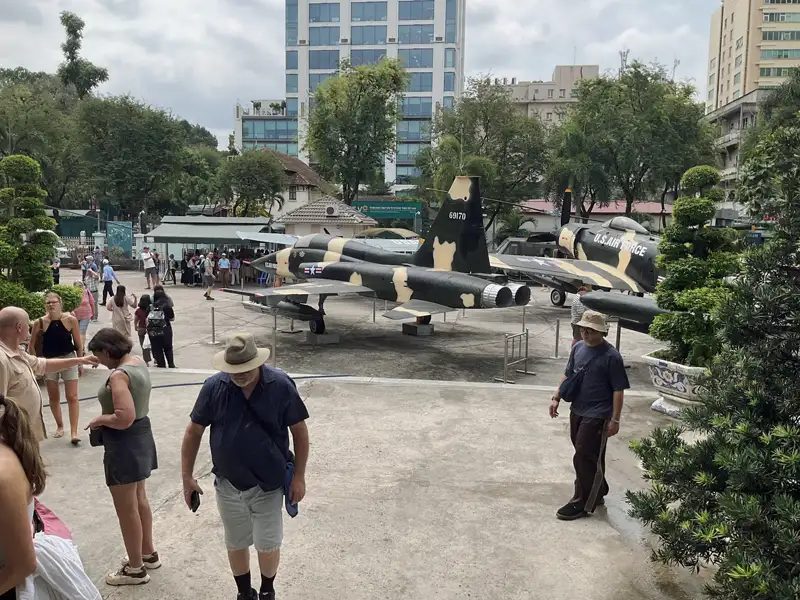
A visit to the War Remnants Museum was one of the most moving experiences of our time in Ho Chi Minh City. The photographs, personal stories, and exhibits were confronting and deeply emotional. It was heartbreaking to see the suffering that war brings and a sobering reminder of how cruel people can be to one another. Leaving the museum, I felt both saddened and grateful to live in more peaceful times.
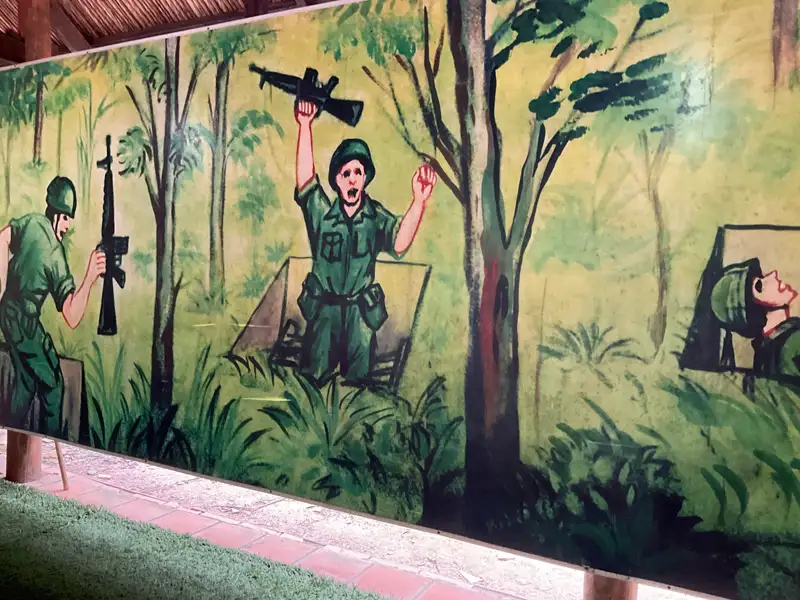
One of the highlights of our visit was exploring the famous Cu Chi Tunnels. I was fascinated by the ingenuity, determination, and resilience of the Vietnamese people, who created this remarkable underground network and used it so effectively during the war. It is an incredible example of human resourcefulness under the most difficult circumstances. Unfortunately, the site has become a very popular tourist attraction, and with so many visitors at the same time, it can feel quite commercial and lose some of its historical atmosphere.
Back to table of contents
Conclusion
In just twelve days, we experienced an incredible journey through Cambodia and Vietnam. We explored the magnificent temples of Siem Reap and Angkor Wat, then relaxed on a memorable Mekong River cruise where we gained a fascinating insight into the lives of the people who depend on this mighty river. In Phnom Penh, we visited the Royal Palace and Buddhist Centre, while also learning about Cambodia’s tragic past under the Khmer Rouge. Our journey ended in the vibrant streets of Ho Chi Minh City, providing a wonderful contrast to the peaceful days on the river.
Holiday-Max did an excellent job organising the tour. The tour leaders were knowledgeable and friendly, every day offered something new and interesting, and there was never a dull moment. On board, we enjoyed outstanding cuisine, excellent entertainment, and the warm hospitality of the crew, making this a journey we will remember for many years.
Looking for more Southeast Asia travel adventures? Discover magnificent temples, fascinating cultures, spectacular scenery, and unforgettable journeys in our complete Southeast Asia Travel Experiences.