10 Day Kangaroo Island Itinerary: Wildlife, Coastal Walks & National Parks
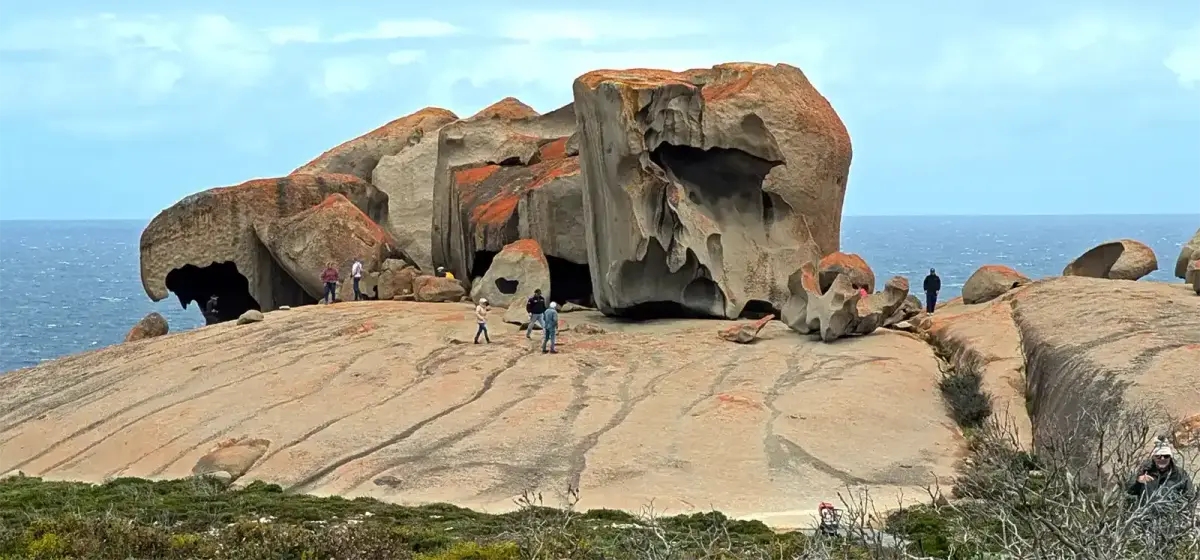
The Kangaroo Island itinerary was perfect to experience its rugged beauty and abundant wildlife of the island. From the dramatic Admirals Arch and Remarkable Rocks to peaceful moments with kangaroos, sea lions, dolphins, and Cape Barren geese, the island offers something for every nature lover. I stayed in Penneshaw, Kingscote, and Flinders Chase National Park, giving me easy access to scenic hikes, iconic lighthouses, and the best wildlife-viewing spots. This kangaroo island itinerary truly showcases the island’s diverse landscapes and captivating wildlife.
Kangaroo Island had been on my bucket list for a long time. In November, I finally made the trip, taking a short flight from Sydney to Adelaide, South Australia, followed by another brief hop to Kingscote on Kangaroo Island.
I quickly realised that exploring Kangaroo Island requires a bit of planning. Car rental options and accommodation are limited, and most of them are concentrated in the east of the island, mainly in the two towns of Kingscote and Penneshaw. After arriving in Kingscote, I picked up a hire car and stocked up on supplies for the next six days.
That first night I stayed in American River, and the following day I began my journey across the island, driving from east to west and into its wilder, more remote landscapes.
10 Day Kangaroo Island Itinerary Overview
Days 1: Arrival on Kangaroo Island by plane. Car hire & shopping Kingscote overnight American River.
Days 2: Seals Bay Conservation Park -Vivonne Bay – Karatta Discovery Park
Days 3 – 5: Hiking Flinders Chase National Park, Admiral Arch, Remarkable Rocks
Days 6 – 8: Hanson Bay, Little Sahara & Raptor Domain – Penneshaw – Wildlife Cruise – Cape St Albans Lighthouse – Wineries
Days – 9 -10: Hike American River – Kingscote – Salt Lagoon – Emu Bay – Flight Home
Table of contents
- Seals Bay Conservation Park – Close Encounters with Sea Lions
- Flinders Chase National Park – Remarkable Rocks & Admirals Arch
- On the Way Back – Hanson Bay, Little Sahara & Raptor Domain
- Penneshaw – Gateway to Kangaroo Island
- Exploring American River and Kingscote
- Kangaroo Island Travel Tips
Seals Bay Conservation Park – Close Encounters with Sea Lions
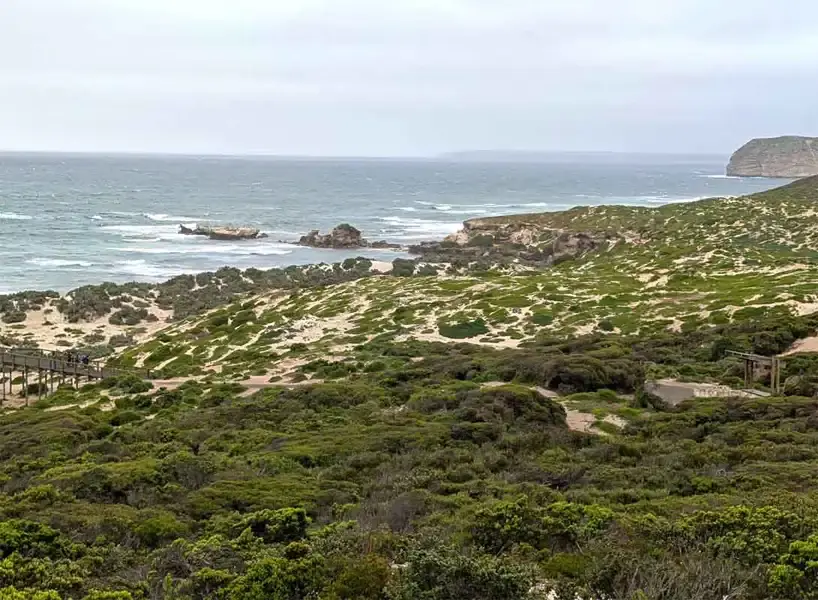
The next day, after about an hour’s drive, I arrived at Seal Bay. The National Parks Centre there is excellent, with informative displays and exhibits about Australian sea lions and their unique habitat.
Visitors can choose between a guided tour or a self-guided experience. I opted for the Self-Guided Boardwalk Tour, which turned out to be a great decision. It allowed me to walk at my own pace, with hardly anyone else around.
I saw many sea lions: some sleeping, others wandering across the sand, a few involved in noisy squabbles. There were lots of adorable pups too, including one unfortunate little fellow who was chased away after approaching the wrong mother — a reminder of how tough life can be in the wild.
The wind was cold and very strong, and I was glad I’d chosen the self-guided option, as it allowed me to head back whenever I felt I’d had enough of the elements.
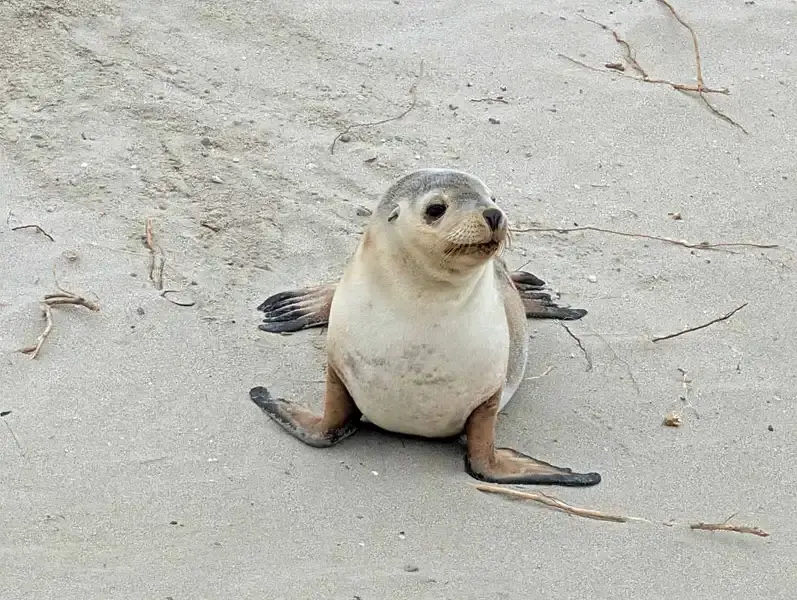
A lonely three-to-five-month-old sea lion pup wanders across a sandy beach. After being rejected by a female that wasn’t its mother, the pup looks small and vulnerable as it searches for her lost mother.
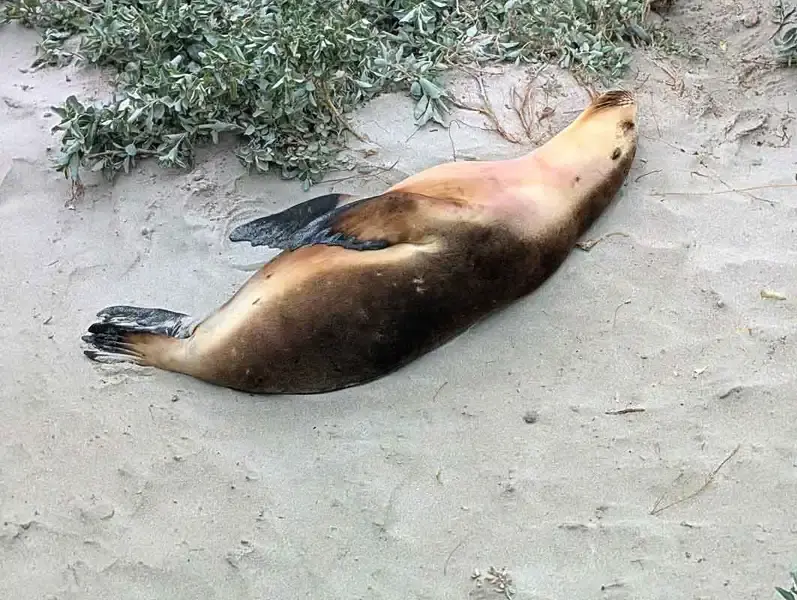
After a period of fishing at sea, seals return to land to rest and socialise. Observing these animals in their natural habitat is was one highlight of the Kangaroo Island itinerary.
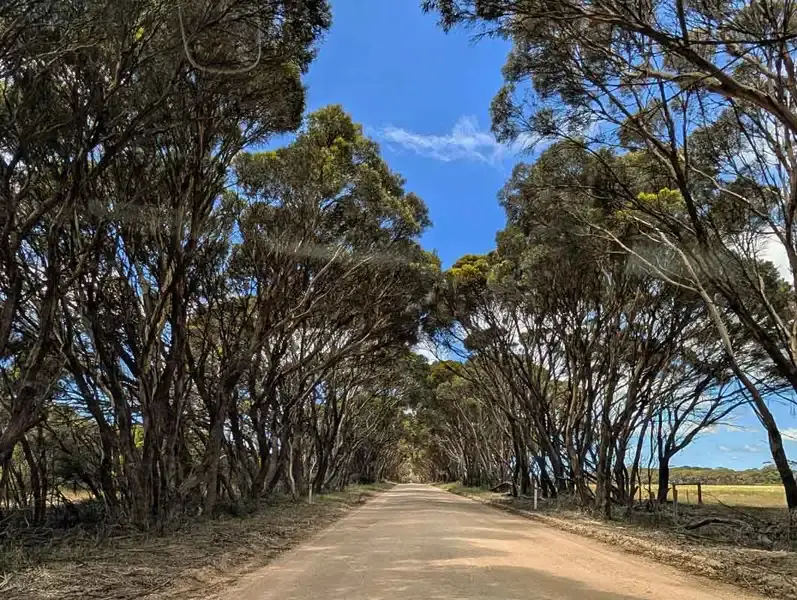
After visiting Seal Bay, I drove on to Karatta on the west side of Kangaroo Island — another journey of about 1 hour and 45 minutes. Somewhere along the way, I began to wonder whether my Kangaroo Island itinerary might actually be too long.
Traffic on Kangaroo Island is extremely light, and both sealed and unsealed roads are generally in good condition, making driving easy and relaxed. The distances are manageable, and the sense of isolation adds to the feeling of being far removed from everyday life.
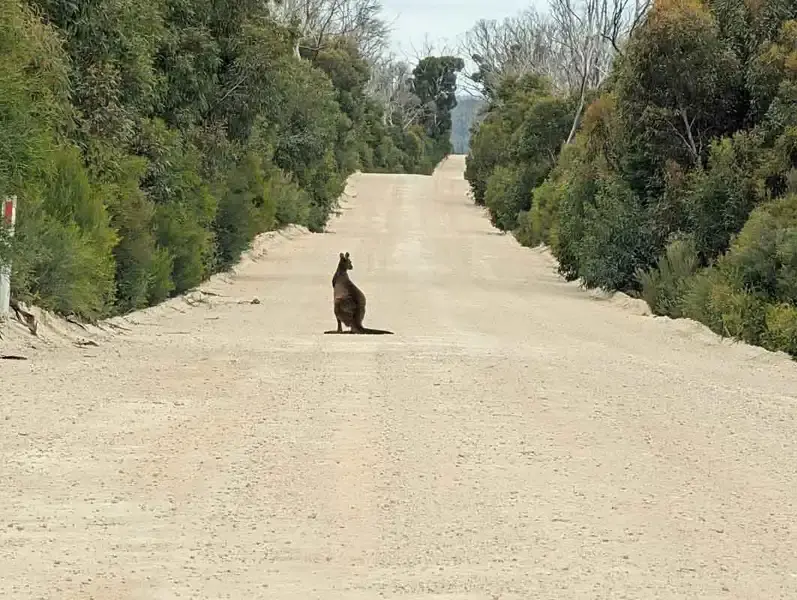
Traffic is not a hazard on Kangaroo Island — the real challenge is the wildlife. I tried to avoid driving at dawn and dusk, yet curious kangaroos still appeared without warning, often standing motionless at the edge of the road, as if deciding whether to cross.
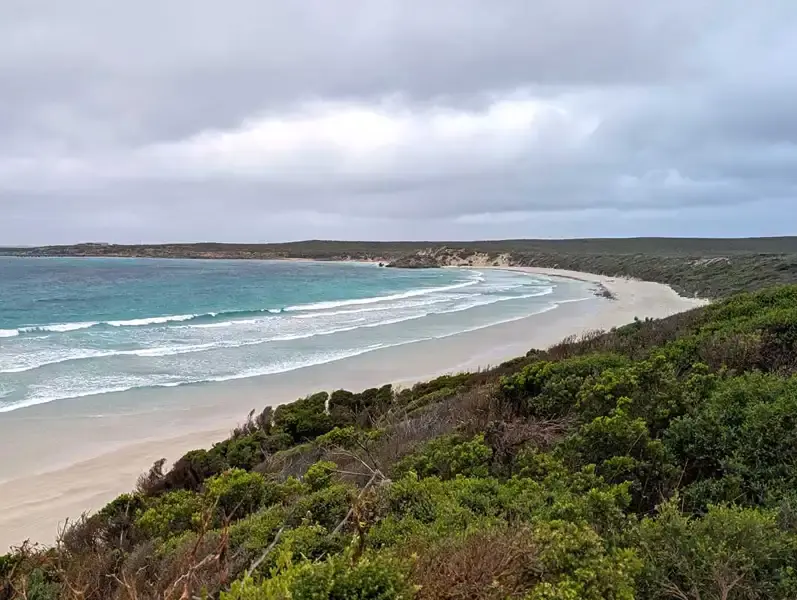
I had a lunch break at the General Store in Vivonne Bay, enjoyed their famous whiting burger, then took some time to explore the empty white beaches and the jetty before moving on to my next accommodation.
Back to table of contents
Flinders Chase National Park – Remarkable Rocks & Admirals Arch
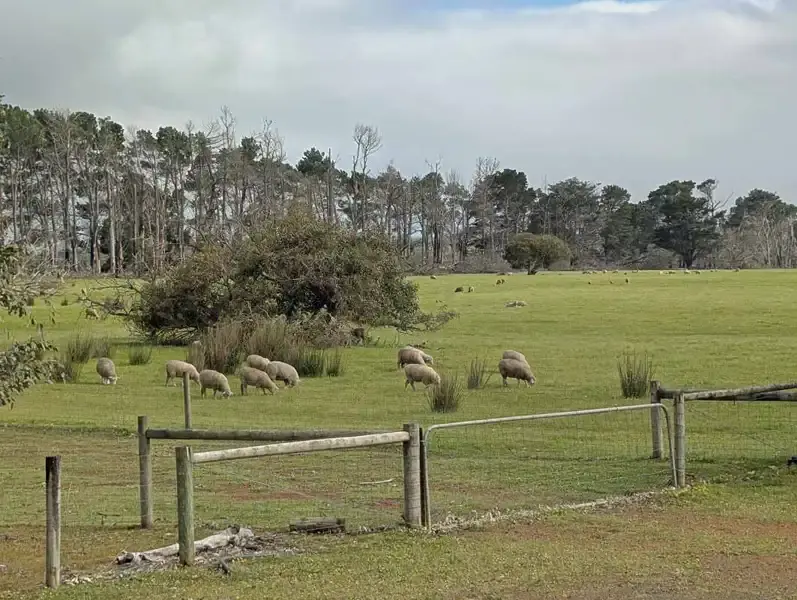
Discovery Park is a fantastic place to unwind, with cosy cabins nestled among natural bushland and abundant wildlife. It feels like a peaceful escape into nature. The staff were exceptionally friendly and went out of their way to make the stay enjoyable
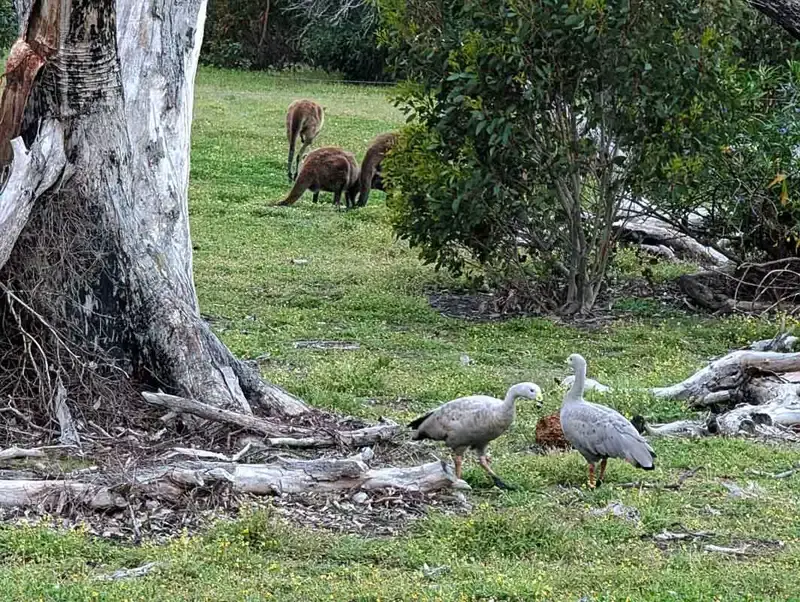
To explore Flinders Chase National Park, I stayed in a spacious cabin set among open paddocks and natural bushland—a perfect base for exploration. A pair of Cape Barren geese fiercely defended their territory from other geese, which was fascinating behaviour to watch. Nearby, Kangaroo Island kangaroos—larger, stockier, and generally darker than their eastern grey cousins—grazed calmly in the open paddocks.
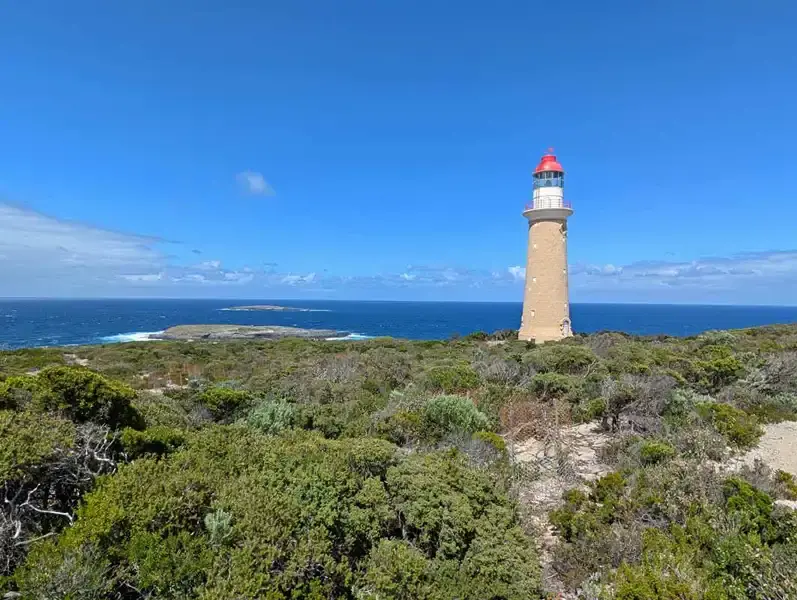
Day 3 of this Kangaroo Island itinerary takes you to the spectacular southwestern corner of the island in Flinders Chase National Park. I hiked the Admirals Arch and Cape du Couedic Lighthouse Loop, walked to the Weirs Cove Lookout, and after a short drive explored the famous Remarkable Rocks. Discovering these iconic geological formations, dramatic coastal scenery, and abundant wildlife makes this area one of the highlights of any Kangaroo Island itinerary and easily fills a memorable half-day.
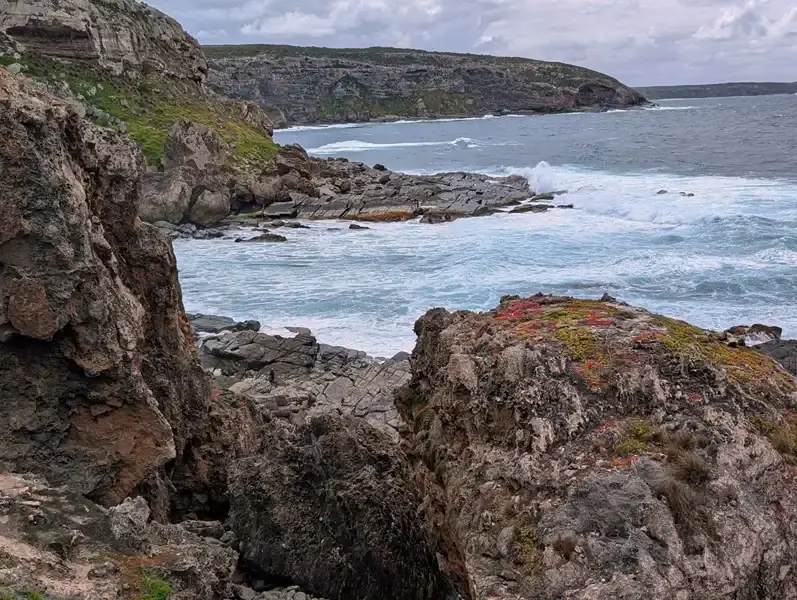
No rain, just a stiff, cold breeze blowing across the headlands. It was classic Kangaroo Island—cool, rugged, and perfect for a long hike. The coastal views are breathtaking, and seeing the seals in their natural habitat was easily the highlight of the day
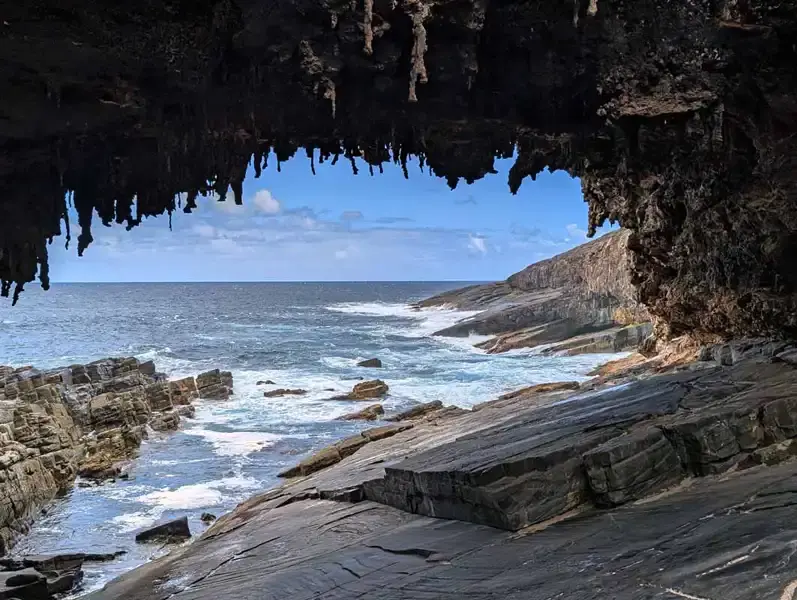
Visiting Admirals Arch was without doubt the highlight of my Kangaroo Island journey and one of the best Kangaroo Island wildlife spotting experiences. Nature has sculpted a magnificent stone Arch. The view through the arch is breathtaking, with delicate stalactites hanging from its ceiling and framing the wild Southern Ocean beyond. Below, the rock pools are alive with New Zealand fur seals—especially the playful pups splashing in the water or resting lazily on the rocks beneath the arch. Reaching the viewing platforms is easy along a well-maintained boardwalk, with only the final descent requiring a short but steep set of steps.
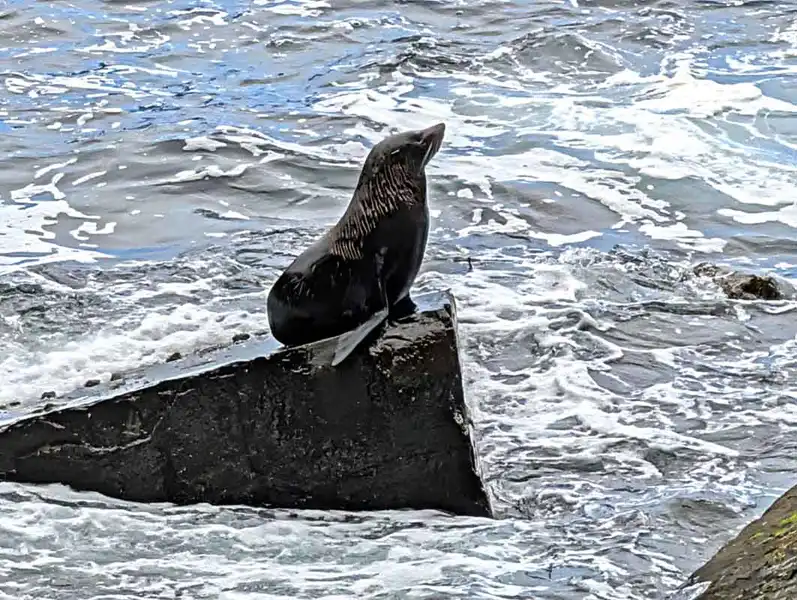
It was fascinating to see the seals emerge from the water and clamber onto the rocks to rest, a few of them squabbling over the best spots, rising upright as they competed for space.
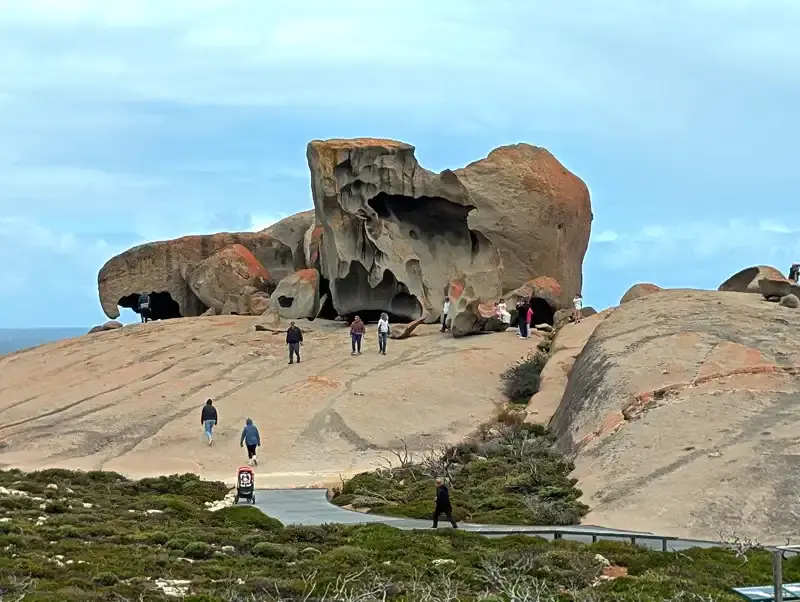
Just a short drive from Admirals Arch, the Remarkable Rocks rise dramatically above the Southern Ocean, one of the most iconic landscapes in Flinders Chase National Park. From the car park, a gentle boardwalk leads to a short climb onto the rock platform.
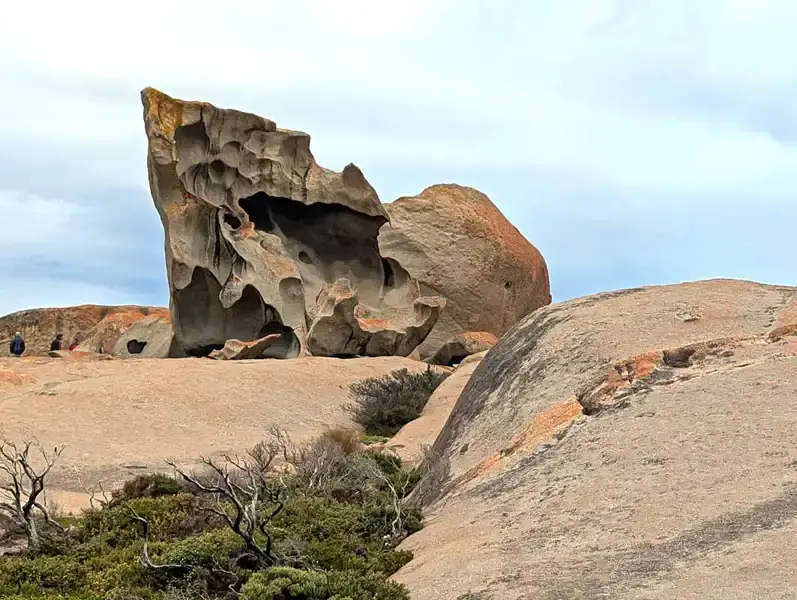
I’ve always loved rock formations, and this place is a dream—granite sculptures shaped over more than 500 million years by wind, rain, and sea spray. Their colours and forms are so varied that it’s impossible to do them justice on a single website.
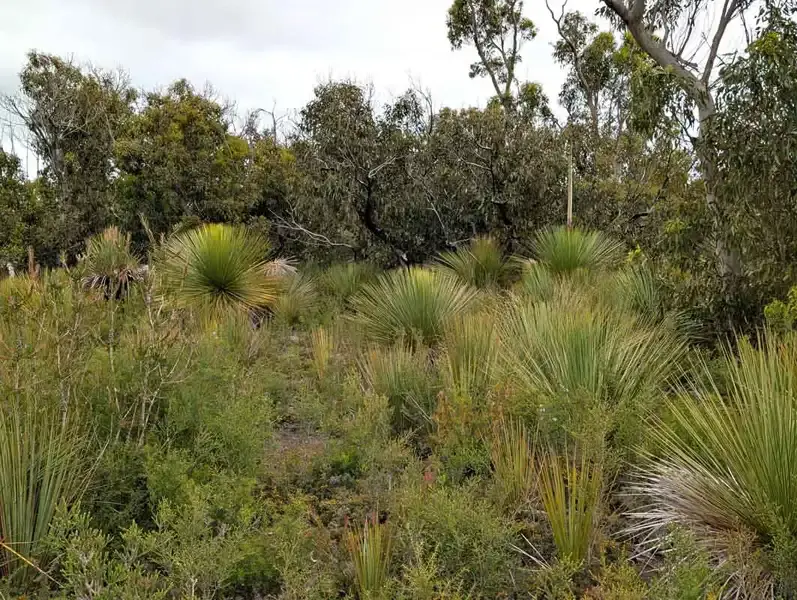
I should also mention the excellent Flinders Chase National Park Visitor Centre, the gateway to iconic sights such as Remarkable Rocks and Admirals Arch. It offers all the information needed to explore the area, along with a pleasant café. From here I walked the Platypus Waterholes circuit (5.5 km), a well-maintained and easy-to-follow track with informative signage, native vegetation, and plenty of wildlife. The platypus remained elusive, though a bench or two along the way would have been very welcome for a not-so-young walker like me.
Back to table of contents
On the Way Back – Hanson Bay, Little Sahara & Raptor Domain
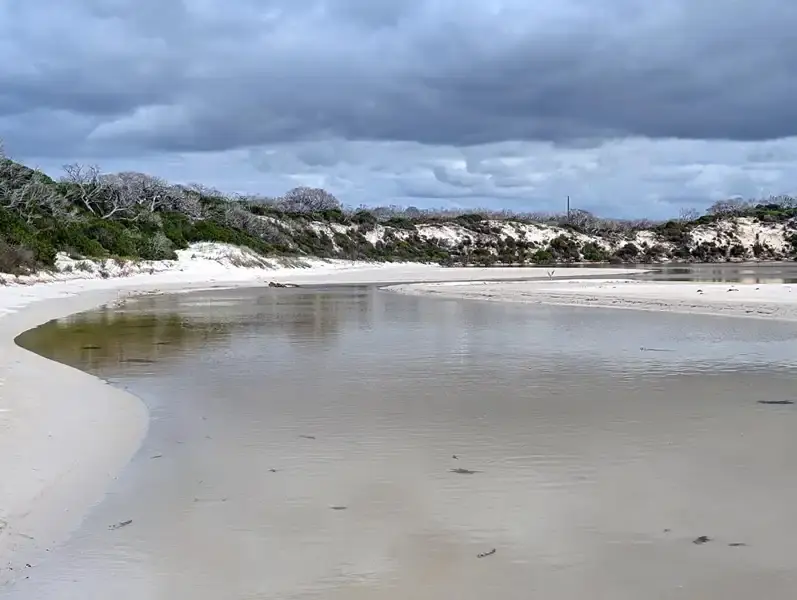
After three nights at Discovery Parks & Resorts, it was time to leave the west and explore the eastern part of Kangaroo Island. Along the way, I visited Hanson Bay, the Little Sahara, and Raptor Domain. The unsealed road to Hanson Bay was easy to drive, like most roads on the island, with hardly any traffic. When I arrived, I had the white-sand beach and tranquil lagoon entirely to myself. Nearby are a few cabins and other holiday rentals, as well as the luxurious Southern Ocean Lodge—where the Australian Premier spent his honeymoon. I’d say he made an excellent choice.
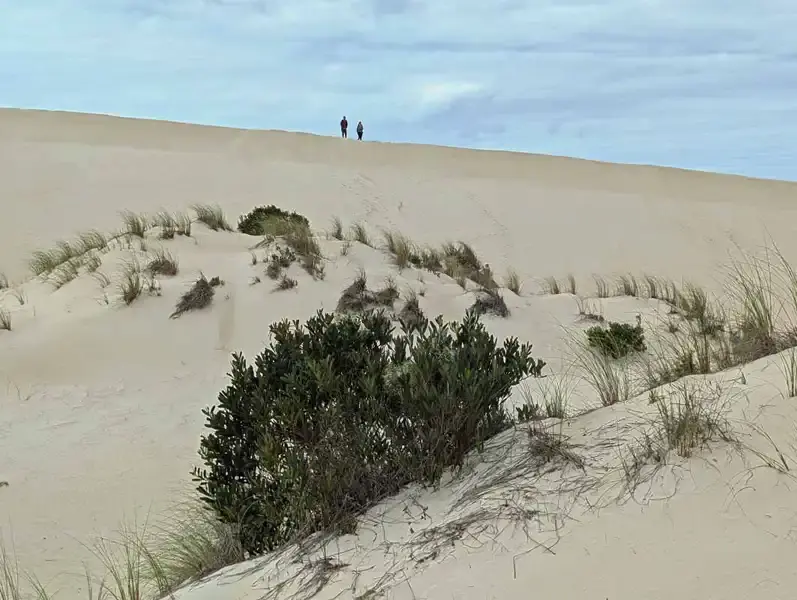
The Little Sahara inland sand dunes, near Vivonne Bay, offer something for everyone. You can simply wander through the beautiful rolling dunes and enjoy the silence, or choose from a range of adventurous activities. Options include guided tours with koala spotting, sandboarding and toboggan rides down the dunes, e-bike tours, and even buggy tours for a more adrenaline-filled experience.
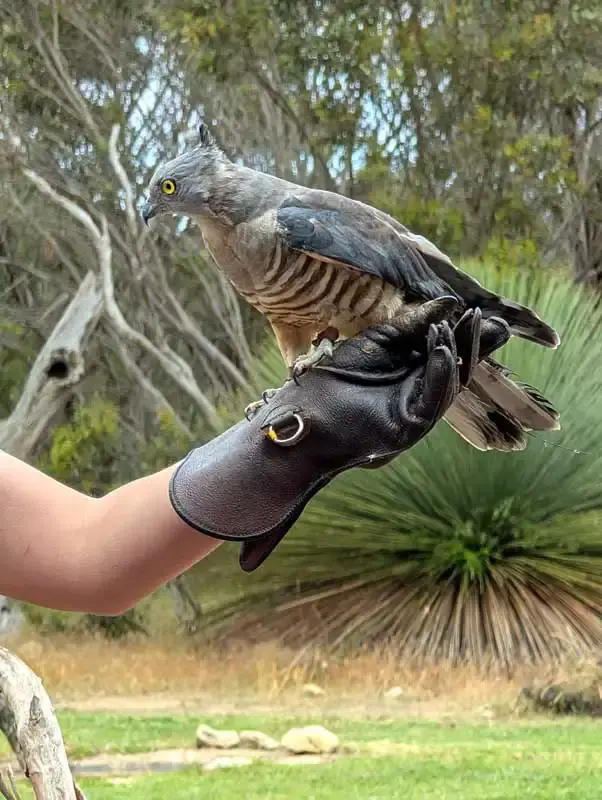
The Raptor Domain show was thoroughly enjoyable and is home to South Australia’s only free-flight Birds of Prey presentation. All the birds performed impressively, but I was most taken by a clever magpie that picked up tissues from the ground and dropped them neatly into a rubbish bin—earning a well-deserved reward, and plenty of applause, for its effort.
Back to table of contents
Penneshaw – Gateway to Kangaroo Island
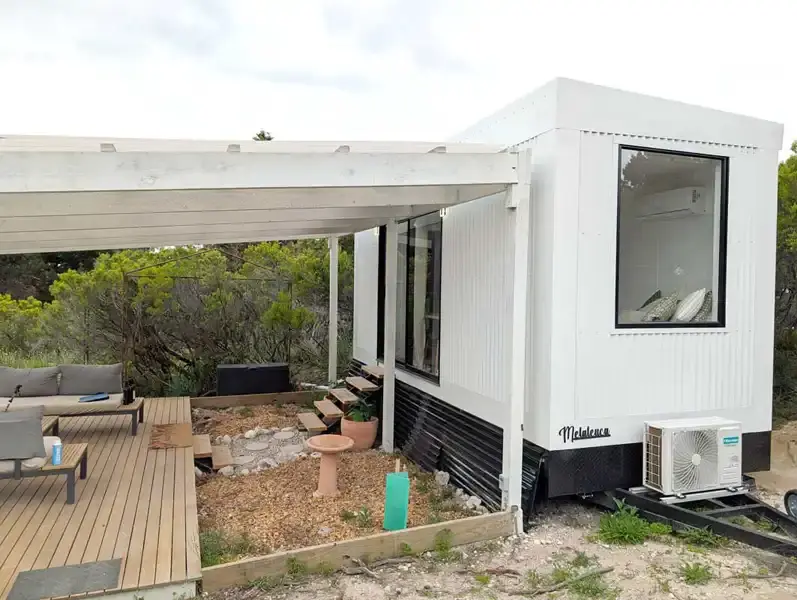
For the next three days, I stayed in a tiny home at Island Beach, about a 15-minute drive from Penneshaw. The stylishly converted shipping container was set among beautiful native bushland and regularly visited by kangaroos, as well as a delightful pair of blue wrens. The outdoor area was fantastic—a peaceful place to sit, relax, and enjoy the surrounding bush. The only downside was the stairs, which would have felt safer with a handrail.
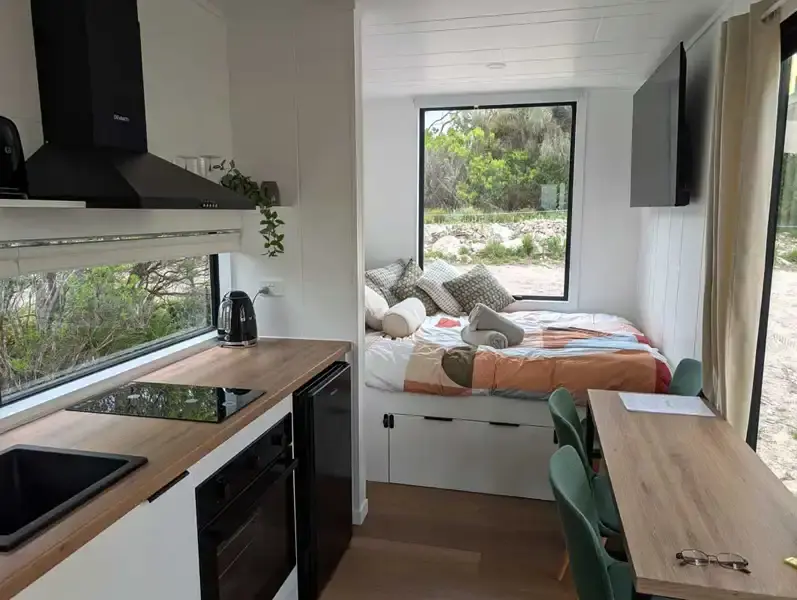
The container accommodation was thoughtfully designed—comfortable, modern, and surprisingly stylish. Everything was cleverly fitted into the compact space: a tiny bathroom, a small kitchen, a table, and a large bed where you could relax, watch TV, and sleep. It worked well, as long as you’re not claustrophobic.
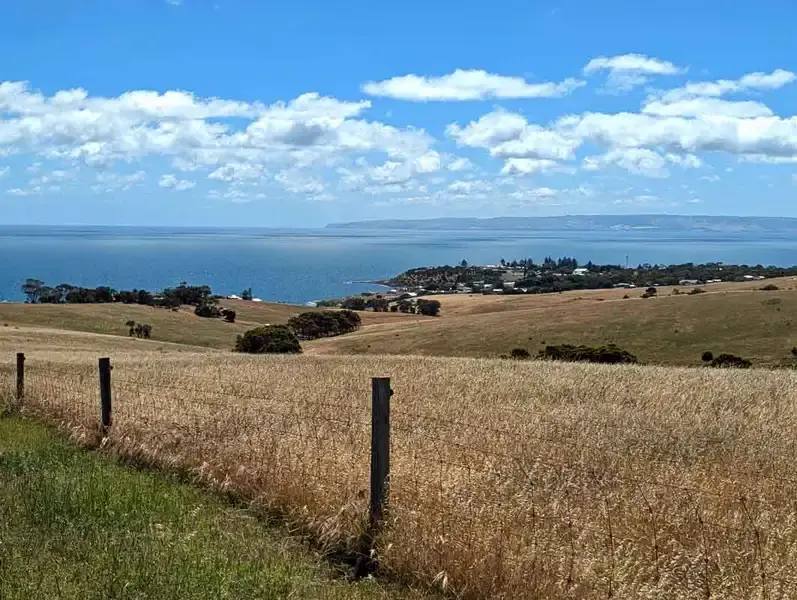
Penneshaw, perched on the Dudley Peninsula, is the second-largest town on Kangaroo Island—though “town” is a generous term, with a population of just 270 people. It is the island’s main ferry port from mainland South Australia and the first handshake for most visitors. The ferry also offers convenient bus packages from Adelaide, ranging from one to three days, making it an easy and relaxed way to explore the island without a car.
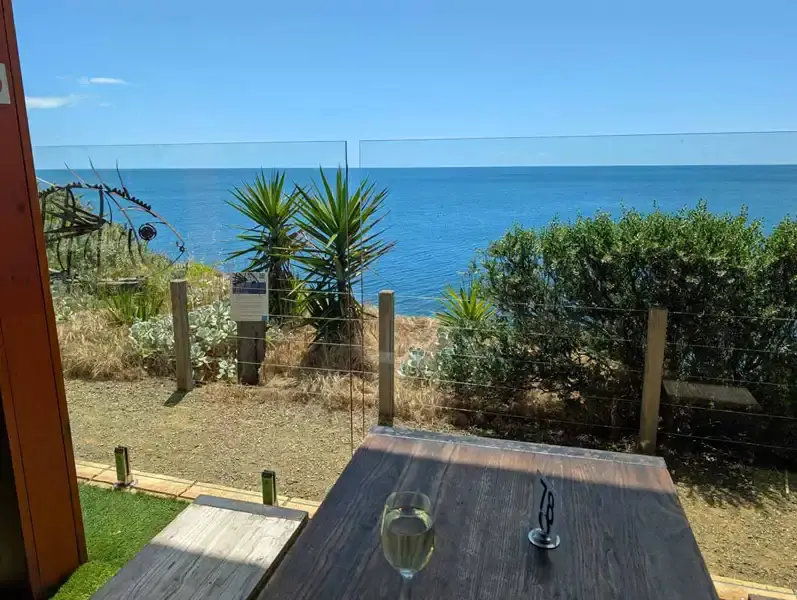
Outside the two main towns, you won’t find many pubs—perhaps a café here and there, along with a few excellent wineries. After several days in the bush, I arrived in Penneshaw and spotted a promising pub. It was already 2:00 pm, and I assumed the kitchen would close at any moment. I jumped out of the car and hurried towards what felt like salvation—only to run straight into an invisible glass panel at full speed. A kind barmaid quickly bandaged my cut, and the story at least had a happy ending: the kitchen didn’t close until 2:30.
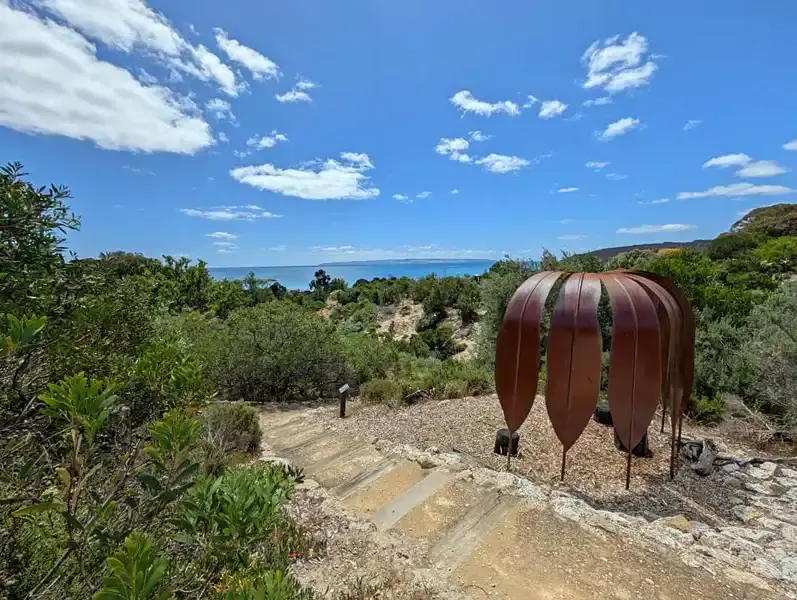
I really enjoyed the Kangaroo Island Sculpture Trail, a 1.5-kilometre walk that combines striking sculptures with fantastic coastal views and the chance to spot Kangaroo Island wildlife. The hike may be short, but it’s not easy—graded level three, with a few testing sections. All the more impressive is that this trail is a community project, a remarkable achievement when you consider the island’s small population.
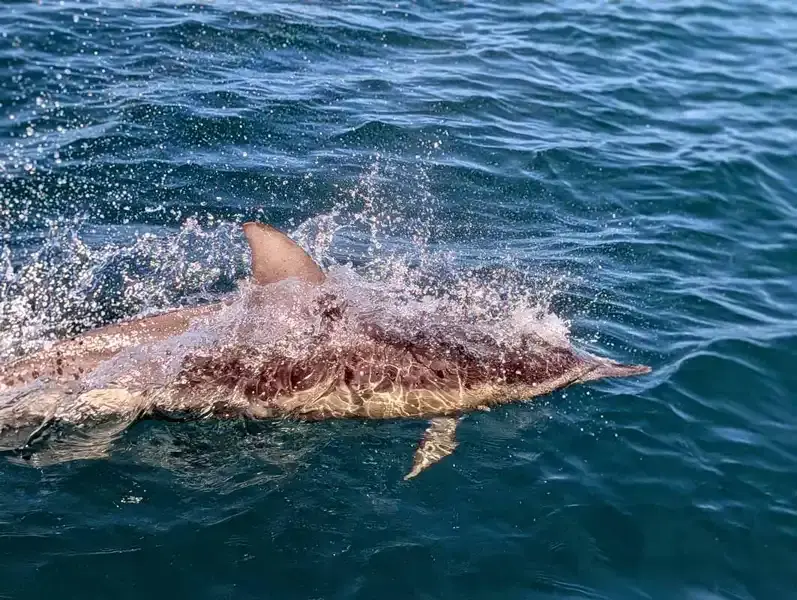
The 75-minute Ocean Safari was excellent. The 38-seat vessel was only half full, so there was plenty of space to move around and enjoy the ever-changing coastal views. We saw many dolphins, speeding through the water—beautiful to watch, but so fast that getting a good photo was a challenge.
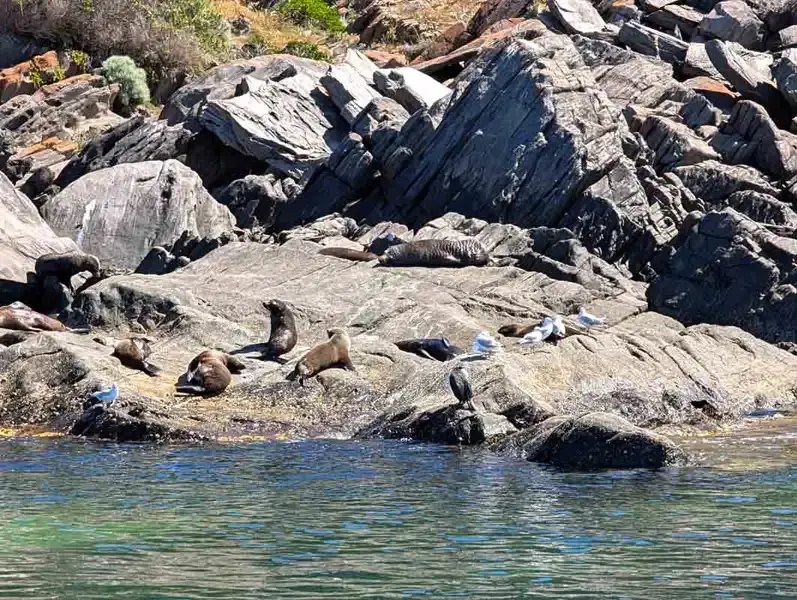
The Kangaroo Island Ocean Safari also offers a two-hour snorkelling safari, giving you the chance to snorkel with seals and swim with dolphins in the wild. We certainly encountered plenty of them: cruising close to another seal colony, I realized that despite seeing many kangaroos on the island, I had seen far more seals. Maybe they should have called it Seal Island.
Back to table of contents
Exploring American River and Kingscote
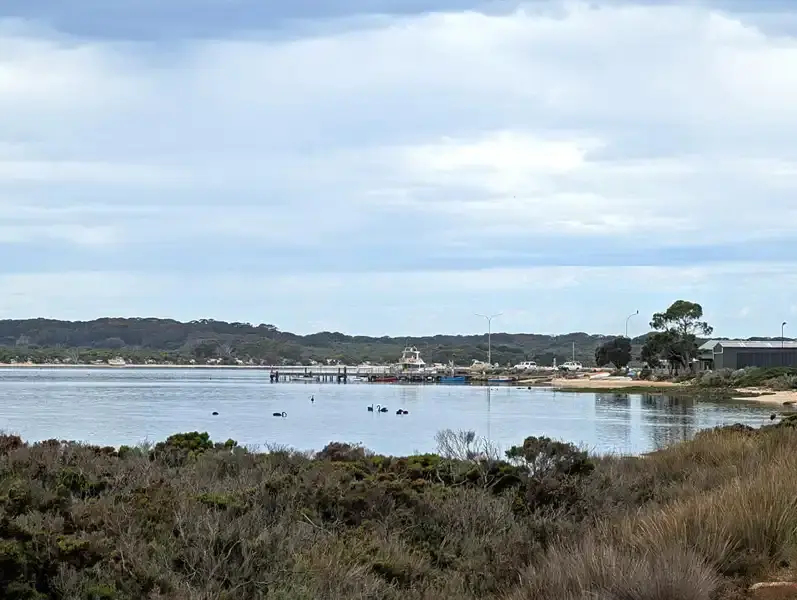
American River is a quiet seaside village on , nestled beside tranquil Pelican Lagoon. It’s a very relaxing place, surrounded by bushland and beautiful cannery hiking trails. After completing a nice hike, I finished the day with a glass of wine and fresh oysters at the cafe on the wharf, where I enjoyed watching seals, dolphins, and seabirds.
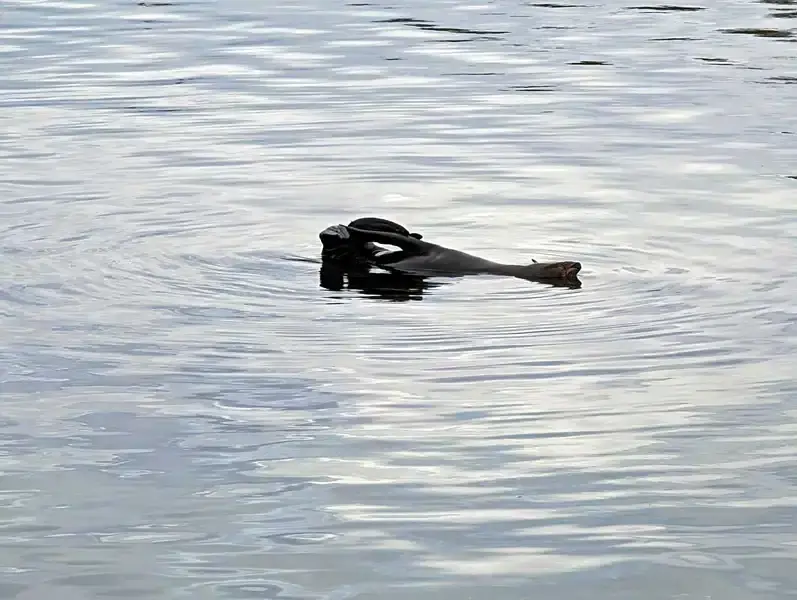
A New Zealand fur seal drifted effortlessly in the water for hours, completely relaxed and unbothered. It was fascinating to watch—something I had never seen before.
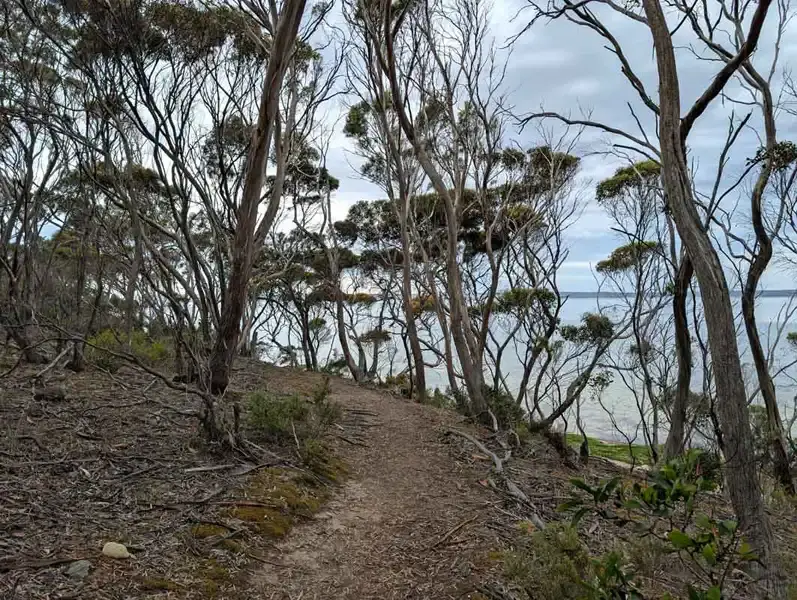
The Cannery Walk is an easy 4-kilometre trail through coastal bushland beside the beach. The path gently undulates, with a few rocky, root-strewn sections, so good footwear is recommended. For anyone of average fitness, it’s a pleasant and rewarding walk. The trail ends at the historic site of an old fish cannery, with the return route following the beach past oyster farms, black swans, other seabirds, and striking rock formations.
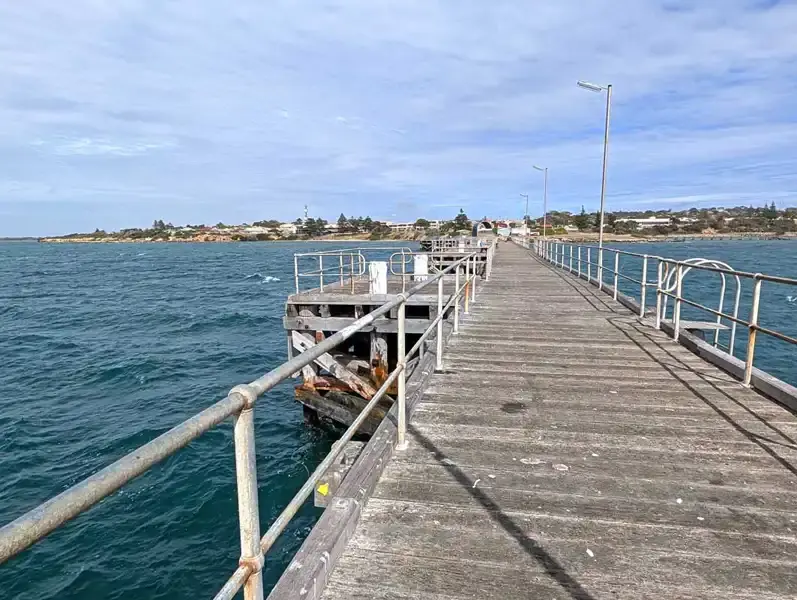
The Kingscote Jetty on Kangaroo Island is a historic landmark, originally built in 1880 and rebuilt in 2023 using modern timber and design features. It offers easy access for fishing and walking with new platforms and ledges along the way. While it may not be Australia’s longest jetty, it remains a much-loved part of Kingscote’s foreshore and a beautiful spot for sunrise photography.
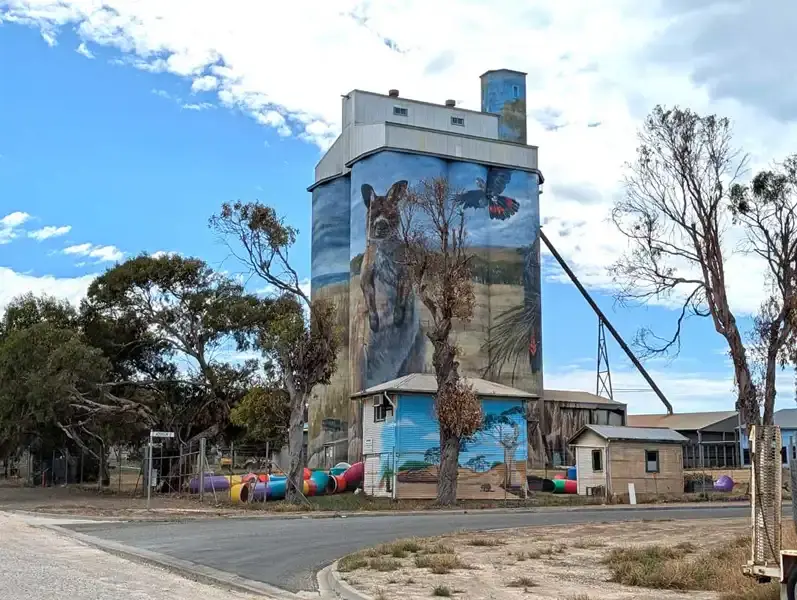
The Kingscote Silos were painted in January 2022 by artists Cam Scale and Andrew Davis, transforming them into a striking public artwork. One side features a towering kangaroo—at 22 metres high, believed to be the largest painted kangaroo in the world. On the opposite side, an equally impressive black cockatoo completes the mural, both animals set within a sweeping landscape that celebrates the natural beauty of Kangaroo Island.
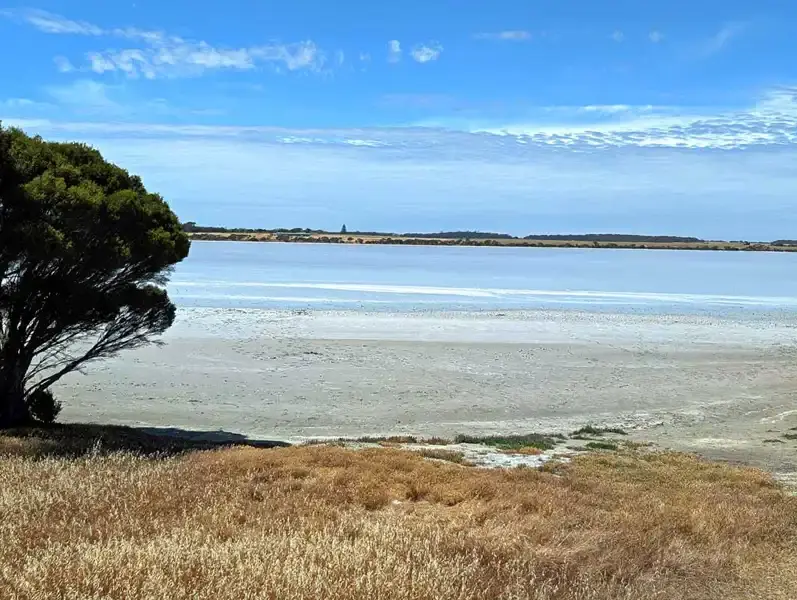
Salt Lagoon on Kangaroo Island is a striking salt lake that often shimmers with delicate pink tones. Located just a 10–20 minute drive from Kingscote, not far from the island’s well-known lavender fields, it’s an unusual and eye-catching landscape. The lagoon’s shallow water and salt flats create subtle patterns and changing colours that shift with the light. From ground level the view is interesting, but the lagoon’s true beauty is best revealed from above, where aerial or drone views highlight its remarkable textures and pastel hues.
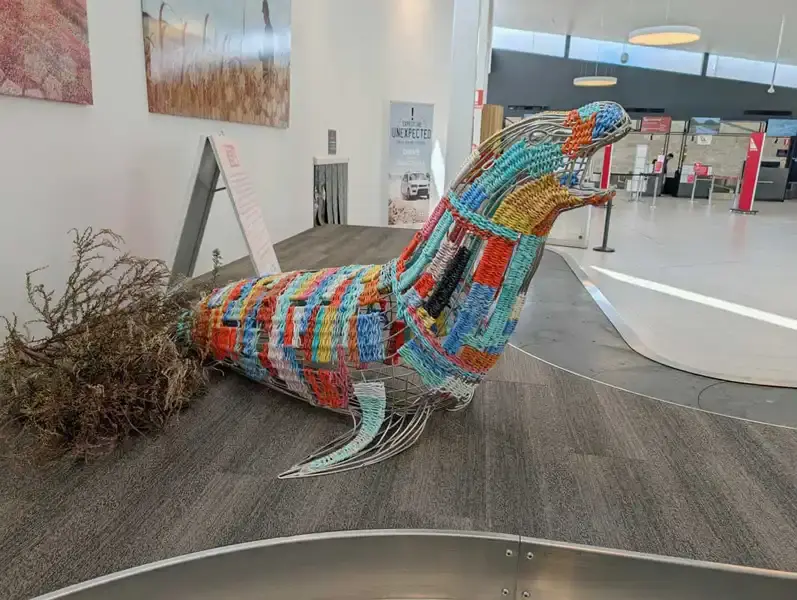
Kingscote Airport – Every journey eventually comes to an end.
I truly enjoyed encountering Kangaroo Island’s rich wildlife—kangaroos, seals, and sea lions—although I missed seeing koalas. A guided wildlife tour might have helped with that.
The clear highlight of my 10-Day Kangaroo Island itinerary was Flinders Chase National Park, with its iconic landmarks, dramatic coastal hikes, wildflowers, and abundant wildlife.
Looking back, I sometimes wonder whether my itinerary was a little too long—or whether I simply should have joined a guided wildlife tour to discover even more of the island’s remarkable animals.
Back to table of contents
10 Day Kangaroo Island Itinerary Travel Tips
Kangaroo Island is a breathtaking destination, but it can feel surprisingly remote. Unless you truly enjoy solitude, it may not be the best place to travel alone. The island has a population density of only about one person per square kilometre. Even though I’m quite outgoing, I had very little contact with other people during my trip. Even the camp kitchen—usually a place where travellers meet and chat—was often completely empty.
Kangaroo Island is perfect for travellers who enjoy wildlife, dramatic coastal scenery, deserted beaches, and excellent hiking trails.
Quick Travel Tips
- Plan ahead: Book accommodation, car hire, and popular tours such as Seal Bay Conservation Park or Ocean Safari well in advance, especially during peak seasons.
- Bring supplies: Outside the towns of Penneshaw and Kingscote, dining options are limited and there are no large takeaway chains. Carry enough food and drinks for your day trips.
- Wear proper footwear: Many Kangaroo Island walking trails are graded Level 2–3 and can include uneven or exposed sections. Sturdy hiking shoes are recommended.
- Keep your camera ready: Wildlife sightings—kangaroos, seals, sea lions, dolphins, and birdlife—can happen unexpectedly. Binoculars are very useful.
- Drive with caution: Avoid driving at dawn, dusk, or night when kangaroos and other wildlife frequently cross the roads.
Back to table of contents
ore from South Australia: Flinders Ranges
More from South Australia: Adelaide and the Hills