Canadian Rockies Road Trip: Banff, Jasper and the Icefields Parkway
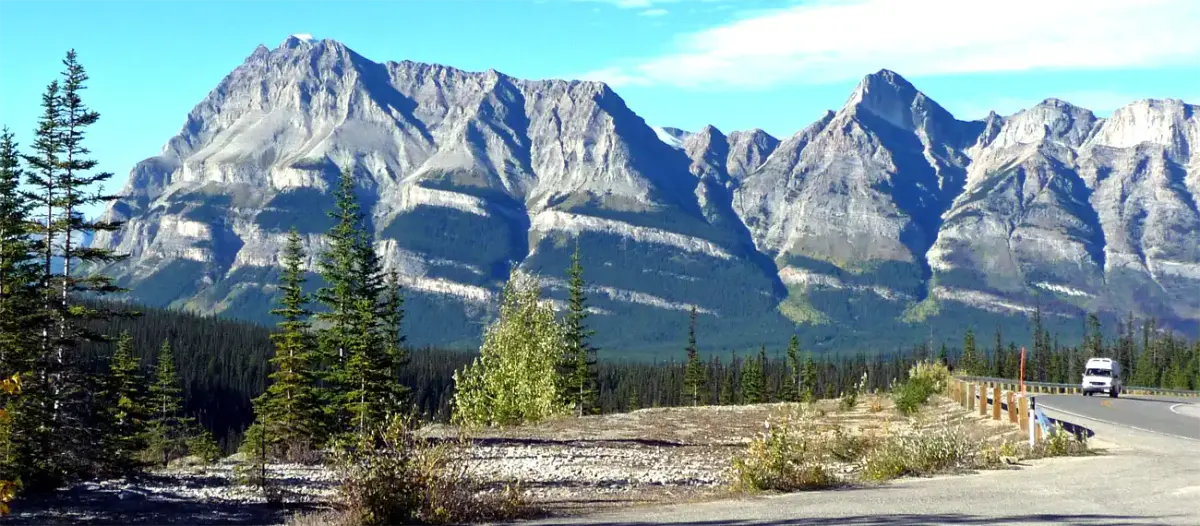
A Canadian Rockies road trip was the highlight of our four-week journey through British Columbia. Traveling by motorhome gave us the freedom to explore spectacular mountain landscapes, hike scenic trails, and stay overnight in some of Canada’s most beautiful national parks.
We visited the Canadian Rockies in mid-September, which turned out to be one of the best times for a road trip. The school holidays had just ended, campgrounds were quieter, and motorhome rentals were still reasonably priced. The weather was also perfect for outdoor adventures, with daytime temperatures around 18°C—ideal for hiking and exploring the stunning alpine scenery.
Autumn was beginning to paint the forests in brilliant shades of red, yellow, and orange, creating the magical atmosphere of the Canadian “Indian summer.” Although the weather in the mountains can be unpredictable at this time of year—with the possibility of snow or heavy rain—we were lucky and experienced only two rainy days during the entire trip.
Late September can also bring another natural spectacle: the Aurora Borealis, or Northern Lights. While we kept our eyes on the night sky hoping to catch a glimpse, this time luck wasn’t on our side.
Table of contents
- Walking Vancouver
- Lake Lac le Jeune
- Yoho National Park – Waterfalls and Mountain Scenery
- Banff National Park – Hiking in the Canadian Rockies
- Driving the Icefields Parkway
- Jasper National Park – Wildlife and Wilderness
- Wells Gray Provincial Park – Mushroom Foraging
- Whistler
- Vancouver Island
Walking Vancouver
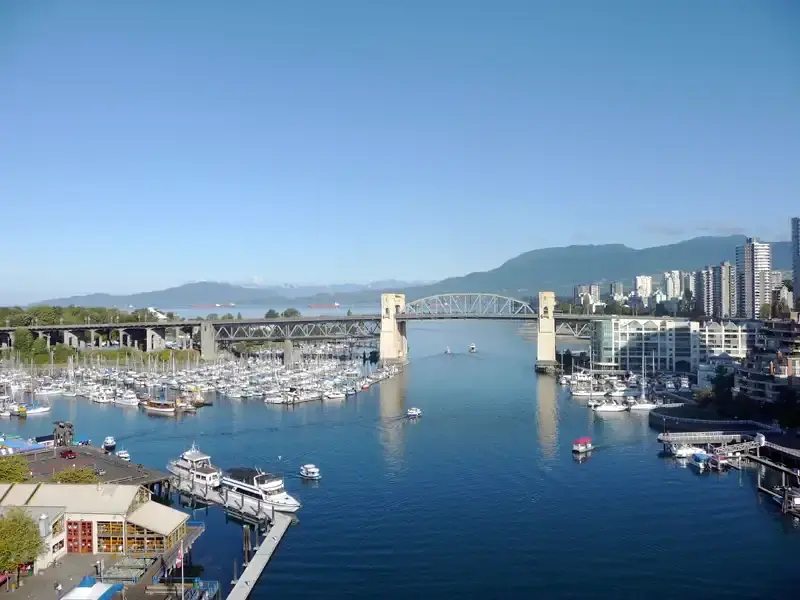
After a direct flight from Sydney, we arrived in Vancouver—a city known for its stunning natural beauty and high quality of life. We reached the CBD in record time via the $5 SkyTrain, a level of transit efficiency that puts Sydney to shame. After dropping our bags, we headed straight to the bustling Granville Island Market to stock up on supplies for our upcoming Canadian Rockies road trip by motorhome.
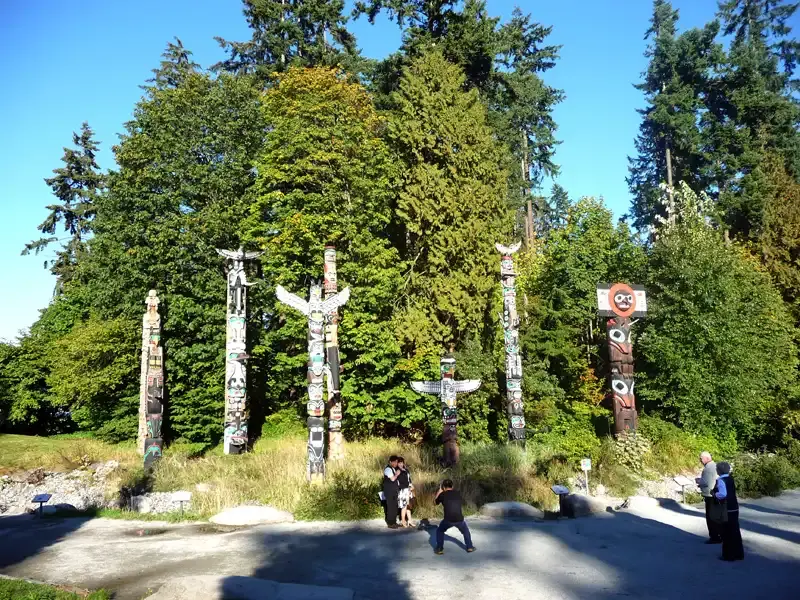
The following day, we set out on a scenic six-hour trek along the waterfront, making our way from downtown toward the iconic Stanley Park. After a refreshing dip in the ocean at Third Beach, we cut across the park to the Vancouver Aquarium, where the beluga whales were a definite highlight. We finished our loop at the southeastern tip of the park, taking in the historic First Nations totem poles and the Brockton Point Lighthouse.
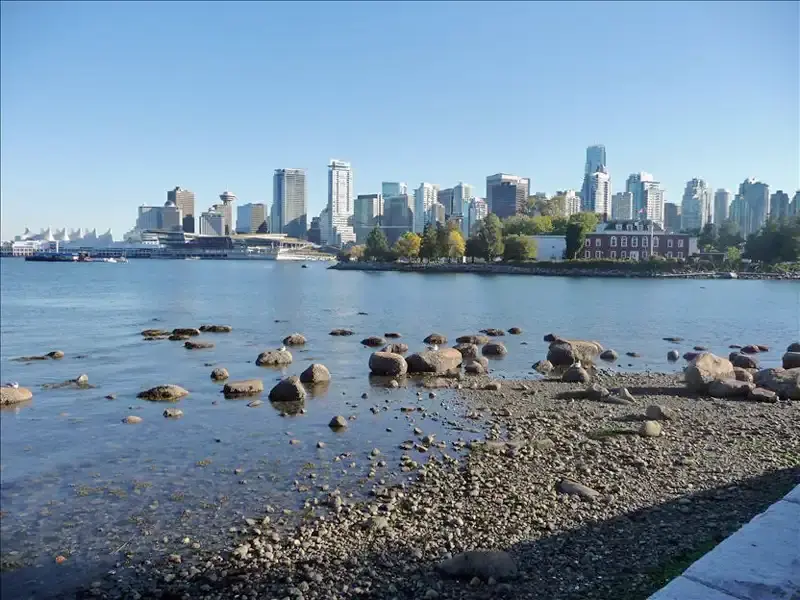
We spent another hour wandering the East Vancouver waterfront before finally reaching the historic Steamworks Brewpub in Gastown. It was easily the largest pub I’ve ever seen! A round of drinks and a great meal truly brought us back to life. Exhausted, we decided to skip the final walk back to the hotel and took a taxi instead—a decision we felt a little guilty about, but our feet definitely thanked us!
Back to table of contents
Lake Lac le Jeune
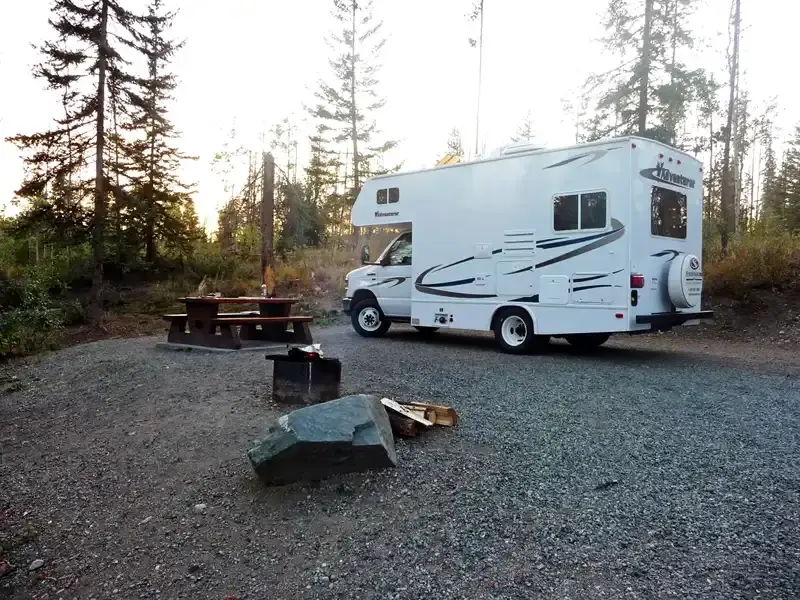
Our Canadian Rockies road trip began when we picked up our RV from Fraserway in Delta, just outside Vancouver. After spending three days exploring Vancouver, we were excited to finally start our journey into the mountains. Due to a small misunderstanding, however, we didn’t leave until the afternoon instead of the morning.
The RV felt huge compared with our SUV at home, and driving on the right side of the road in Canada instead of the left took some getting used to. Because of the late start, we didn’t make it to Lac Le Jeune Lake as planned. Instead, we stopped for the night at the campground in the small town of Hope, British Columbia, where we spent our first evening settling into our comfortable RV and looking forward to the adventure ahead in the Canadian Rockies.
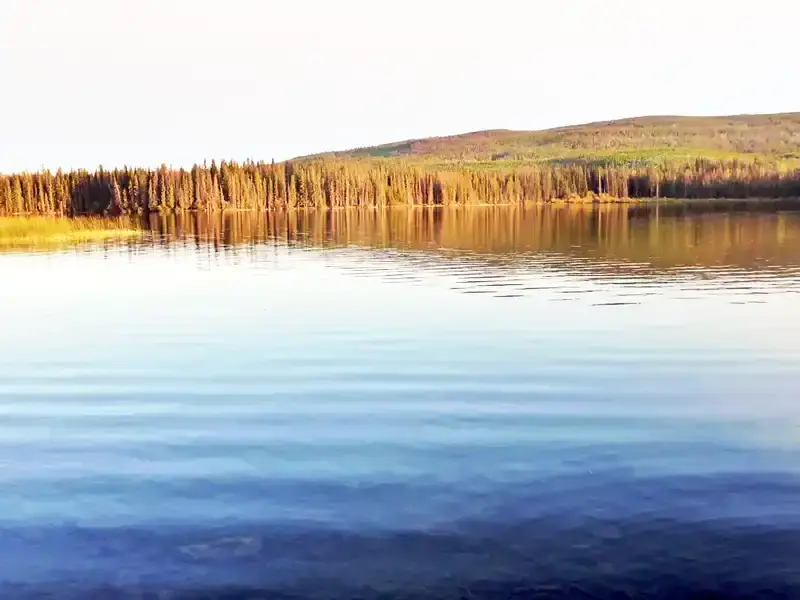
For the next few days, we stayed at Lake Lac le Jeune, where we relaxed, swam, and went hiking around the lake. Overall, the camping experience was very peaceful and quiet. In fact, the only companions we had at the campsite were a couple of curious squirrels.
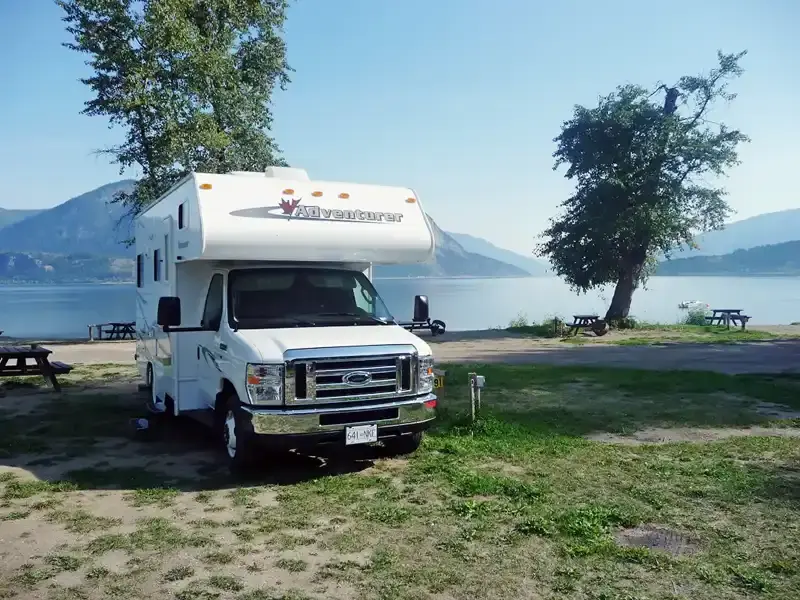
This was probably our best motorhome trip ever. We had rented RVs before, but this one was by far the most comfortable. The motorhome had excellent air conditioning and heating, a reliable water heater, and even a bathroom with a proper flush toilet.
We had also chosen the perfect time for our Canadian Rockies road trip. Most campgrounds were nearly empty, which meant we could choose the best spots with beautiful views. On our way toward Banff National Park, we found this peaceful campsite surrounded by mountains and water—an ideal place to enjoy the freedom of traveling through Canada by RV.
Back to table of contents
Yoho National Park – Waterfalls and Mountain Scenery
Yoho National Park is a paradise for nature lovers and one of the highlights of the Canadian Rockies. The park attracts hikers, photographers, and travellers seeking tranquillity in a spectacular mountain landscape. Yoho is renowned for its dramatic scenery—towering peaks, powerful waterfalls, crystal-clear alpine lakes, and dense forests that make this national park a truly unforgettable destination.
Yoho National Park is equally stunning as the neighboring Banff National park, but with fewer crowds and a quieter.
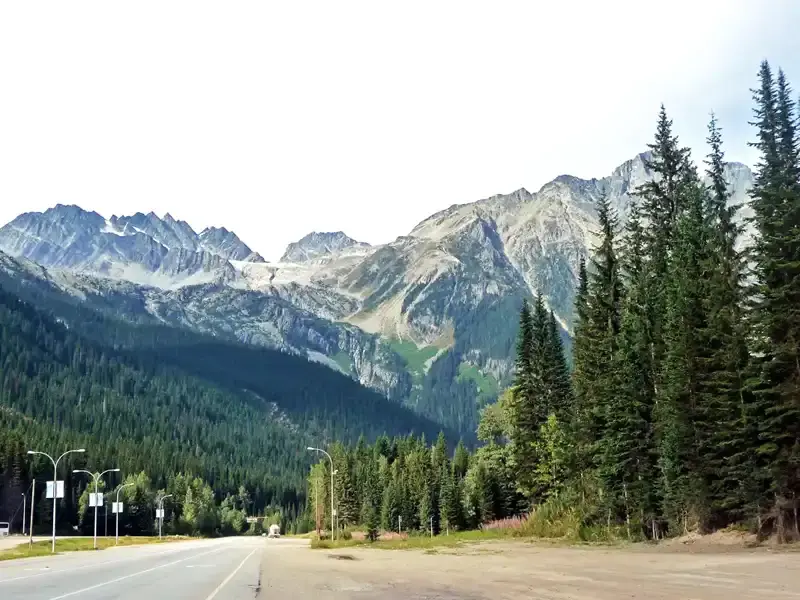
Driving the Trans-Canada Highway toward the Canadian Rockies was a fantastic experience. The road was in excellent condition, traffic was light, and the scenery was breathtaking. Towering mountains, dense forests, and wide valleys unfolded along the way. Even so, it’s easy to get distracted by the views—so it’s best to keep your eyes on the road and enjoy the scenery at the lookout points.
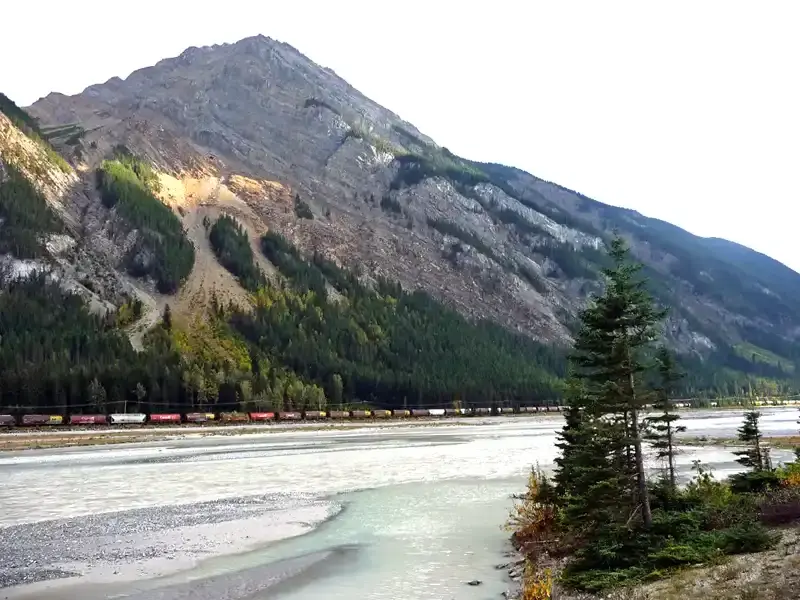
The railway line from Vancouver to Toronto stretches about 4,500 kilometres across Canada, passing through the spectacular Canadian Rockies. Along many sections, the tracks run parallel to the highway, so during our road trip we frequently saw trains rumbling through the mountains.
Some of the freight trains in Canada are incredibly long, often between 1.5 and 4 kilometres, and they can take four to five days to travel from west to east across the country.
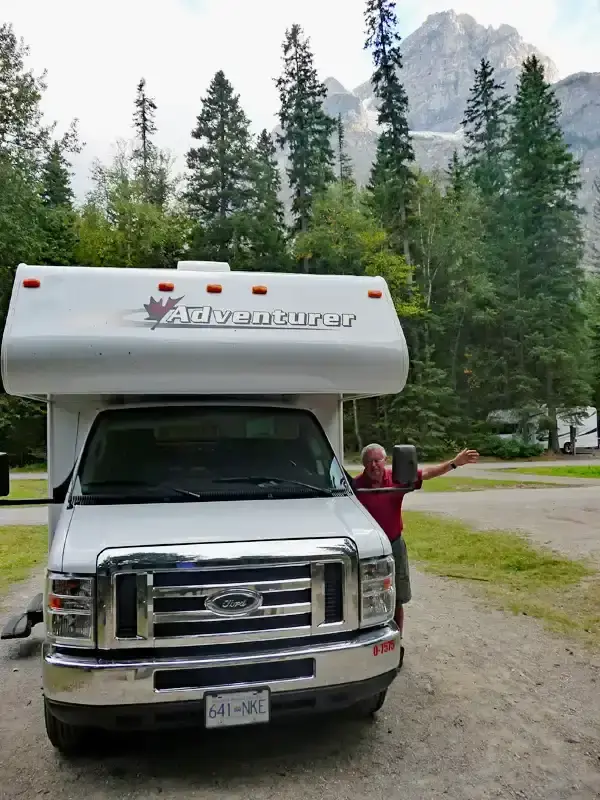
During the next few days, we camped at Kicking Horse Campground in Yoho National Park in the heart of the Canadian Rockies. From there, we explored the park’s most beautiful sights. We hiked around the stunning Emerald Lake, visited the impressive Takakkaw Falls, and stopped at the fascinating Natural Bridge.
Everywhere we went, the landscapes were breathtaking. The turquoise waters, powerful waterfalls, and towering mountain peaks made this part of the Canadian Rockies truly unforgettable.
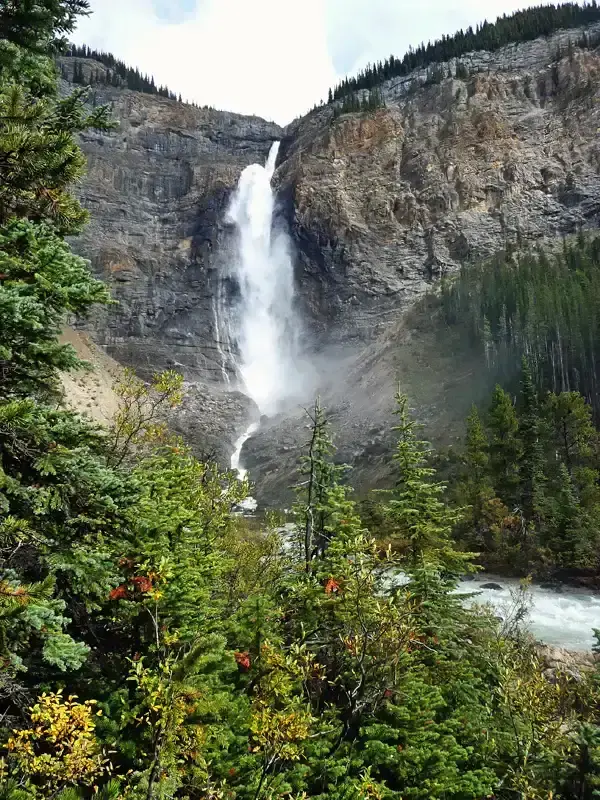
Takakkaw Falls is one of the most powerful and spectacular waterfalls in British Columbia. When visiting Yoho National Park, a stop at Takakkaw Falls is a must.
An easy walking trail leads visitors close to Canada’s second-tallest waterfall, which plunges an impressive 373 metres from the cliffs above. The falls are at their most powerful in July, when snowmelt from the surrounding mountains feeds the river, but even during our visit in mid-September the thundering cascade was incredibly impressive.
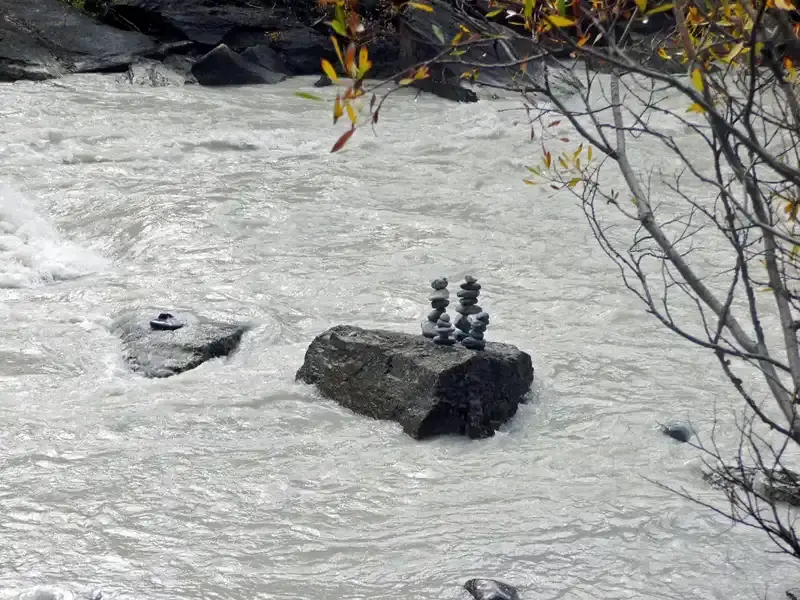
Whenever we went hiking in British Columbia, we often came across mysterious Inukshuk. These striking stone figures, carefully stacked by hand, have long served as guides for travellers in the wilderness. Traditionally built by Inuit people, Inukshuks can mark routes across vast landscapes, indicate good hunting or fishing areas, warn of danger, or identify places of cultural and spiritual significance.
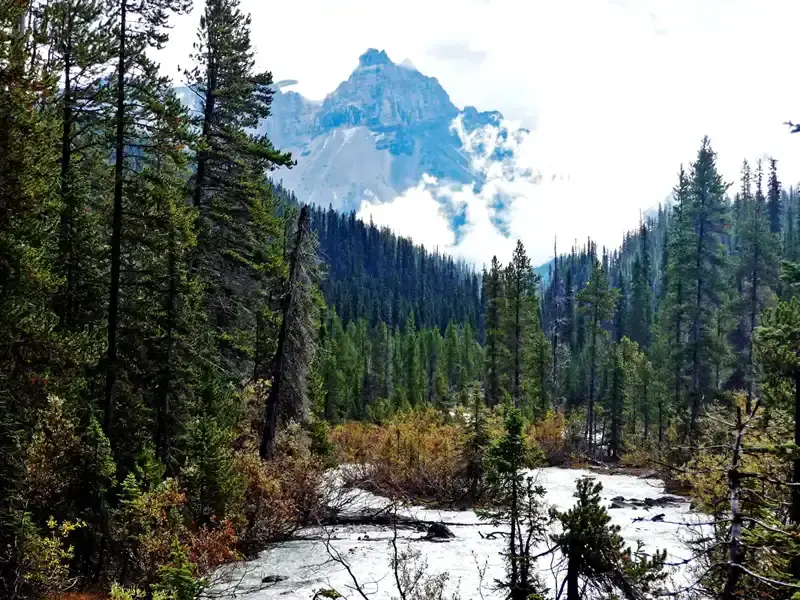
In hindsight, our favourite campsite was in Yoho National Park. Staying in a secluded spot surrounded by tall forest trees felt almost magical and gave us a real sense of the wilderness of the Canadian Rockies.
Nearly every campground we stayed at during our road trip was wonderful, but another highlight was spending a quiet night along the Icefields Parkway. We found a tiny campsite right beside a river and had the place almost entirely to ourselves—one of those unforgettable moments that make a motorhome journey through the Canadian Rockies so special.
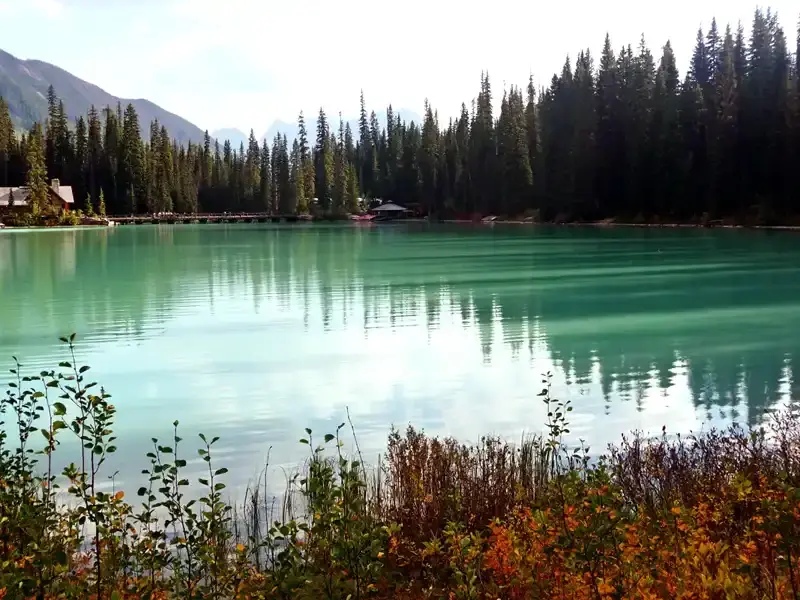
Our favourites were the 12-kilometer Emerald Lake and Glacier Trail Loops. Hiking around the green glacial lake takes about 3 hours. In particular, without the crowds of Lake Louise, this trail is one of the best in the Canadian Rockies.
Back to table of contents
Banff National Park – Hiking in the Canadian Rockies
Banff National Park is Canada’s oldest national park. it covers over 6,600 square kilometres. It is a great place for hiking, wildlife viewing, skiing, and snowboarding. Wildlife is abundant in the park, with the chance to see elk, grizzly bears, and bighorn sheep.
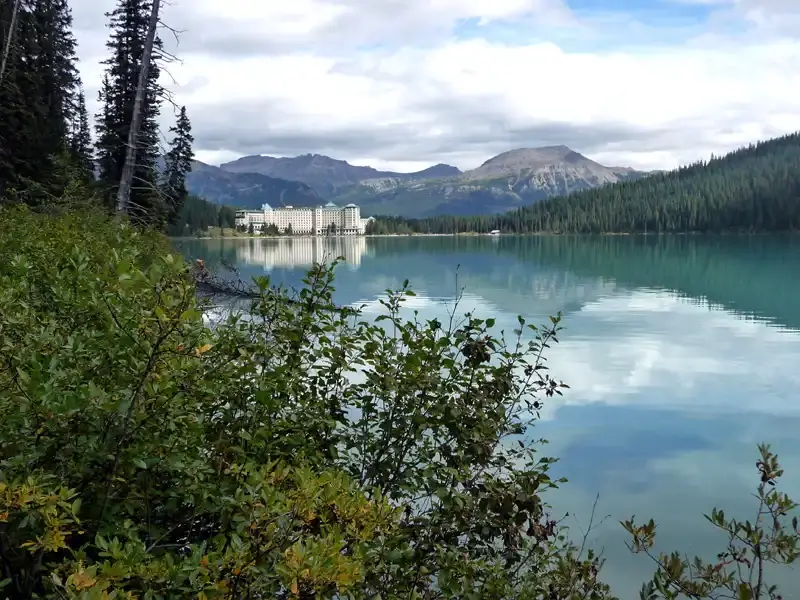
Lake Louise, in Banff National Park, is a tourist magnet, attracting millions of visitors each year. The lakeshore trail is easy. It has views of the stunning mountains, glaciers, and the luxury Fairmont Château Lake Louise.
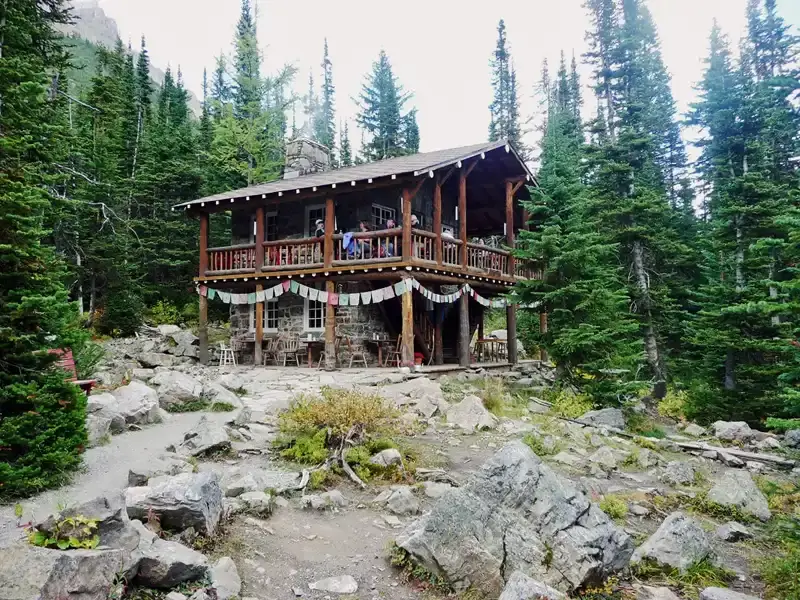
In the Canadian Rockies, we went hiking to the Plain of Six Glaciers Teahouse. The hike starts from Lake Louise; it is a 4–6 hour, 15 km hike to an elevation of 2100 metres. Unfortunately, it is not a European mountain café, no Glühwein, no Snaps,
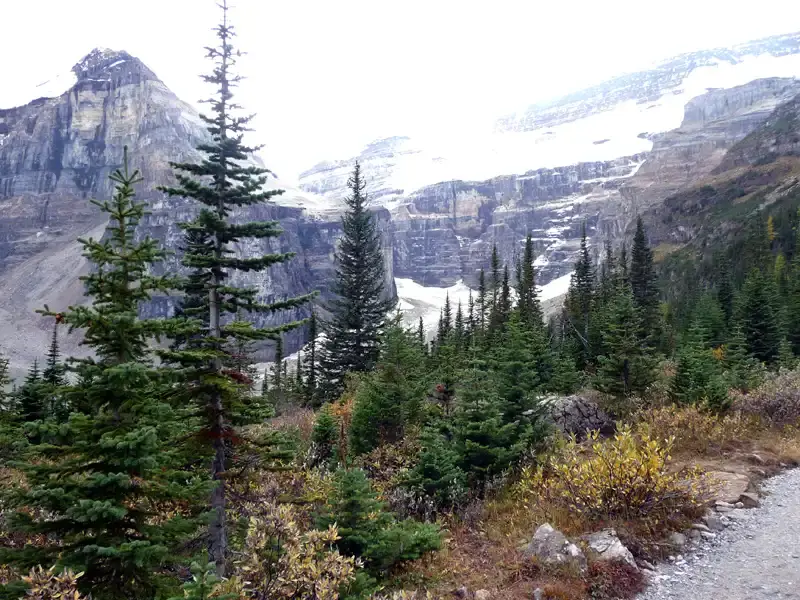
From the Teahouse, we had a fantastic view of Mount Lefroy and the Victoria Glacier. In addition to the beautiful view, we heard the whumping sounds of avalanches. This created an eerie feeling. Wherever we went the Canadian Rockies are stunning.
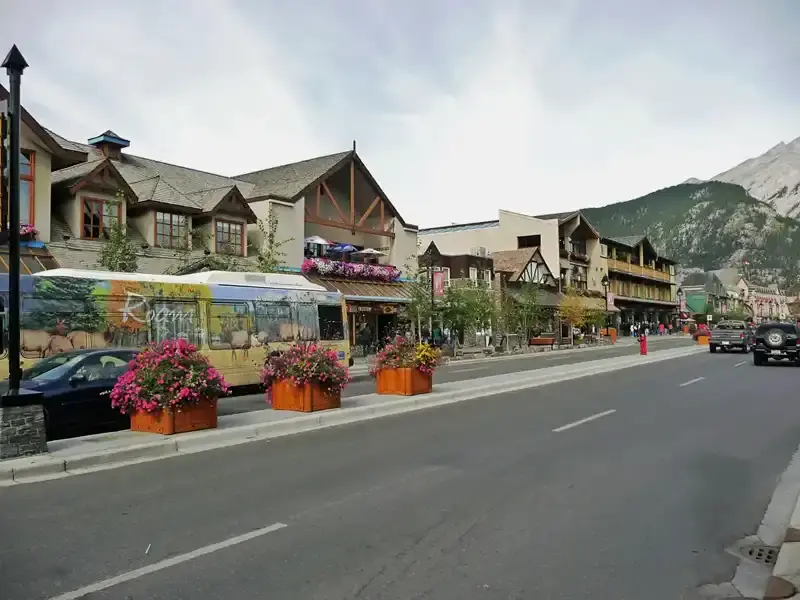
Banff is a lovely resort town in Banff National Park. It has hotels, restaurants, boutiques, and souvenir shops. They remind us of Alpine towns in Europe. Additionally, we swam in the upper Hot Springs, hiked the Hoodoo Trail, and saw deer in the middle of town.
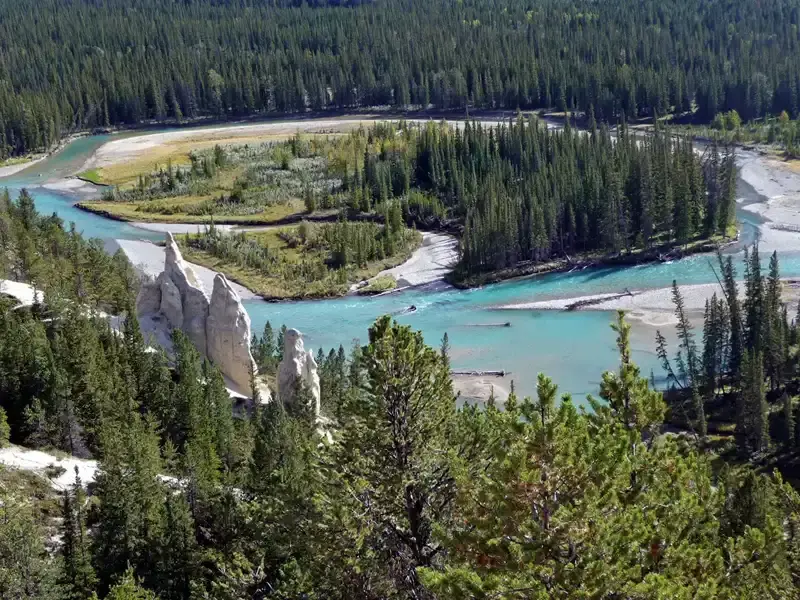
Hoodoos in Banff National Park are the result of thousands of years of erosion. They are a rare combination of hard rock and soft rock, resulting in these rare and unique structures. During our time in Banff, we walk the Hoodoos Trail, a short walk with spectacular views.
Back to table of contents
Driving the Icefields Parkway
The Icefields Parkway is one of the most scenic drives in the world. It stretches 230 kilometres through the Canadian Rockies. The Icefields Parkway starts in the town of Lake Louise and finishes in the town of Jasper.
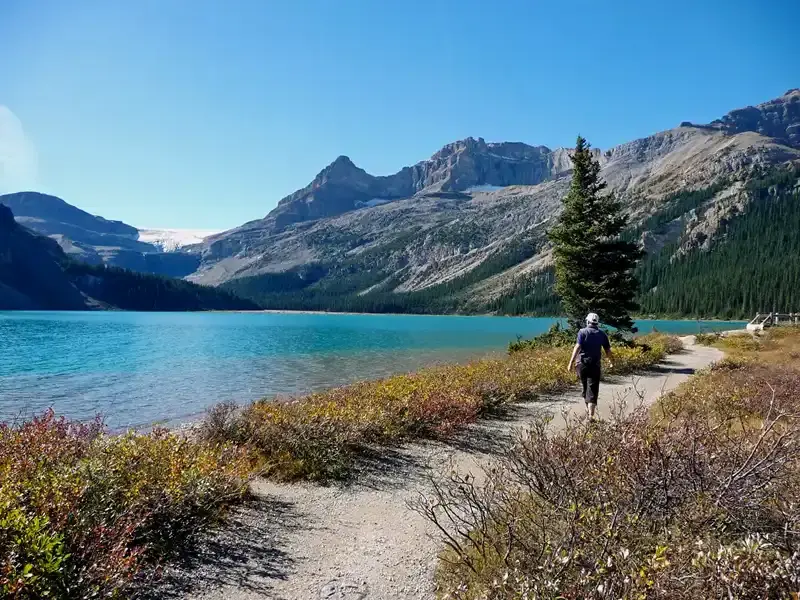
Bow Lake, at an elevation of 1920 metres, is surrounded by the Bow Glacier and Crowfoot Mountain. Hiking in the Candian Rockies to Bow Glacier Falls. It’s only 9 kilometres long, but because the terrain waspeyto difficult at times, we needed three hours.
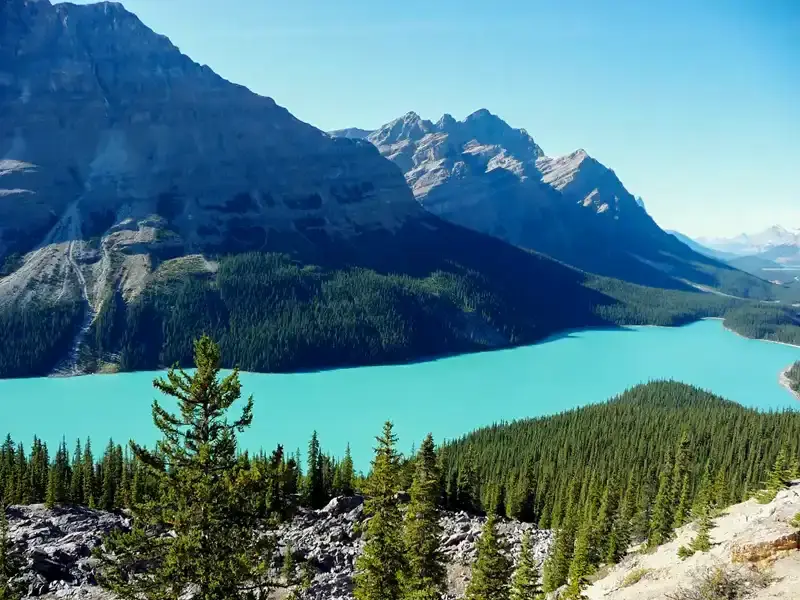
Lake Peyto in Banff National Park is one of the most striking glacier-fed lakes in the Canadian Rockies. Located just off the famous Icefields Parkway, it is a popular stop for travellers exploring the park. During summer, fine glacial sediment—often called rock flour—flows into the lake from nearby glaciers, scattering sunlight and creating the lake’s brilliant turquoise colour.
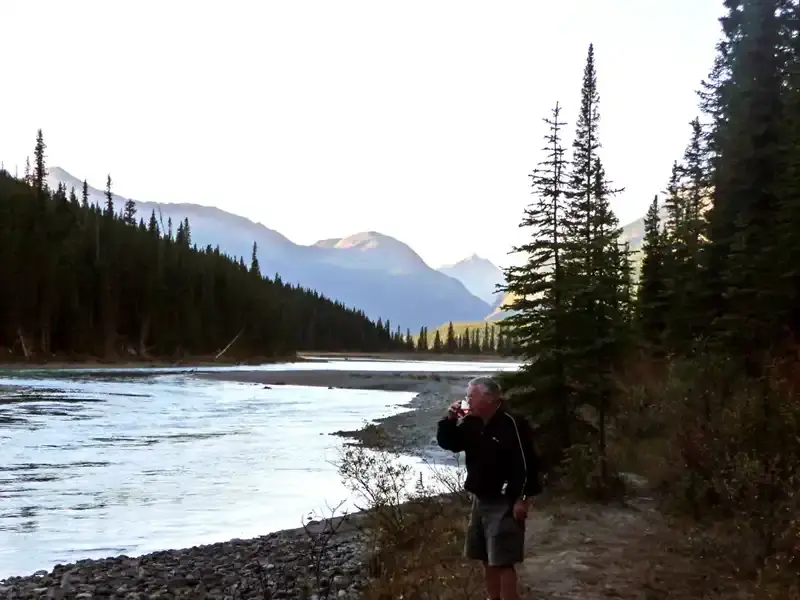
While travelling along the famous Icefields Parkway in the Canadian Rockies, we discovered a small and secluded riverside RV park. We decided to stay overnight and were the only visitors there. With the sound of the river and the surrounding wilderness all to ourselves, the quiet evening felt wonderfully peaceful and romantic.
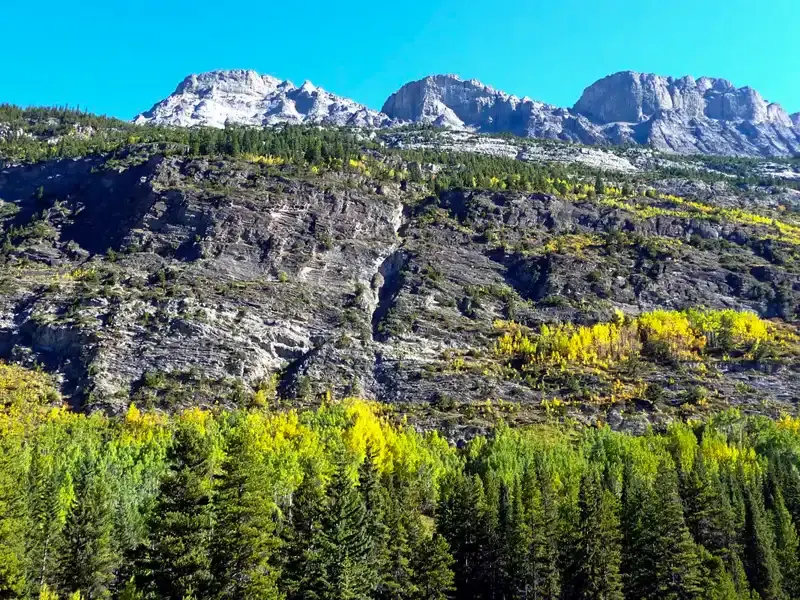
The 230-kilometre Icefields Parkway is widely considered one of the most scenic drives in the world. Travelling through the heart of the Canadian Rockies, we were rewarded with spectacular mountain landscapes glowing in rich colours during a beautiful Indian summer.
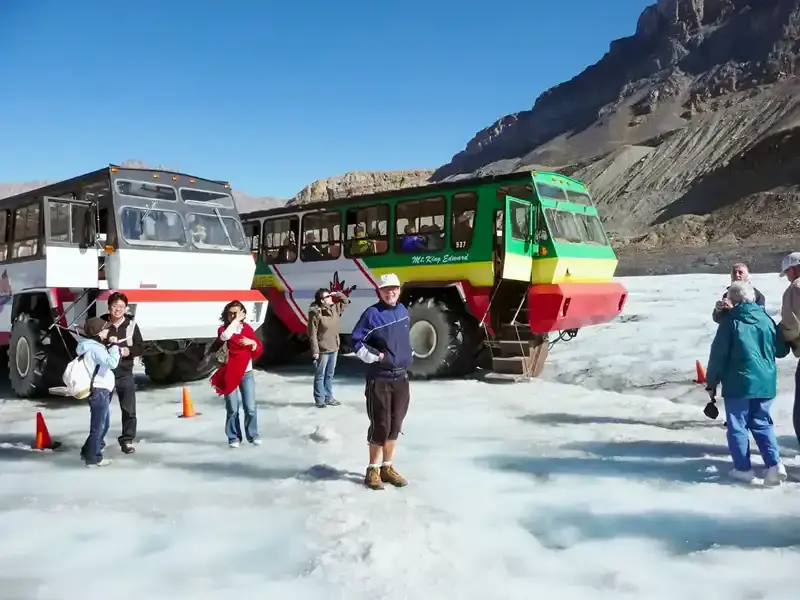
From the Columbia Icefield Discovery Centre, we joined an Ice Explorer bus tour to the impressive Athabasca Glacier. The glacier lies high in the Canadian Rockies at about 2,700 metres above sea level and is part of the vast Columbia Icefield. After the short but steep ride onto the ice, we were able to step out and walk on the ancient glacier itself. Standing on a sheet of ice that formed more than 10,000 years ago was a truly unforgettable experience.
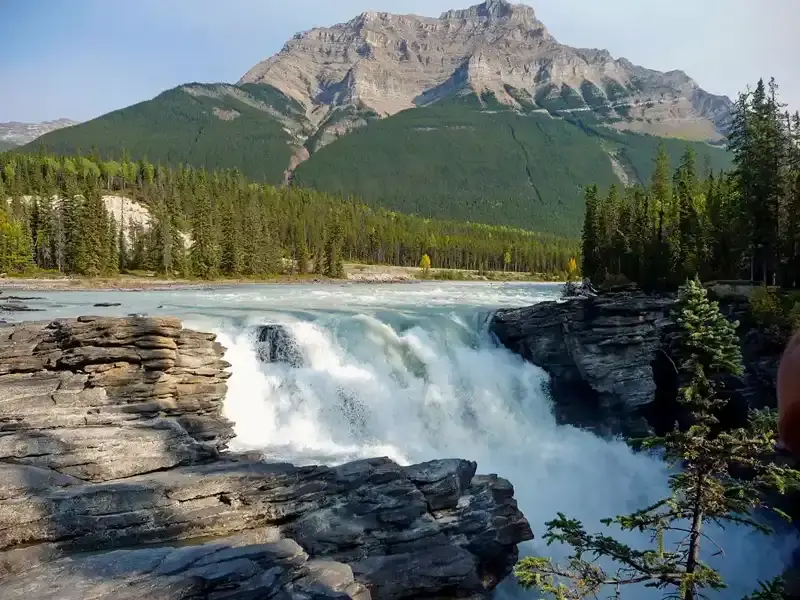
Although Takakkaw Falls impressed us with its remarkable height, we found Athabasca Falls to be the most dramatic waterfall in the Canadian Rockies. The sheer volume of water plunging through the narrow gorge and the thunderous roar of the falls create a breathtaking spectacle. It is easy to see why this powerful waterfall attracts visitors from all over the world.
Back to table of contents
Jasper National Park – Wildlife and Wilderness
Jasper National Park is the largest national park in the Canadian Rockies and feels far more relaxed than some of its busier neighbours. With its vast wilderness, beautiful campgrounds, and countless scenic hiking trails, it is a wonderful place to slow down and explore nature. The park is also well known for its abundant wildlife, and it is not uncommon to spot elk, bears, or mountain goats while travelling through this stunning landscape.
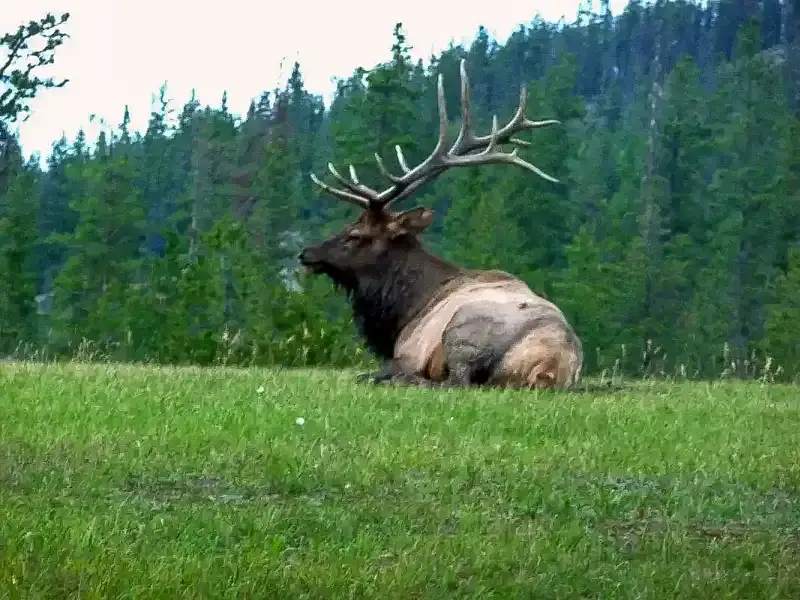
At Whistlers Campground, warning signs reminded us that elk can be dangerous during the rutting season, and some hiking trails were temporarily closed as a precaution. One afternoon, as we drove into the campground, a large elk stood calmly near the entrance. The magnificent animal appeared completely relaxed, almost as if it were posing for photos.
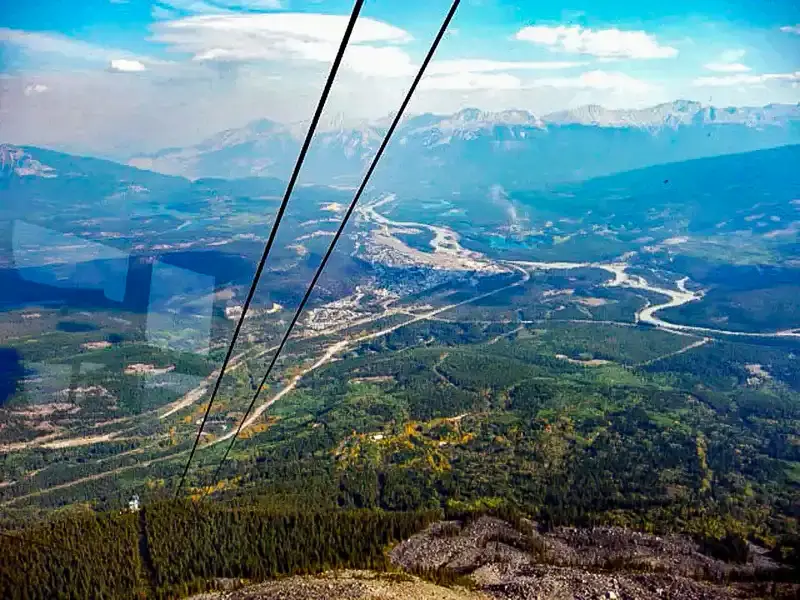
While visiting Jasper National Park, we took the Jasper SkyTram up to Whistlers Mountain. One of the tram attendants happened to be from Queensland, Australia, which made for a friendly conversation along the way. As the tram steadily climbed higher, we enjoyed spectacular bird’s-eye views over the lush green valleys far below. The ride was both exciting and wonderfully scenic.
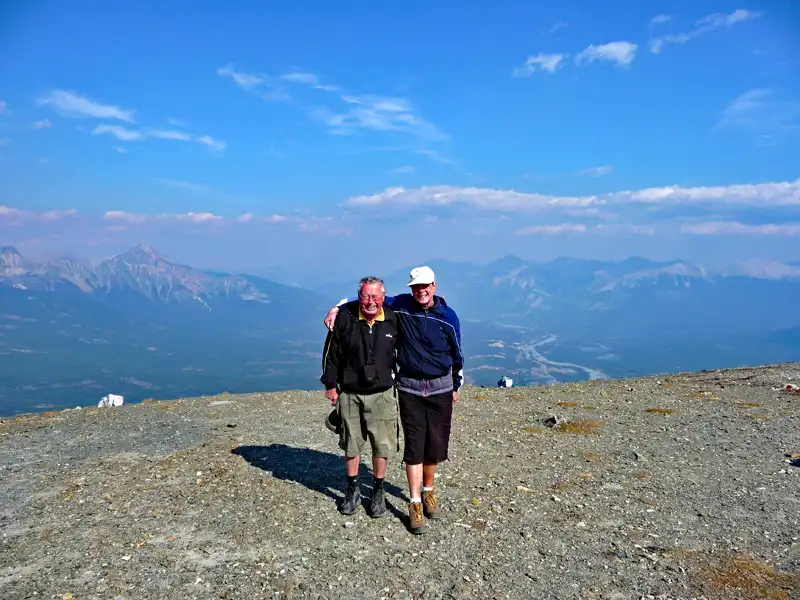
From the upper station of the Jasper SkyTram, we continued on foot along the trail to the summit of Whistlers Mountain. At 2,263 metres above sea level, the hike offered spectacular views of the surrounding Canadian Rockies. From the summit, we were rewarded with a breathtaking panoramic view stretching across the vast mountain landscape.
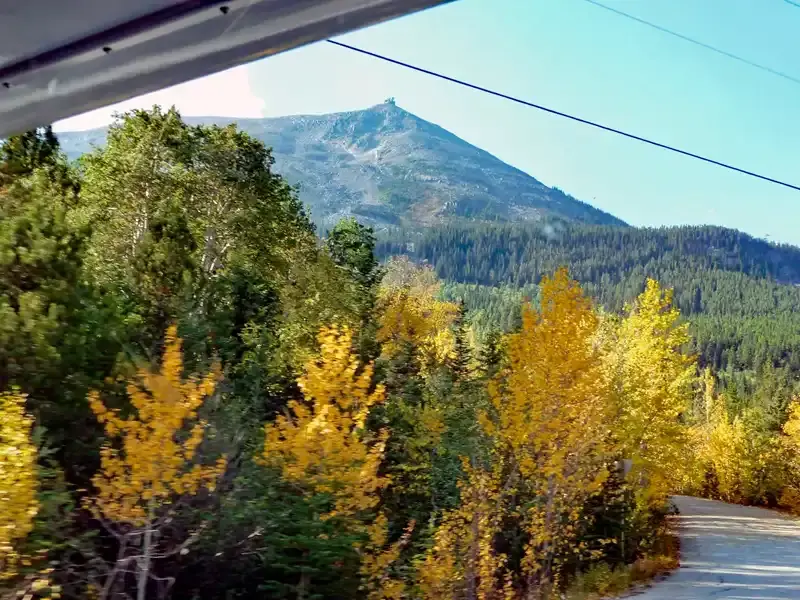
Walking uphill was strenuous, and the long descent was tough on the knees. It took me several days to recover. But on the way down we spotted mushrooms—some species we hadn’t seen for more than twenty years. Instantly our passion for mushroom foraging returned, and that evening we enjoyed a wonderful dinner with our freshly gathered finds.
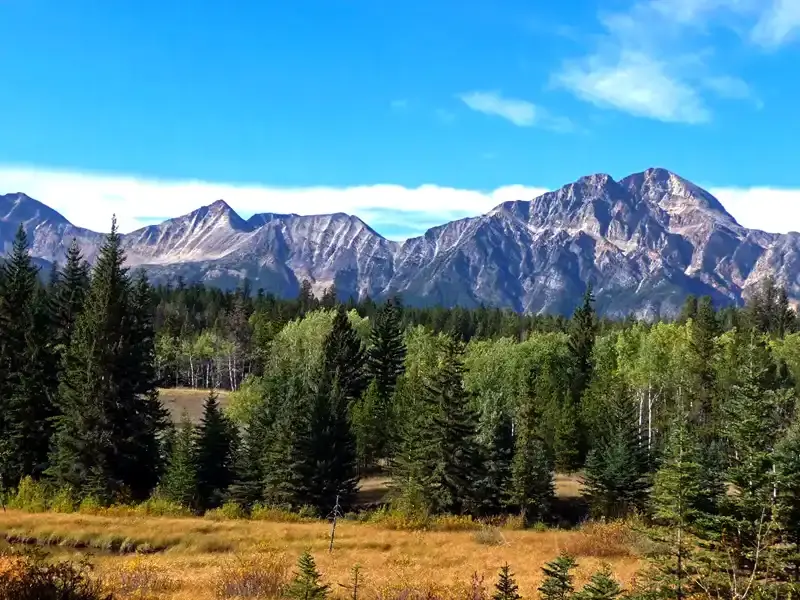
While in Jasper, we hiked the breathtaking Valley of the Five Lakes and First Lake Trail. This 8.2-kilometre route is quite popular and requires a reasonable level of fitness. The trail winds through lush forest and passes several stunning turquoise lakes, offering beautiful views and plenty of scenic spots to pause and enjoy the surroundings.
Back to table of contents
Wells Gray Provincial Park – Mushroom Foraging
Wells Gray Provincial Park is one of British Columbia’s hidden gems. This vast wilderness area features spectacular waterfalls, crystal-clear lakes, and dense forests. The park offers excellent hiking trails and is also a great place for mushroom foraging. Wildlife is abundant, with black bears, grizzly bears, moose, wolves, and cougars all inhabiting this rugged landscape.
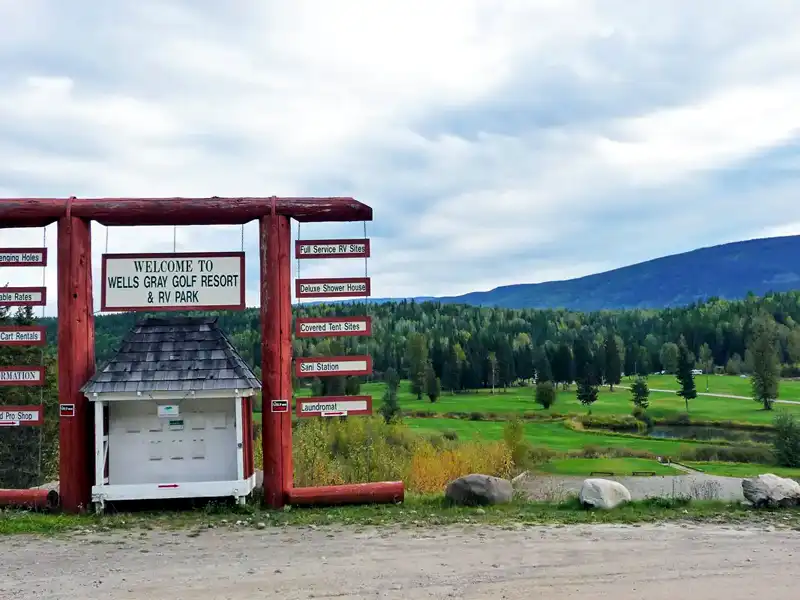
On our way to Vancouver, we stayed for a few days at the Wells Gray Golf Resort & RV Park near the small town of Clearwater. From there we explored Wells Gray Provincial Park and went hiking in Wells Gray Regional Park, doing what we love most—mushroom foraging.
We even played a round of golf at the resort. It was great fun, although we lost quite a few balls along the way. In the end, we agreed that hiking is not only more rewarding, but also much cheaper.
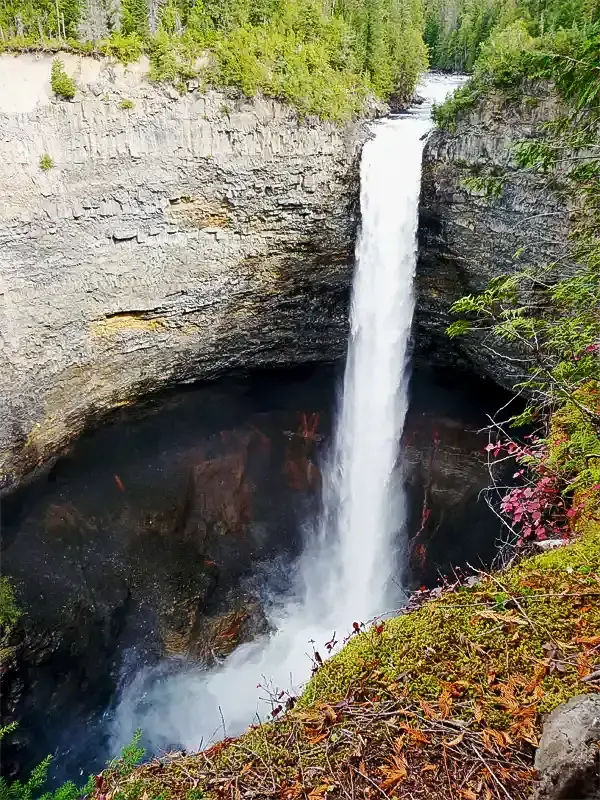
While camping in Wells Gray Provincial Park, we took a pleasant hike to Helmcken Falls, Canada’s fourth-highest waterfall, plunging an impressive 141 metres into a deep canyon. The view of the powerful cascade surrounded by rugged cliffs and forest was breathtaking. Interestingly, the park itself was established in 1939 largely to protect this magnificent waterfall.
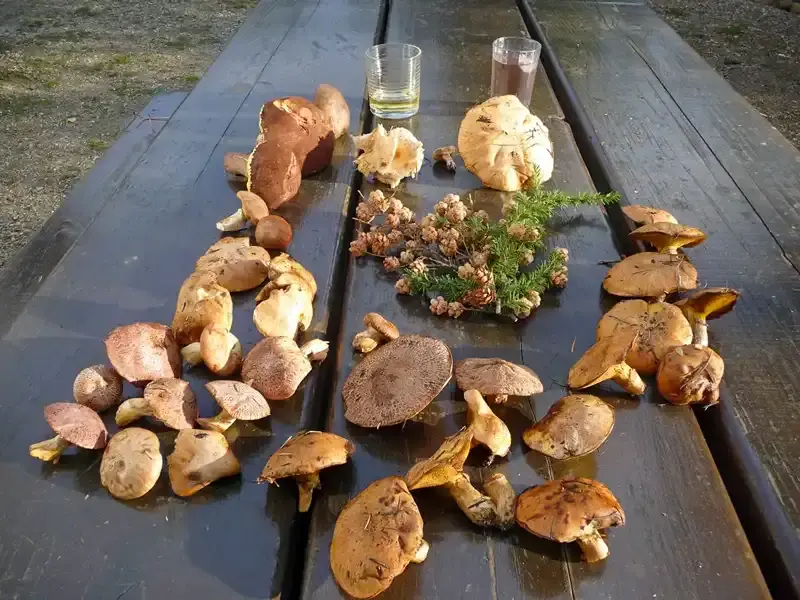
Mushroom foraging was one of our favourite activities when we lived in Germany. Unfortunately, there are few forests in Australia where this tradition can be enjoyed. While hiking around Wells Gray Provincial Park, we found many wonderful wild mushrooms. For days we lived off our delicious finds, spending money only on drinks and fuel for our RV until it was time to fly back to Australia.
Back to table of contents
Whistler
Whistler is one of Canada’s premier mountain destinations. At the heart of the experience is Whistler Blackcomb, one of the largest ski resorts in North America, offering vast terrain for skiers and snowboarders of all levels. In summer, the mountains transform into a playground for hikers, mountain bikers, and sightseers, with breathtaking alpine views at every turn. The car-free Whistler Village is well equipped with cosy cafés, restaurants, and shops, for the 2 million annual visitors.
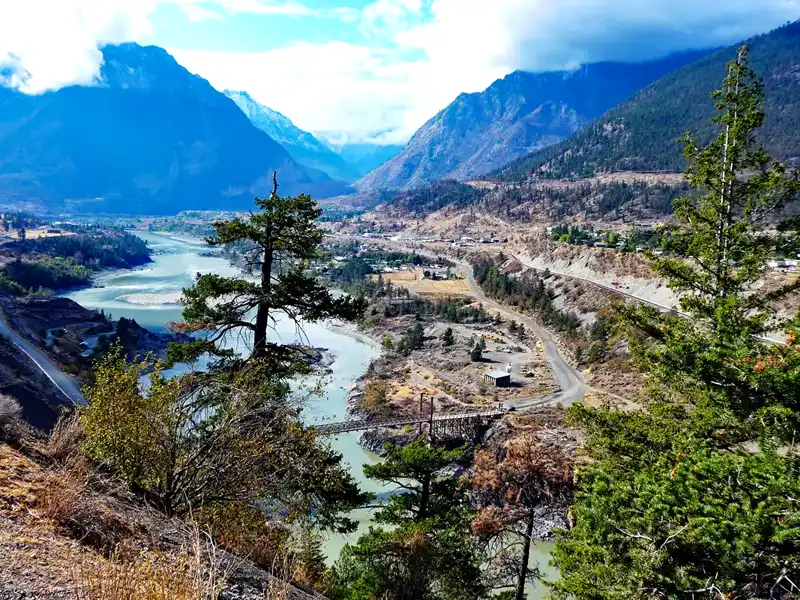
While driving to Whistler, we stopped in Lillooet on the banks of the Fraser River. It’s the longest river in British Columbia, Canada. It flows 1,375 km from the Rocky Mountains to the Strait of Georgia, south of Vancouver. Additionally, this river is well-known for its stunning beauty and rich history.
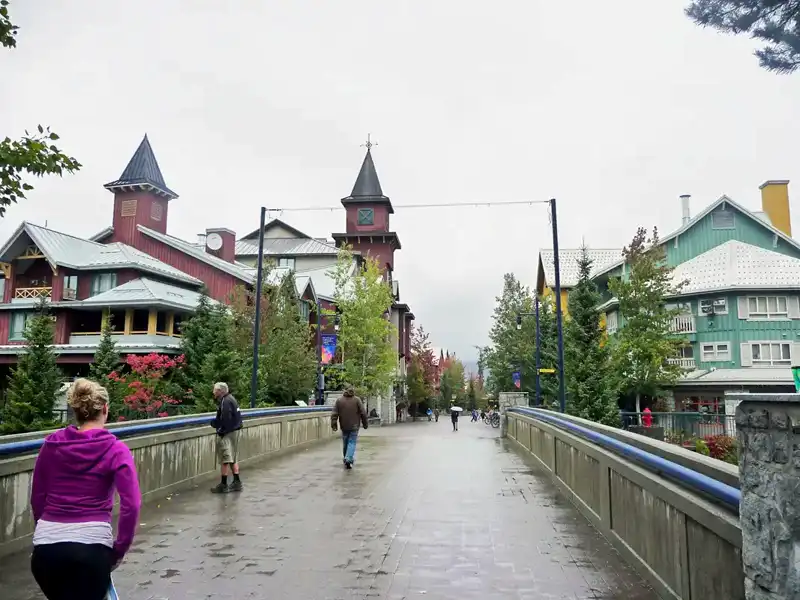
Having spent many years exploring the European Alps—hiking and skiing across Germany, Switzerland, and Austria—we were excited to experience one of North America’s largest ski resorts. Riding the gondola up to the peak was high on our list. Unfortunately, the weather didn’t cooperate; heavy rain set in and the mountains disappeared behind a thick blanket of cloud. Still, we couldn’t complain—every other day we were treated to a spectacular Indian summer, making the trip memorable in its own way.
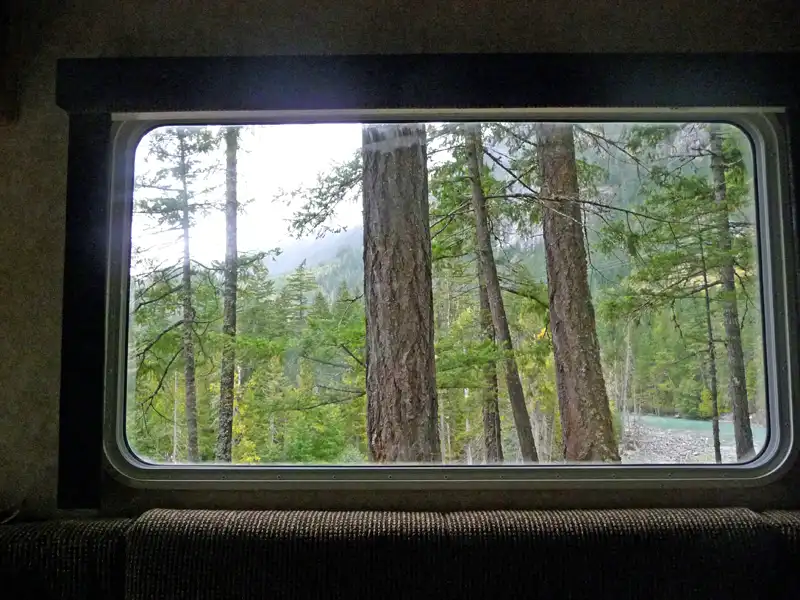
For one night, we stayed just outside Whistler in our cosy RV, surrounded by peaceful forest views. We enjoyed a home-cooked meal and relaxed with a lovely bottle of red wine, making it a simple yet memorable evening.
Back to table of contents
Vancouver Island
Vancouver Island is the largest island on North America’s Pacific coast, stretching about 460 kilometres in length and up to 100 kilometres in width. Visitors can experience unforgettable wildlife encounters, with opportunities to spot whales, sea lions, and even black bears in their natural habitats. Off the western edge of British Columbia, it’s a place where rugged wilderness meets charming coastal towns, offering a perfect mix of adventure and relaxation. Outdoor activities are at the heart of Vancouver Island’s appeal. Whether it’s kayaking through calm inlets, surfing along wild ocean shores or hiking in forests.
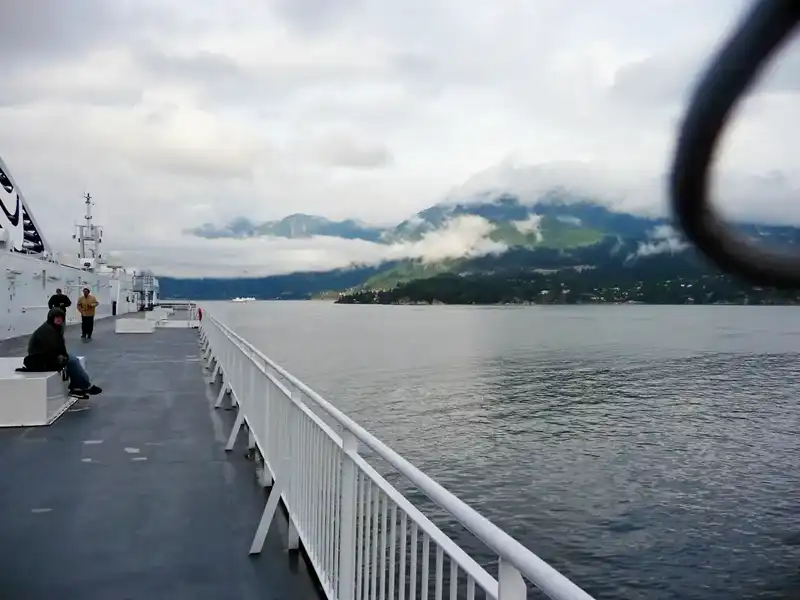
After a restful night’s sleep, we drove about 100 kilometres to Horseshoe Bay to catch the ferry to Vancouver Island—the final destination of our British Columbia road trip. Although the weather was drizzly, we thoroughly enjoyed the two-hour journey across the bay. The crossing was smooth, and the coastal scenery was breathtaking.
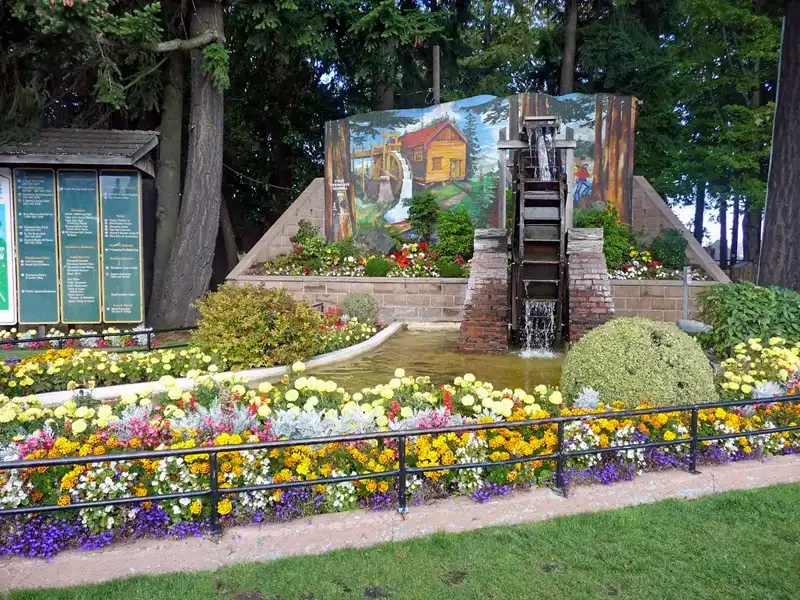
Arriving on Vancouver Island, we were greeted by sunshine once again. Our first stop was Chemainus, known as the “City of Murals.” The town is famous for its remarkable outdoor art gallery, featuring more than 40 murals that vividly depict local history and culture. Strolling through the streets, we admired the vibrant colours and intricate details of each painting. The murals bring the town to life, telling stories of its past and transforming Chemainus into a unique and welcoming destination that attracts visitors from around the world.
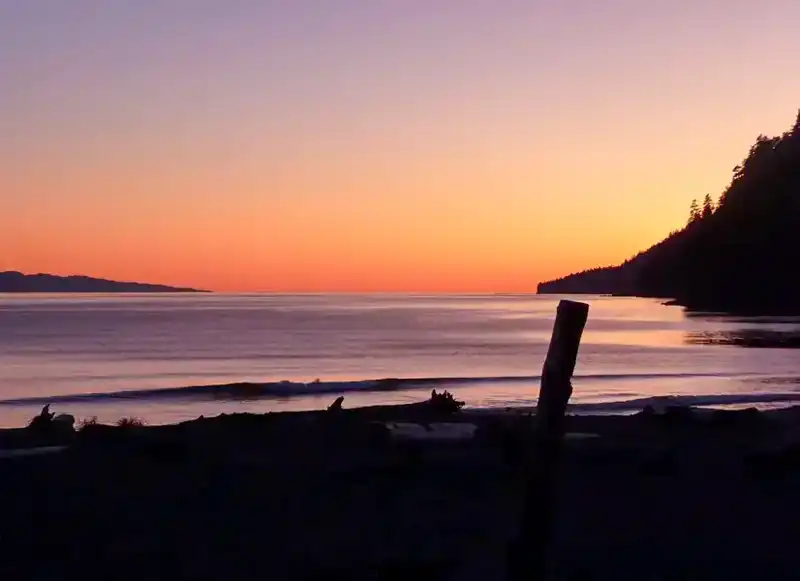
Staying at the Pacheedaht Campground near Port Renfrew was a truly special experience. Set on the traditional lands of the Pacheedaht First Nation, the campground offered a unique and peaceful coastal setting. We stayed at a beachfront site, far from the main amenities, which made it wonderfully quiet. The sunsets were simply spectacular. Unlike many busy campgrounds where people arrive late and leave early, this felt more relaxed and community-oriented. We met friendly fellow campers, some staying in traditional-style tents, who even shared freshly caught mussels with us—an unforgettable moment of generosity and connection.
Victoria
Welcome to the “City of Gardens.” Situated on the southern tip of Vancouver Island, Victoria, British Columbia, is a rare place where British colonial charm meets the wild energy of the Pacific Northwest. It’s a city of striking contrasts: one moment you’re enjoying vibrant café culture and colourful gardens, and the next you’re surrounded by rugged coastline, lush forests, and abundant wildlife.
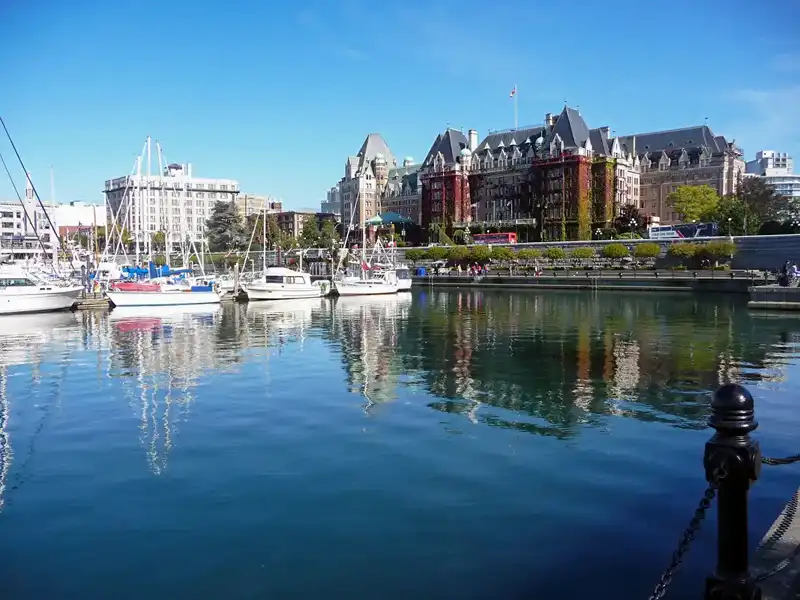
Following our usual tradition, we explored the city on foot. We wandered the Inner Harbour, visited the Parliament Buildings, and toured the Emily Carr House—a must-see National Historic Site. When our feet finally gave out, we treated ourselves to a well-earned drink at the iconic Fairmont Empress.
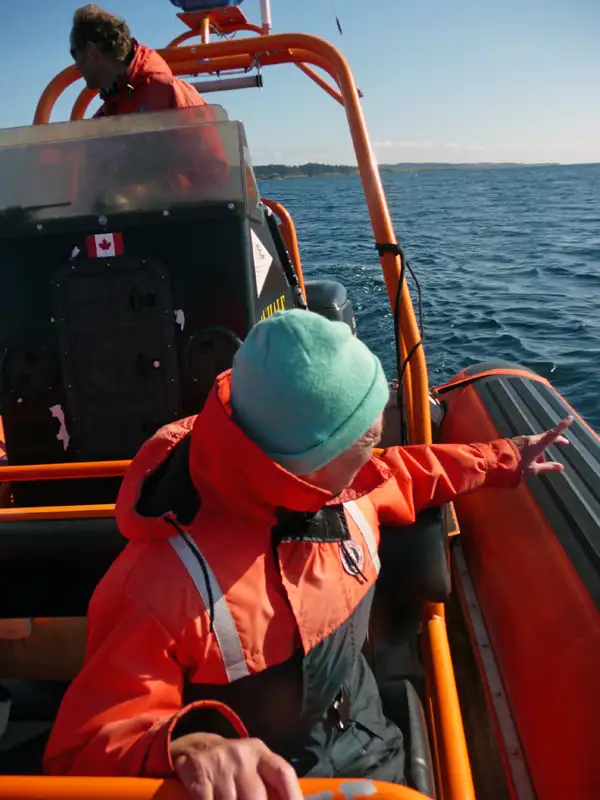
While hiking is always at the heart of our travels, we also love adding a touch of adventure. This time, we tried something completely new—an unforgettable orca-watching tour in a small 12-person Zodiac boat on the Salish Sea.
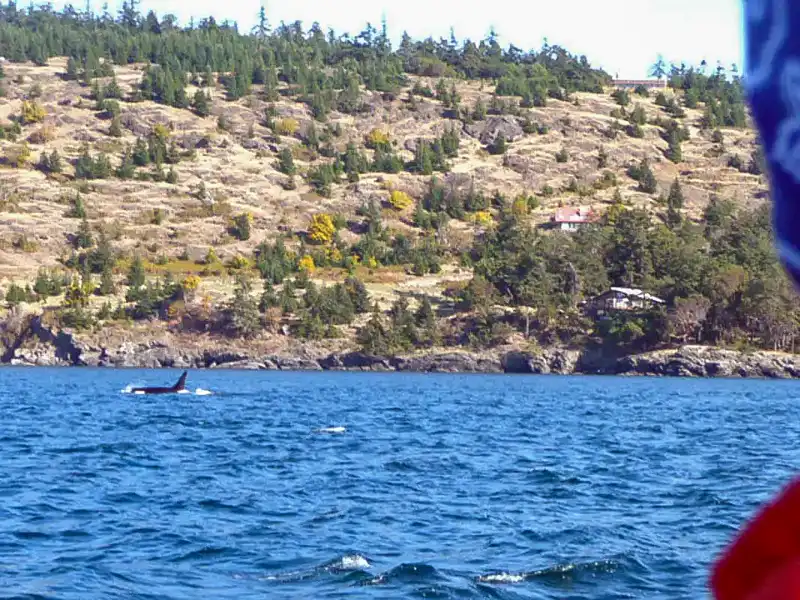
The tour was fantastic—we cruised close to the U.S. border and encountered a pod of orcas. They were incredibly quick, though, and we never quite managed to catch them breaching on camera.
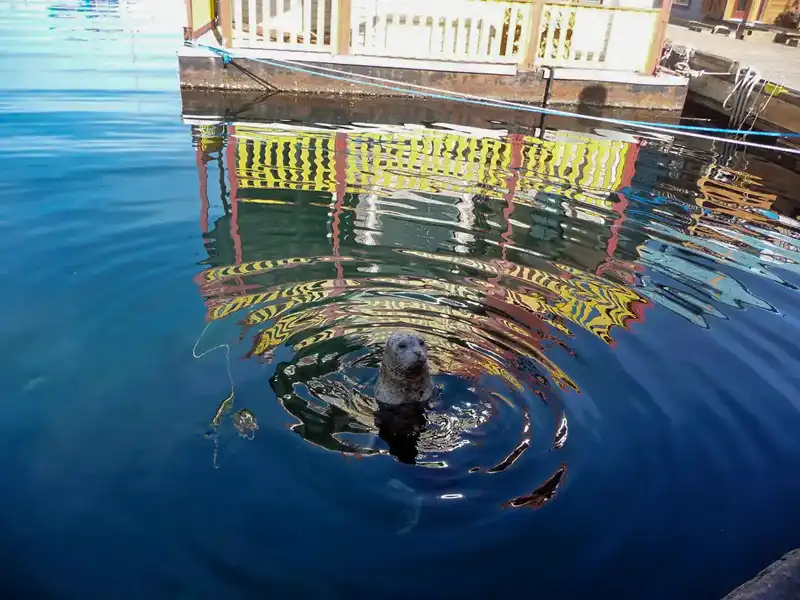
Every great journey eventually comes to an end. Before catching the ferry from Victoria to Vancouver and flying back to Sydney, we made one last stop at Fisherman’s Wharf in Victoria—where a curious harbour seal seemed to bid us a gentle farewell
Back to table of contents
Looking for more North America travel adventures? Discover spectacular scenery, unforgettable hiking trails, incredible wildlife, and iconic destinations in our complete North America Travel Guide.